Browse by Category
Fiction
- Action & Adventure
- African American
- Anthologies
- Children's Fiction
- Classics
- Comics & Graphic Novels
- Coming of Age
- Contemporary
- Cultural & Regional
- Drama
- Erotica
- Fantasy
- General
- Historical Fiction
- Horror
- Humor & Satire
- Literary Fiction
- Mystery, Thriller & Suspense
- Poetry
- Religious & Inspirational
- Romance
- Science Fiction
- Short Stories
- War & Military
- Westerns
- Women's Fiction
- Young Adult
Non-Fiction
- Antiques & Collectibles
- Arts & Photography
- Biographies & Memoirs
- Business & Money
- Children's Non-Fiction
-
Computers & Technology
- Artificial Intelligence
- Computer Science
- Cybersecurity & Cryptography
- Data Science & Analytics
- Databases & Big Data
- Game Development & Design
- General
- Hardware & DIY
- Mobile App Development
- Networking & Cloud Computing
- Operating Systems
- Programming
- Robotics
- Software
- Software Engineering
- User Experience (UX) & Design
- Web Development & Design
- Cooking, Food & Wine
- Crafts, Hobbies & Home
- Education & Teaching
- Engineering
- General
- Health, Fitness & Dieting
-
History
- African History
- African History - North Africa
- African History - Sub-Saharan Africa
- American History
- American History - 20th Century
- American History - Civil War
- American History - Colonial Period
- Ancient History
- Asian History
- Asian History - China
- Asian History - India
- Asian History - Japan
- Asian History - Southeast Asia
- European History
- European History - Ancient Greece
- European History - Ancient Rome
- European History - Medieval
- European History - Modern
- European History - Renaissance
- General
- Middle Eastern History
- Military History
- Military History - Aviation
- Military History - Naval
- Social & Cultural History
- World History
- Humor & Entertainment
- Industrial Technology
- Language Learning
- Law
- LGBTQ+ Non-Fiction
- Literary Criticism
- Medical Books
- Parenting & Relationships
- Philosophy
- Politics & Social Sciences
- Reference
- Religion & Spirituality
-
Science & Math
- Agricultural Sciences
- Astronomy & Space Science
- Behavioral Sciences
- Biological Sciences
- Botany & Plant Science
- Chemistry
- Earth Sciences
- Engineering - Chemical
- Engineering - Civil
- Engineering - Electrical
- Engineering - Mechanical
- Environment
- General
- Geology
- Mathematics
- Nature & Ecology
- Oceanography
- Paleontology
- Physics
- Statistics
- Self-Help
- Sports & Outdoors
- Study Aids
- Sustainability & Green Living
- Textbooks
- Transportation
- Travel
- True Crime
- Urban Planning & Development
- Veterinary Medicine
- Writing & Publishing
Jump to Section
MixCache.com Total Access
Unlimited reading and audiobooks for every book published by MixCache.com.
Included titles carry the MTA badge.
Learn more →
Education In Panama
MTA
A Comprehensive Overview from Early Childhood to Higher Education
About this book:
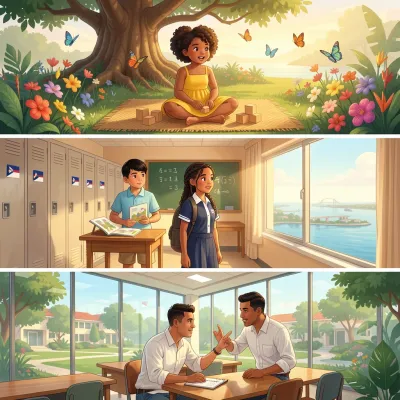
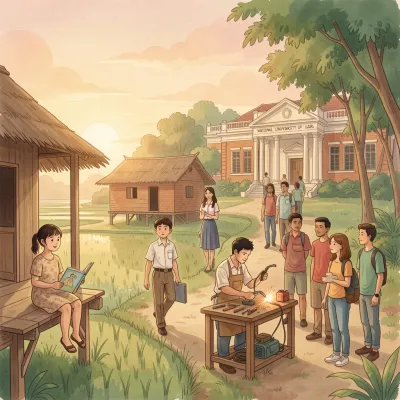
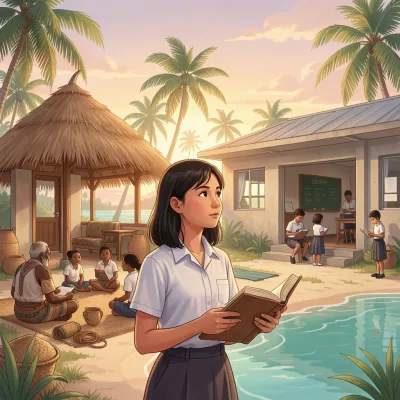
Education in Panama has evolved from informal indigenous traditions and colonial Jesuit schools into a modern, state‑overseen system managed by the Ministry of Education (MEDUCA). The system is structured into pre‑primary, primary (six years), secondary (divided into lower *Educación Premedia* and upper *Educación Media* with academic and technical tracks), and higher education (public and private universities, technical institutes). Education is free and compulsory from ages six to fifteen, and the academic year runs from March to December. Historical milestones include the founding of the University of Panama in 1935 and the expansion of public and private institutions thereafter, shaped by periods of Colombian association, U.S. influence, and national reforms aimed at universal access and quality.
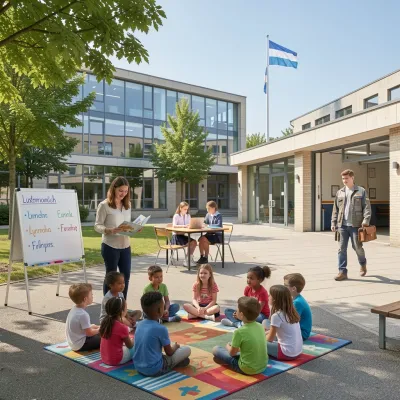
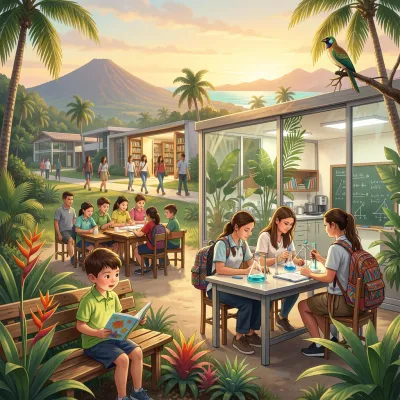
Early childhood education emphasizes holistic, play‑based learning and cultural relevance, though access remains uneven between urban and rural areas. Primary education focuses on literacy, numeracy, bilingual Spanish‑English instruction, and foundational subjects, supported by national standards and teacher training. Secondary education diversifies into academic *Bachilleratos* (science, humanities, commerce, tourism) and technical *Bachilleratos* (agriculture, IT, electronics, construction, hospitality), preparing students for university or the workforce. Teacher training combines initial university programs with ongoing professional development, while challenges include infrastructure gaps, teacher shortages in remote areas, and the need for curriculum relevance to labor market demands.
Higher education features the University of Panama, the Technological University of Panama, and numerous private institutions offering degrees in business, engineering, health, and the sciences, complemented by short‑term technical institutes. Quality assurance is overseen by CONEAUPA, with accreditation processes ensuring standards across public and private sectors. Funding relies primarily on national budget allocations, supplemented by international aid, private tuition, and public‑private partnerships. Persistent issues involve socioeconomic disparities, the digital divide, indigenous language preservation, special education inclusion, and retention rates, particularly in rural and indigenous communities. Reforms target‑based learning, expanding STEM, enhancing teacher training, improving technology integration, strengthening early childhood and indigenous programs such as conditional cash transfers and infrastructure investment. Education is viewed as a catalyst for national development, driving economic diversification, social mobility, democratic participation, cultural preservation, and environmental stewardship, with ongoing efforts directed toward equity, quality, and alignment with future labor market needs.
What You'll Find Inside:
- Historical evolution of Panama's education system from pre-Columbian indigenous learning through Spanish colonial era to post-independence reforms and modern developments
- Detailed structure of Panama's educational system across all levels (pre-primary, primary, secondary, higher education) with MEDUCA's regulatory role and curriculum frameworks
- Critical analysis of access and equity challenges, particularly for rural, indigenous, and low-income populations, along with government strategies to address disparities
- Examination of vocational and technical education pathways (Bachilleratos Técnicos) and their alignment with labor market demands for employment readiness
- Exploration of education's role in national development including economic diversification, social mobility, cultural preservation, and democratic governance
Who's It For:
This book is primarily designed for policymakers, educational administrators, and Ministry of Education officials seeking comprehensive insights for reform and strategic planning. It will also significantly benefit researchers, academics, and students studying Latin American education systems, as well as international development organizations and investors analyzing Panama's human capital landscape. Additionally, educators, school leaders, and engaged citizens interested in understanding Panama's educational pathways, challenges, and opportunities will find valuable context and analysis.
Table of Contents:
- Introduction
- Chapter 1: Historical Foundations of Panamanian Education
- Chapter 2: The Structure of the Panamanian Educational System
- Chapter 3: Early Childhood Education: Foundations and Philosophy
- Chapter 4: Access and Equity in Early Childhood Programs
- Chapter 5: Primary Education: Curriculum and Standards
- Chapter 6: Teacher Training and Development in Primary Schools
- Chapter 7: Secondary Education: Diversification and Specialization
- Chapter 8: Challenges and Reforms in Secondary Education
- Chapter 9: Vocational and Technical Education: Pathways to Employment
- Chapter 10: Higher Education Institutions: Universities and Beyond
- Chapter 11: Accreditation and Quality Assurance in Higher Education
- Chapter 12: Funding and Investment in Panamanian Education
- Chapter 13: The Role of Government in Educational Policy
- Chapter 14: Private Education: Growth and Impact
- Chapter 15: Indigenous Education: Preserving Culture and Language
- Chapter 16: Special Education: Supporting Diverse Learning Needs
- Chapter 17: Technology Integration in the Classroom
- Chapter 18: Adult Education and Lifelong Learning Initiatives
- Chapter 19: International Cooperation and Educational Exchange
- Chapter 20: Educational Outcomes and Student Performance
- Chapter 21: Challenges of Access and Retention
- Chapter 22: The Impact of Socioeconomic Factors on Education
- Chapter 23: Educational Reforms and Future Directions
- Chapter 24: The Role of Education in National Development
- Chapter 25: Conclusion: Prospects and Recommendations for Panamanian Education
Author:
Published By:
Date Published:
July 2, 2026
Type:
Nonfiction
Language:
English
Word Count:
44,186 words
Reading Time:
3 hours 6 minutes
Sample:
Order:
Order Education In Panama (Paperback) on MixCache.com:
Buy NowPrint copy is made to order and ships worldwide. Includes the ebook free, ready to read instantly.
$5 account credit for all new MixCache.com accounts, usable toward any ebook purchase!*