
Browse by Category
Fiction
- Action & Adventure
- African American
- Anthologies
- Children's Fiction
- Classics
- Comics & Graphic Novels
- Coming of Age
- Contemporary
- Cultural & Regional
- Drama
- Erotica
- Fantasy
- General
- Historical Fiction
- Horror
- Humor & Satire
- Literary Fiction
- Mystery, Thriller & Suspense
- Poetry
- Religious & Inspirational
- Romance
- Science Fiction
- Short Stories
- War & Military
- Westerns
- Women's Fiction
- Young Adult
Non-Fiction
- Antiques & Collectibles
- Arts & Photography
- Biographies & Memoirs
- Business & Money
- Children's Non-Fiction
-
Computers & Technology
- Artificial Intelligence
- Computer Science
- Cybersecurity & Cryptography
- Data Science & Analytics
- Databases & Big Data
- Game Development & Design
- General
- Hardware & DIY
- Mobile App Development
- Networking & Cloud Computing
- Operating Systems
- Programming
- Robotics
- Software
- Software Engineering
- User Experience (UX) & Design
- Web Development & Design
- Cooking, Food & Wine
- Crafts, Hobbies & Home
- Education & Teaching
- Engineering
- General
- Health, Fitness & Dieting
-
History
- African History
- African History - North Africa
- African History - Sub-Saharan Africa
- American History
- American History - 20th Century
- American History - Civil War
- American History - Colonial Period
- Ancient History
- Asian History
- Asian History - China
- Asian History - India
- Asian History - Japan
- Asian History - Southeast Asia
- European History
- European History - Ancient Greece
- European History - Ancient Rome
- European History - Medieval
- European History - Modern
- European History - Renaissance
- General
- Middle Eastern History
- Military History
- Military History - Aviation
- Military History - Naval
- Social & Cultural History
- World History
- Humor & Entertainment
- Industrial Technology
- Language Learning
- Law
- LGBTQ+ Non-Fiction
- Literary Criticism
- Medical Books
- Parenting & Relationships
- Philosophy
- Politics & Social Sciences
- Reference
- Religion & Spirituality
-
Science & Math
- Agricultural Sciences
- Astronomy & Space Science
- Behavioral Sciences
- Biological Sciences
- Botany & Plant Science
- Chemistry
- Earth Sciences
- Engineering - Chemical
- Engineering - Civil
- Engineering - Electrical
- Engineering - Mechanical
- Environment
- General
- Geology
- Mathematics
- Nature & Ecology
- Oceanography
- Paleontology
- Physics
- Statistics
- Self-Help
- Sports & Outdoors
- Study Aids
- Sustainability & Green Living
- Textbooks
- Transportation
- Travel
- True Crime
- Urban Planning & Development
- Veterinary Medicine
- Writing & Publishing
Jump to Section
MixCache.com Total Access
Unlimited reading and audiobooks for every book published by MixCache.com.
Included titles carry the MTA badge.
Learn more →
Education In Portugal
MTA
A Comprehensive Overview from Early Childhood to Higher Education
About this book:
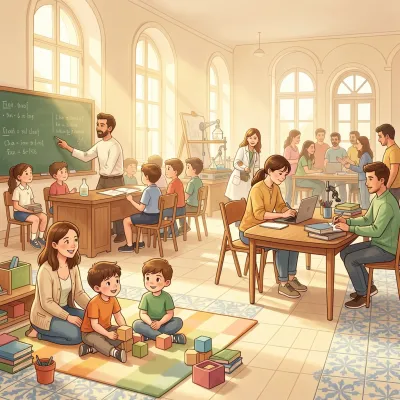
Portugal's education system is a structured, evolving entity that has transitioned from religious and authoritarian roots to a modern, democratic framework aligned with European standards. From early childhood through higher education, the system is divided into optional pre-school (ages 3-5), compulsory basic education (nine years across three cycles, ages 6-15), and compulsory secondary education (three-year cycle covering grades 10-12, ages 15-18), followed by higher education. Basic education progresses from a single-teacher model in the first cycle to specialized subject teachers in later cycles, with national examinations at the end of the ninth grade. Secondary education offers three distinct pathways: general programs (Cursos Científico-Humanísticos) for university preparation, technical/vocational programs (Cursos Profissionais) for direct workforce entry, and specialized artistic programs.
Higher education features a binary system of universities, focused on theoretical knowledge and research, and polytechnic institutes, which emphasize applied knowledge and professional training. All institutions operate under the Bologna Process with a three-cycle degree structure (Bachelor's, Master's, Doctorate). Access to public institutions is highly competitive, governed by national examinations and a numerus clausus system. Key support structures include robust quality assurance through the A3ES agency, comprehensive teacher training requiring Master's degrees for secondary educators, and strong inclusive education policies integrating students with special needs into mainstream classrooms. Technology integration, internationalization through Erasmus+ and English-taught programs, and adult education initiatives like Qualifica Centers for lifelong learning are central to the system's modern development.
Persistent challenges include ensuring equity across socio-economic and geographic divides, aligning curricula with rapid labor market changes, attracting and retaining qualified teachers, and modernizing aging infrastructure. However, the system also presents significant opportunities through digital transformation, strengthened vocational pathways, deepening international partnerships, and a commitment to lifelong learning that leverages European Union funding. Cultural values, particularly the emphasis on family and respect for authority, shape pedagogical approaches and student aspirations, while the growing diversity of classrooms drives efforts toward intercultural education and social inclusion.
Looking forward, Portuguese education is poised for continued evolution, with trends pointing toward deeper integration of artificial intelligence and personalized learning, a stronger focus on 21st-century skills like critical thinking and collaboration, and an expanded role for sustainability and global citizenship in the curriculum. The system's active participation in the European Higher Education Area and its growing international reputation position it as a dynamic contributor to a larger European educational landscape, balancing tradition with innovation to prepare students for a rapidly changing world.
What You'll Find Inside:
- A detailed overview of the Portuguese educational system, from its historical foundations through the three cycles of basic education and into secondary and higher education.
- An in-depth look at the binary higher education system, explaining the distinct roles of universities (focused on research) and polytechnic institutes (focused on applied, professional training).
- Comprehensive coverage of inclusive education policies and the support systems available for students with special educational needs across all levels of schooling.
- An analysis of how technology is integrated into Portuguese classrooms, from basic interactive whiteboards to advanced AI and VR tools in vocational and higher education.
- A comparative perspective that positions Portugal's education system within the broader European landscape, highlighting its alignment with the Bologna Process and EU quality standards.
Who's It For:
This book is ideal for international students and expatriate families considering education in Portugal, providing a complete roadmap from creches to doctoral programs. It is essential reading for educators, researchers, and policymakers seeking a comprehensive comparative analysis of a European education system that balances tradition with modern reform. Education professionals in adult education, inclusive education, and vocational training will also find detailed chapters on these specialized areas.
Table of Contents:
- Introduction
- Chapter 1: Historical Foundations of Portuguese Education
- Chapter 2: The Structure of the Portuguese Educational System
- Chapter 3: Early Childhood Education: Creches and Pre-School
- Chapter 4: Primary Education: 1º Ciclo do Ensino Básico
- Chapter 5: Second and Third Cycles of Basic Education
- Chapter 6: Secondary Education: Pathways and Specializations
- Chapter 7: Vocational and Technical Education in Portugal
- Chapter 8: Access to Higher Education: Exams and Applications
- Chapter 9: Universities in Portugal: Public and Private Institutions
- Chapter 10: Polytechnic Institutes: Applied Knowledge and Professional Training
- Chapter 11: Degree Programs and Academic Offerings
- Chapter 12: Quality Assurance and Accreditation in Portuguese Education
- Chapter 13: Teacher Training and Professional Development
- Chapter 14: Inclusive Education and Special Needs Support
- Chapter 15: The Role of Technology in Portuguese Classrooms
- Chapter 16: Internationalization of Portuguese Higher Education
- Chapter 17: Adult Education and Lifelong Learning Initiatives
- Chapter 18: Funding and Financing of the Education System
- Chapter 19: Educational Policies and Reforms
- Chapter 20: Challenges and Opportunities in Portuguese Education
- Chapter 21: The Impact of Culture and Society on Education
- Chapter 22: Student Support Services and Well-being
- Chapter 23: Research and Development in Portuguese Universities
- Chapter 24: The Future of Education in Portugal: Trends and Prospects
- Chapter 25: A Comparative Perspective: Portugal in the European Educational Landscape
Author:
Published By:
Date Published:
July 3, 2026
Type:
Nonfiction
Language:
English
Word Count:
51,657 words
Reading Time:
3 hours 37 minutes
Sample:
MixCache.com Total Access
Get unlimited access to this book + all books published by MixCache.com for $11.99/month
Subscribe to MTAOr purchase this book individually below
Order:
Buy the Education In Portugal ebook on MixCache.com:
Buy Now
Full ebook will be available immediately
- read online or download as a PDF file.
$5 account credit for all new MixCache.com accounts, usable toward any ebook purchase!*



Ratings & Reviews
Ask Questions About This Book
Have a question about the content? Ask our AI assistant!
Start by asking a question about "Education In Portugal"
Example: "Does this book mention William Shakespeare?"
Thinking...