
Browse by Category
Fiction
- Action & Adventure
- African American
- Anthologies
- Children's Fiction
- Classics
- Comics & Graphic Novels
- Coming of Age
- Contemporary
- Cultural & Regional
- Drama
- Erotica
- Fantasy
- General
- Historical Fiction
- Horror
- Humor & Satire
- Literary Fiction
- Mystery, Thriller & Suspense
- Poetry
- Religious & Inspirational
- Romance
- Science Fiction
- Short Stories
- War & Military
- Westerns
- Women's Fiction
- Young Adult
Non-Fiction
- Antiques & Collectibles
- Arts & Photography
- Biographies & Memoirs
- Business & Money
- Children's Non-Fiction
-
Computers & Technology
- Artificial Intelligence
- Computer Science
- Cybersecurity & Cryptography
- Data Science & Analytics
- Databases & Big Data
- Game Development & Design
- General
- Hardware & DIY
- Mobile App Development
- Networking & Cloud Computing
- Operating Systems
- Programming
- Robotics
- Software
- Software Engineering
- User Experience (UX) & Design
- Web Development & Design
- Cooking, Food & Wine
- Crafts, Hobbies & Home
- Education & Teaching
- Engineering
- General
- Health, Fitness & Dieting
-
History
- African History
- African History - North Africa
- African History - Sub-Saharan Africa
- American History
- American History - 20th Century
- American History - Civil War
- American History - Colonial Period
- Ancient History
- Asian History
- Asian History - China
- Asian History - India
- Asian History - Japan
- Asian History - Southeast Asia
- European History
- European History - Ancient Greece
- European History - Ancient Rome
- European History - Medieval
- European History - Modern
- European History - Renaissance
- General
- Middle Eastern History
- Military History
- Military History - Aviation
- Military History - Naval
- Social & Cultural History
- World History
- Humor & Entertainment
- Industrial Technology
- Language Learning
- Law
- LGBTQ+ Non-Fiction
- Literary Criticism
- Medical Books
- Parenting & Relationships
- Philosophy
- Politics & Social Sciences
- Reference
- Religion & Spirituality
-
Science & Math
- Agricultural Sciences
- Astronomy & Space Science
- Behavioral Sciences
- Biological Sciences
- Botany & Plant Science
- Chemistry
- Earth Sciences
- Engineering - Chemical
- Engineering - Civil
- Engineering - Electrical
- Engineering - Mechanical
- Environment
- General
- Geology
- Mathematics
- Nature & Ecology
- Oceanography
- Paleontology
- Physics
- Statistics
- Self-Help
- Sports & Outdoors
- Study Aids
- Sustainability & Green Living
- Textbooks
- Transportation
- Travel
- True Crime
- Urban Planning & Development
- Veterinary Medicine
- Writing & Publishing
Jump to Section
MixCache.com Total Access
Unlimited reading and audiobooks for every book published by MixCache.com.
Included titles carry the MTA badge.
Learn more →
Voices from the Borderlands
MTA
Nationality Policies, Deportations, and Identity in the Soviet Periphery
About this book:
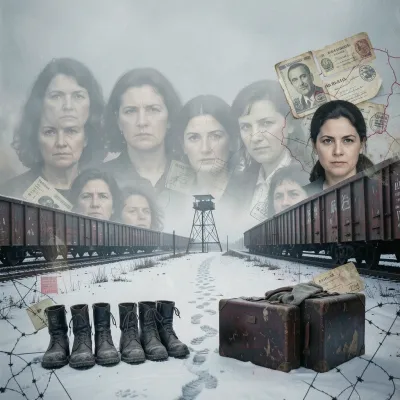
"Voices from the Borderlands" delves into the intricate and often brutal implementation of Soviet nationality policies across its diverse peripheries, specifically focusing on Ukraine, the Baltic States, the Caucasus, and Central Asia. The book argues that these regions were not passive recipients of Moscow's directives but dynamic arenas where state projects, such as language reforms, cultural engineering, and mass deportations, collided with local realities, histories, and communities. It highlights how the Soviet state employed deportation not merely as repression, but as a calculated form of statecraft to reorder space, loyalty, and memory, particularly evident in the mass removals of groups like the Crimean Tatars, Chechens–Ingush, and Volga Germans.
The narrative traces the evolution of Soviet nationality policy from the early revolutionary experimentation and *korenizatsiya* (indigenization) in the 1920s, which initially promoted national cultures and languages, to the Stalinist consolidation, which saw a shift towards Russification and the systematic use of deportations. The book meticulously reconstructs the legal, logistical, and bureaucratic machinery behind these population transfers, revealing how violence and administration intertwined to reshape the human geography of these borderlands. Concurrently, it explores how language policies—from script reforms in Central Asia to the regulation of Ukrainian and Russian in schools—became powerful instruments of governance, defining who could access education, employment, and public life.
A central theme is the agency of local communities and individuals who, despite immense pressure, resisted, adapted, and sometimes collaborated with Soviet rule. The book illustrates how people navigated shifting ideological lines, preserving cultural autonomy and sustaining traditions through quiet acts of defiance, coded expressions, and the robust transmission of oral histories and family lore. It examines the profound and lasting impact of these policies on family structures, gender roles, and the socialization of children, many of whom grew up with a "double consciousness" balancing official narratives with private memories of injustice.
Ultimately, "Voices from the Borderlands" extends its analysis beyond the Soviet collapse, exploring the complex legacies of nationality engineering in the post-1991 era. It scrutinizes the challenges of return and restitution for deported peoples, the emergence of new nationhoods, and the enduring "memory politics" that continue to shape contemporary borders, citizenship laws, and interethnic relations. The book concludes that the Soviet periphery, far from being a simple extension of Moscow's will, was a vital, contested space where identities were continuously made and remade, leaving an indelible mark on the region's history and its ongoing struggles for belonging and justice.
What You'll Find Inside:
- Deportations analyzed as systematic statecraft with legal frameworks, logistical planning, and bureaucratic secrecy rather than mere repression
- Language policy examined as a governance tool tracing shifts from korenizatsiya to Russification and its impact on education, media, and identity
- Local agency highlighted through everyday strategies of accommodation, evasion, and quiet resistance that shaped policy outcomes
- Comparative analysis across Ukraine, the Baltics, Caucasus, and Central Asia revealing common mechanisms and regional specificities in Soviet nationality policy
- Exploration of long-term legacies affecting contemporary borders, memory politics, citizenship laws, and post-Soviet nationhood projects
Who's It For:
This book is essential for scholars and graduate students of Soviet and post-Soviet history, nationalism studies, and borderlands research. It will particularly benefit those interested in the mechanics of state-driven demographic engineering, language policy as governance, and the enduring impact of historical trauma on contemporary identity politics. Researchers working with archival sources, oral histories, or comparative regional studies will find its methodological approach valuable.
Table of Contents:
- Introduction
- Chapter 1 Mapping the Soviet Periphery: Concepts and Methods
- Chapter 2 The Architecture of Nationality Policy, 1917–1936
- Chapter 3 From Korenizatsiya to Russification: Language as Governance
- Chapter 4 Deportation as Statecraft: Laws, Logistics, and Secrecy
- Chapter 5 Ukraine I: Borderlands of Famine, War, and Reassembly
- Chapter 6 Ukraine II: Language Planning, Schools, and Media
- Chapter 7 The Baltic States I: Annexation and Early Purges
- Chapter 8 The Baltic States II: Cultural Engineering and Everyday Life
- Chapter 9 The Caucasus I: Mountains, Minorities, and Micro-Republics
- Chapter 10 The Caucasus II: War, Deportation, and Return
- Chapter 11 Central Asia I: Sedentarization, Collectivization, and Nation-Making
- Chapter 12 Central Asia II: Script Reforms and the Politics of Literacy
- Chapter 13 Crimean Tatars: A Nation in Exile
- Chapter 14 Volga Germans and the Disappearance of Autonomy
- Chapter 15 Chechens–Ingush: Memory, Resistance, and Rehabilitation
- Chapter 16 Greeks, Koreans, and Meskhetians: Lesser‑Known Diasporas
- Chapter 17 Border Policing and Passportization
- Chapter 18 Churches, Mosques, and Synagogues: Faith under Nationality Policy
- Chapter 19 Cultural Producers: Writers, Filmmakers, and Folklorists
- Chapter 20 Children of the Deportations: Family, Gender, and Socialization
- Chapter 21 Everyday Strategies: Accommodation, Evasion, and Quiet Resistance
- Chapter 22 The Late Soviet Turn: Sovereignty within the Union
- Chapter 23 Perestroika and the Reopening of National Questions
- Chapter 24 After 1991: Return, Restitution, and New Nationhoods
- Chapter 25 Legacies and Lessons: Memory Politics and Contemporary Borders
Author:
Published By:
Date Published:
May 2, 2026
Type:
Nonfiction
Language:
English
Word Count:
61,077 words
Reading Time:
4 hours 17 minutes
Sample:
MixCache.com Total Access
Get unlimited access to this book + all books published by MixCache.com for $11.99/month
Subscribe to MTAOr purchase this book individually below
Order:
Buy the Voices from the Borderlands ebook on MixCache.com:
Buy Now
Full ebook will be available immediately
- read online or download as a PDF file.
$5 account credit for all new MixCache.com accounts, usable toward any ebook purchase!*
 Includes Audiobook


Ratings & Reviews
Ask Questions About This Book
Have a question about the content? Ask our AI assistant!
Start by asking a question about "Voices from the Borderlands"
Example: "Does this book mention William Shakespeare?"
Thinking...