
Browse by Category
Fiction
- Action & Adventure
- African American
- Anthologies
- Children's Fiction
- Classics
- Comics & Graphic Novels
- Coming of Age
- Contemporary
- Cultural & Regional
- Drama
- Erotica
- Fantasy
- General
- Historical Fiction
- Horror
- Humor & Satire
- Literary Fiction
- Mystery, Thriller & Suspense
- Poetry
- Religious & Inspirational
- Romance
- Science Fiction
- Short Stories
- War & Military
- Westerns
- Women's Fiction
- Young Adult
Non-Fiction
- Antiques & Collectibles
- Arts & Photography
- Biographies & Memoirs
- Business & Money
- Children's Non-Fiction
-
Computers & Technology
- Artificial Intelligence
- Computer Science
- Cybersecurity & Cryptography
- Data Science & Analytics
- Databases & Big Data
- Game Development & Design
- General
- Hardware & DIY
- Mobile App Development
- Networking & Cloud Computing
- Operating Systems
- Programming
- Robotics
- Software
- Software Engineering
- User Experience (UX) & Design
- Web Development & Design
- Cooking, Food & Wine
- Crafts, Hobbies & Home
- Education & Teaching
- Engineering
- General
- Health, Fitness & Dieting
-
History
- African History
- African History - North Africa
- African History - Sub-Saharan Africa
- American History
- American History - 20th Century
- American History - Civil War
- American History - Colonial Period
- Ancient History
- Asian History
- Asian History - China
- Asian History - India
- Asian History - Japan
- Asian History - Southeast Asia
- European History
- European History - Ancient Greece
- European History - Ancient Rome
- European History - Medieval
- European History - Modern
- European History - Renaissance
- General
- Middle Eastern History
- Military History
- Military History - Aviation
- Military History - Naval
- Social & Cultural History
- World History
- Humor & Entertainment
- Industrial Technology
- Language Learning
- Law
- LGBTQ+ Non-Fiction
- Literary Criticism
- Medical Books
- Parenting & Relationships
- Philosophy
- Politics & Social Sciences
- Reference
- Religion & Spirituality
-
Science & Math
- Agricultural Sciences
- Astronomy & Space Science
- Behavioral Sciences
- Biological Sciences
- Botany & Plant Science
- Chemistry
- Earth Sciences
- Engineering - Chemical
- Engineering - Civil
- Engineering - Electrical
- Engineering - Mechanical
- Environment
- General
- Geology
- Mathematics
- Nature & Ecology
- Oceanography
- Paleontology
- Physics
- Statistics
- Self-Help
- Sports & Outdoors
- Study Aids
- Sustainability & Green Living
- Textbooks
- Transportation
- Travel
- True Crime
- Urban Planning & Development
- Veterinary Medicine
- Writing & Publishing
Jump to Section
MixCache.com Total Access
Unlimited reading and audiobooks for every book published by MixCache.com.
Included titles carry the MTA badge.
Learn more →A History of Brunei
About this book:
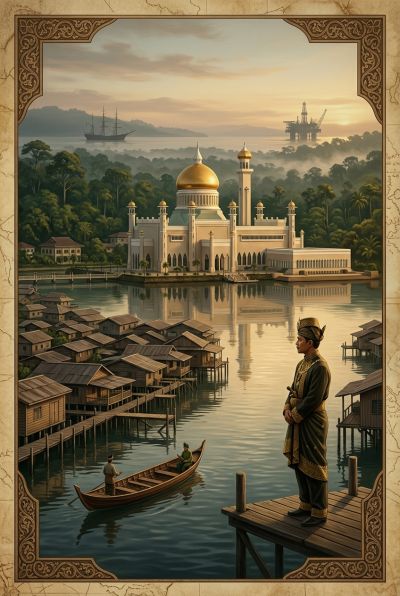
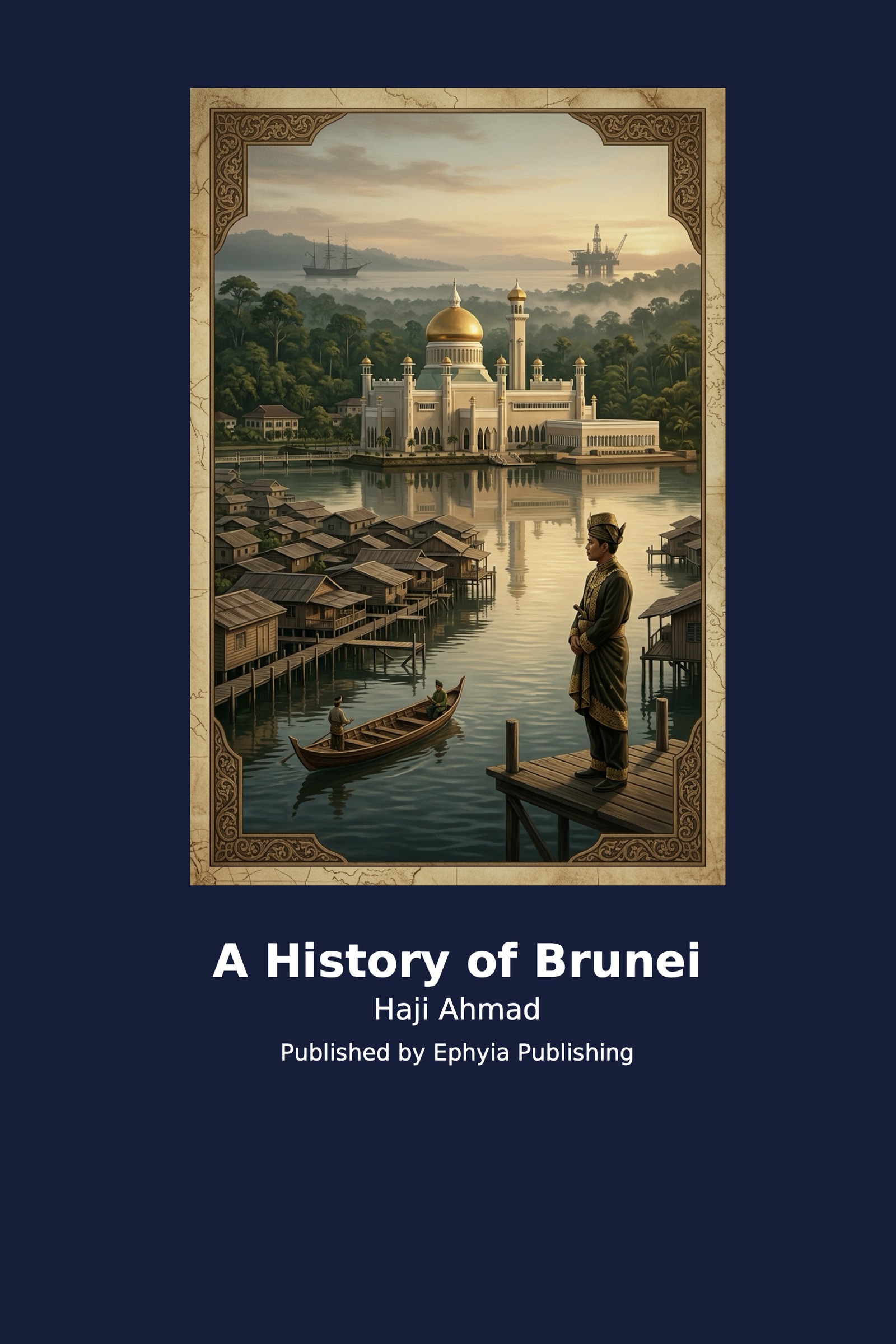
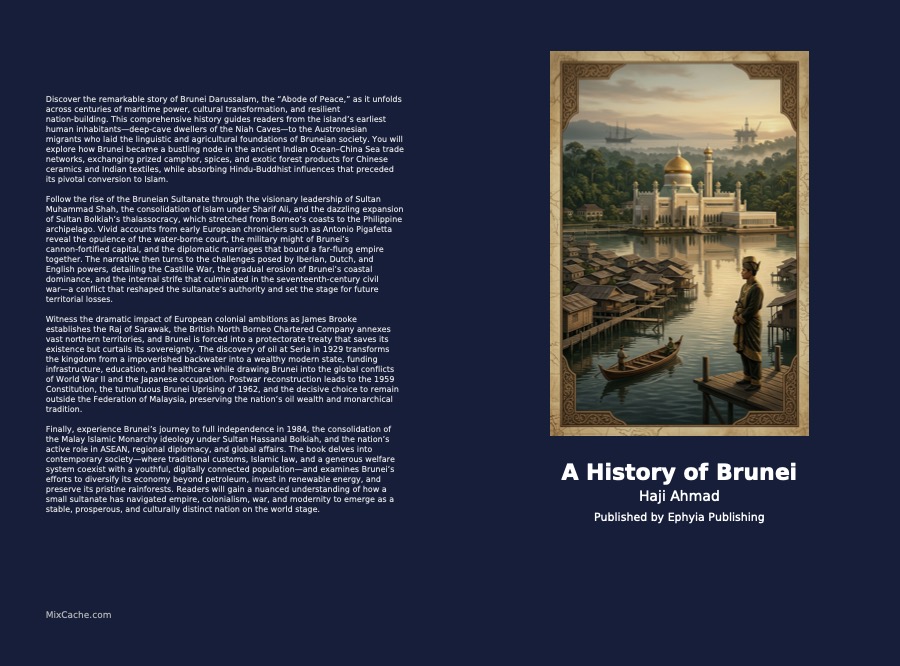
Discover the remarkable story of Brunei Darussalam, the “Abode of Peace,” as it unfolds across centuries of maritime power, cultural transformation, and resilient nation‑building. This comprehensive history guides readers from the island’s earliest human inhabitants—deep‑cave dwellers of the Niah Caves—to the Austronesian migrants who laid the linguistic and agricultural foundations of Bruneian society. You will explore how Brunei became a bustling node in the ancient Indian Ocean–China Sea trade networks, exchanging prized camphor, spices, and exotic forest products for Chinese ceramics and Indian textiles, while absorbing Hindu‑Buddhist influences that preceded its pivotal conversion to Islam.
Follow the rise of the Bruneian Sultanate through the visionary leadership of Sultan Muhammad Shah, the consolidation of Islam under Sharif Ali, and the dazzling expansion of Sultan Bolkiah’s thalassocracy, which stretched from Borneo’s coasts to the Philippine archipelago. Vivid accounts from early European chroniclers such as Antonio Pigafetta reveal the opulence of the water‑borne court, the military might of Brunei’s cannon‑fortified capital, and the diplomatic marriages that bound a far‑flung empire together. The narrative then turns to the challenges posed by Iberian, Dutch, and English powers, detailing the Castille War, the gradual erosion of Brunei’s coastal dominance, and the internal strife that culminated in the seventeenth‑century civil war—a conflict that reshaped the sultanate’s authority and set the stage for future territorial losses.
Witness the dramatic impact of European colonial ambitions as James Brooke establishes the Raj of Sarawak, the British North Borneo Chartered Company annexes vast northern territories, and Brunei is forced into a protectorate treaty that saves its existence but curtails its sovereignty. The discovery of oil at Seria in 1929 transforms the kingdom from a impoverished backwater into a wealthy modern state, funding infrastructure, education, and healthcare while drawing Brunei into the global conflicts of World War II and the Japanese occupation. Postwar reconstruction leads to the 1959 Constitution, the tumultuous Brunei Uprising of 1962, and the decisive choice to remain outside the Federation of Malaysia, preserving the nation’s oil wealth and monarchical tradition.
Finally, experience Brunei’s journey to full independence in 1984, the consolidation of the Malay Islamic Monarchy ideology under Sultan Hassanal Bolkiah, and the nation’s active role in ASEAN, regional diplomacy, and global affairs. The book delves into contemporary society—where traditional customs, Islamic law, and a generous welfare system coexist with a youthful, digitally connected population—and examines Brunei’s efforts to diversify its economy beyond petroleum, invest in renewable energy, and preserve its pristine rainforests. Readers will gain a nuanced understanding of how a small sultanate has navigated empire, colonialism, war, and modernity to emerge as a stable, prosperous, and culturally distinct nation on the world stage.
What You'll Find Inside:
- The Austronesian settlement and early trade links that laid Brunei's cultural and economic foundations.
- The conversion to Islam in the 14th century and the establishment of a Malay Islamic Sultanate that shaped Bruneian identity.
- Sultan Bolkiah's 15th‑16th century golden age, when Brunei became a maritime empire controlling Borneo, the Philippines, and key trade routes.
- The impact of European powers—from the Castille War to Dutch, English, and British protectorate policies—that reduced Brunei to a small state and eventually led to oil‑driven modernization.
- Brunei's journey from oil wealth discovery, through wartime occupation and political turmoil, to peaceful independence in 1984 and its ongoing efforts to diversify the economy while preserving Melayu Islam Beraja.
Who's It For:
This book is ideal for university students, researchers, and general readers interested in Southeast Asian history, colonialism, and nation‑building, as well as policymakers and professionals seeking insight into Brunei’s unique Malay Islamic Monarchy model and its modern development challenges.
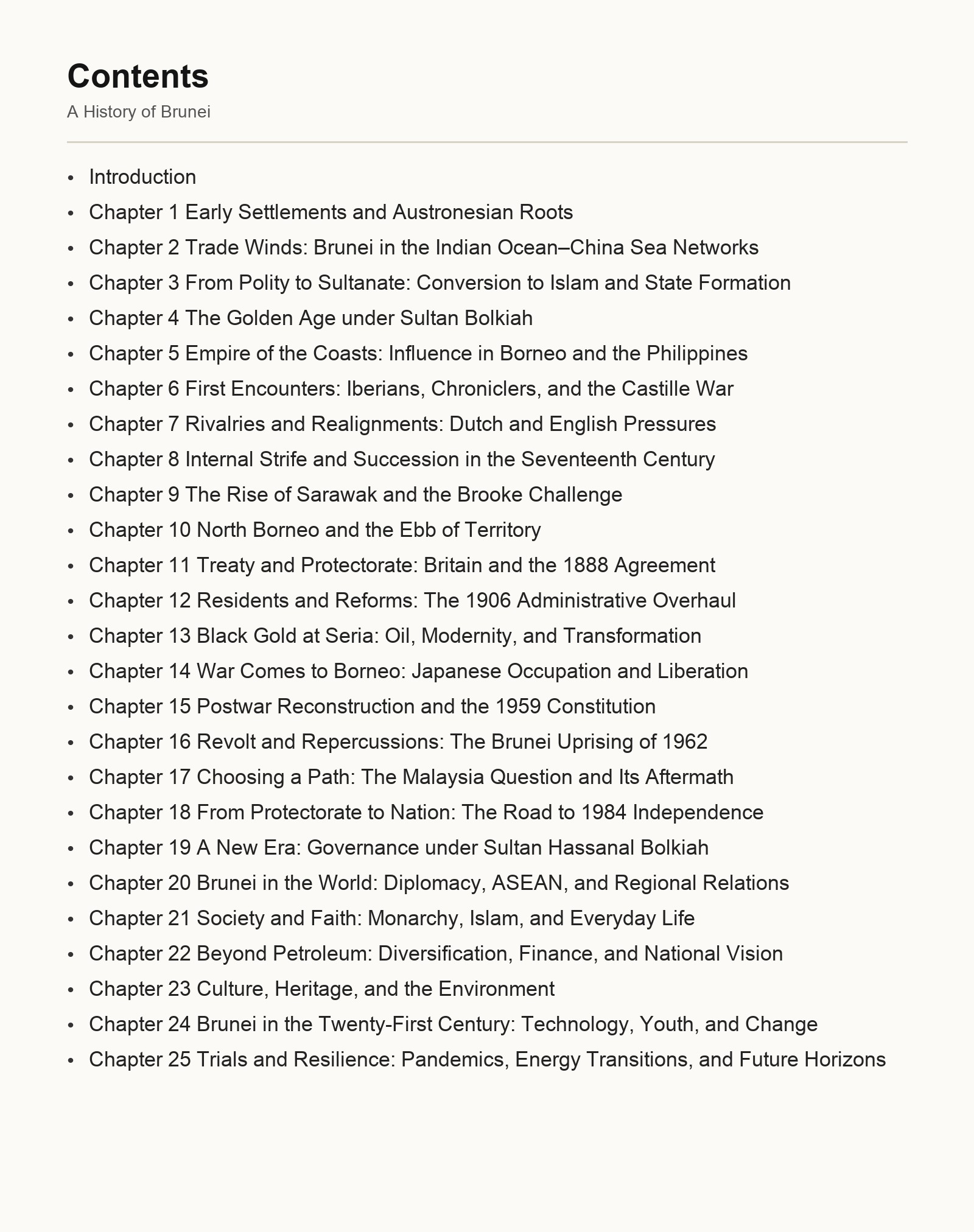
Table of Contents:
- Introduction
- Chapter 1 Early Settlements and Austronesian Roots
- Chapter 2 Trade Winds: Brunei in the Indian Ocean–China Sea Networks
- Chapter 3 From Polity to Sultanate: Conversion to Islam and State Formation
- Chapter 4 The Golden Age under Sultan Bolkiah
- Chapter 5 Empire of the Coasts: Influence in Borneo and the Philippines
- Chapter 6 First Encounters: Iberians, Chroniclers, and the Castille War
- Chapter 7 Rivalries and Realignments: Dutch and English Pressures
- Chapter 8 Internal Strife and Succession in the Seventeenth Century
- Chapter 9 The Rise of Sarawak and the Brooke Challenge
- Chapter 10 North Borneo and the Ebb of Territory
- Chapter 11 Treaty and Protectorate: Britain and the 1888 Agreement
- Chapter 12 Residents and Reforms: The 1906 Administrative Overhaul
- Chapter 13 Black Gold at Seria: Oil, Modernity, and Transformation
- Chapter 14 War Comes to Borneo: Japanese Occupation and Liberation
- Chapter 15 Postwar Reconstruction and the 1959 Constitution
- Chapter 16 Revolt and Repercussions: The Brunei Uprising of 1962
- Chapter 17 Choosing a Path: The Malaysia Question and Its Aftermath
- Chapter 18 From Protectorate to Nation: The Road to 1984 Independence
- Chapter 19 A New Era: Governance under Sultan Hassanal Bolkiah
- Chapter 20 Brunei in the World: Diplomacy, ASEAN, and Regional Relations
- Chapter 21 Society and Faith: Monarchy, Islam, and Everyday Life
- Chapter 22 Beyond Petroleum: Diversification, Finance, and National Vision
- Chapter 23 Culture, Heritage, and the Environment
- Chapter 24 Brunei in the Twenty-First Century: Technology, Youth, and Change
- Chapter 25 Trials and Resilience: Pandemics, Energy Transitions, and Future Horizons
Author:
Published By:
Date Published:
May 18, 2026
Type:
Nonfiction
Language:
English
Also Available In:
French, Italian, Dutch, Portuguese
Word Count:
40,819 words
Reading Time:
2 hours 52 minutes
Sample:
Order:
Buy the A History of Brunei ebook on MixCache.com:
Buy NowThe full ebook will be available immediately to read instantly on any device.
$5 account credit for all new MixCache.com accounts, usable toward any ebook purchase!*






Ratings & Reviews
Ask Questions About This Book
Have a question about the content? Ask our AI assistant!
Start by asking a question about "A History of Brunei"
Example: "Does this book mention William Shakespeare?"
Thinking...