
Browse by Category
Fiction
- Action & Adventure
- African American
- Anthologies
- Children's Fiction
- Classics
- Comics & Graphic Novels
- Coming of Age
- Contemporary
- Cultural & Regional
- Drama
- Erotica
- Fantasy
- General
- Historical Fiction
- Horror
- Humor & Satire
- Literary Fiction
- Mystery, Thriller & Suspense
- Poetry
- Religious & Inspirational
- Romance
- Science Fiction
- Short Stories
- War & Military
- Westerns
- Women's Fiction
- Young Adult
Non-Fiction
- Antiques & Collectibles
- Arts & Photography
- Biographies & Memoirs
- Business & Money
- Children's Non-Fiction
-
Computers & Technology
- Artificial Intelligence
- Computer Science
- Cybersecurity & Cryptography
- Data Science & Analytics
- Databases & Big Data
- Game Development & Design
- General
- Hardware & DIY
- Mobile App Development
- Networking & Cloud Computing
- Operating Systems
- Programming
- Robotics
- Software
- Software Engineering
- User Experience (UX) & Design
- Web Development & Design
- Cooking, Food & Wine
- Crafts, Hobbies & Home
- Education & Teaching
- Engineering
- General
- Health, Fitness & Dieting
-
History
- African History
- African History - North Africa
- African History - Sub-Saharan Africa
- American History
- American History - 20th Century
- American History - Civil War
- American History - Colonial Period
- Ancient History
- Asian History
- Asian History - China
- Asian History - India
- Asian History - Japan
- Asian History - Southeast Asia
- European History
- European History - Ancient Greece
- European History - Ancient Rome
- European History - Medieval
- European History - Modern
- European History - Renaissance
- General
- Middle Eastern History
- Military History
- Military History - Aviation
- Military History - Naval
- Social & Cultural History
- World History
- Humor & Entertainment
- Industrial Technology
- Language Learning
- Law
- LGBTQ+ Non-Fiction
- Literary Criticism
- Medical Books
- Parenting & Relationships
- Philosophy
- Politics & Social Sciences
- Reference
- Religion & Spirituality
-
Science & Math
- Agricultural Sciences
- Astronomy & Space Science
- Behavioral Sciences
- Biological Sciences
- Botany & Plant Science
- Chemistry
- Earth Sciences
- Engineering - Chemical
- Engineering - Civil
- Engineering - Electrical
- Engineering - Mechanical
- Environment
- General
- Geology
- Mathematics
- Nature & Ecology
- Oceanography
- Paleontology
- Physics
- Statistics
- Self-Help
- Sports & Outdoors
- Study Aids
- Sustainability & Green Living
- Textbooks
- Transportation
- Travel
- True Crime
- Urban Planning & Development
- Veterinary Medicine
- Writing & Publishing
Jump to Section
MixCache.com Total Access
Unlimited reading and audiobooks for every book published by MixCache.com.
Included titles carry the MTA badge.
Learn more →
The Media Battlefield: Social Platforms, Propaganda, and Narrative Control in War
MTA
Explores how governments, rebels, and activists use media and social networks to shape perceptions and mobilize support
About this book:

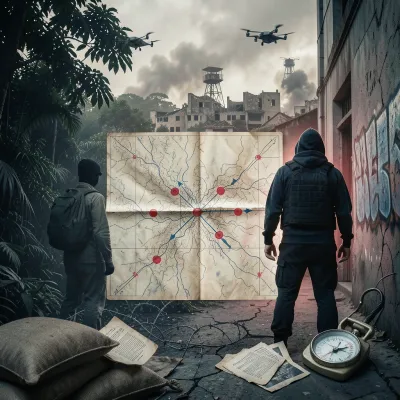
*The Media Battlefield* explores the profound shift in wartime communication from centralized, state-gated broadcasting to the decentralized, algorithmic "feeds" of the social media era. The book argues that modern conflict is no longer fought solely on physical terrain but on a digital front where perception, credibility, and attention are the decisive assets. By bridging media studies and conflict analysis, the text illustrates how governments, rebel groups, and activists utilize platform architectures to mobilize support, radicalize recruits, and demoralize adversaries through high-speed storytelling and visual spectacle.
The book provides a technical and psychological deep dive into the tools of digital warfare, covering the rise of Open-Source Intelligence (OSINT), the weaponization of memes and humor, and the emergence of synthetic media like deepfakes and AI-generated voices. It examines how platform algorithms—optimized for engagement rather than accuracy—inadvertently amplify polarizing, emotionally charged narratives, creating echo chambers that entrench bias. Detailed chapters analyze the "industrialized" side of propaganda, including state-sponsored troll farms, bot networks, and coordinated inauthentic behavior designed to manufacture a false sense of consensus or drown out dissenting voices.
Beyond the tactics of belligerents, the text scrutinizes the role of "middlemen" in conflict: social media platforms, journalists, and humanitarian organizations. It highlights the ethical dilemmas faced by creators who must balance the imperative to bear witness with the risk of exploiting suffering or spreading misinformation. The book also addresses the geopolitical "splinternet," where censorship, internet shutdowns, and information blockades are used by authoritarian regimes to isolate populations and consolidate narrative control. Through case studies from the Global South and the Middle East, it demonstrates that the media battlefield is a transnational arena where local grievances are instantly globalized by diaspora networks and advocacy groups.
The final section looks toward the future of "narrative warfare," warning that the integration of Artificial Intelligence and autonomous systems will lead to hyper-personalized, machine-generated propaganda that is virtually indistinguishable from human reality. To counter this, the book advocates for a multi-layered defense centered on societal resilience. It emphasizes the necessity of media literacy, robust verification playbooks, and international policy frameworks to safeguard the integrity of information. Ultimately, the book concludes that while digital tools have empowered witnesses to document atrocities, they have also created a volatile environment where the struggle for truth requires constant vigilance and a fundamental re-evaluation of how we govern wartime speech.
What You'll Find Inside:
- How social media platforms have transformed warfare into a continuous battle for attention, where algorithms prioritize engaging—often emotional or sensational—content over accuracy, reshaping how conflicts are perceived and fought.
- The role of synthetic media (deepfakes, AI-generated content), memes, and coordinated inauthentic behavior (bots, troll farms) in enabling sophisticated deception, manipulation, and psychological operations at unprecedented speed and scale.
- The empowering yet challenging impact of smartphones, livestreams, and open-source intelligence (OSINT) in democratizing war documentation while creating verification dilemmas and ethical tensions for journalists and NGOs.
- The immense power of platforms in moderating and amplifying wartime narratives, coupled with their struggles for transparency, consistency, and accountability amid government pressures and conflicting stakeholder demands.
- Strategies for building resilience through media literacy, prebunking, trusted messenger networks, and strategic communication to counter disinformation while safeguarding democratic discourse and humanitarian efforts in the digital age.
Who's It For:
This book is essential for journalists, media professionals, and NGO workers operating in or reporting on conflict zones who need practical verification frameworks and ethical guidance. It also serves policymakers, platform regulators, and scholars in media studies, political science, and international security seeking to understand the dynamics of digital information warfare. Additionally, activists, educators, and concerned citizens interested in media literacy, countering disinformation, and building societal resilience will find actionable insights and strategies.
Table of Contents:
- Introduction
- Chapter 1 The New Battlespace: From Broadcasters to Feeds
- Chapter 2 Information Ecologies in Conflict
- Chapter 3 Propaganda’s Long Arc and Its Digital Turn
- Chapter 4 How Algorithms Prioritize War
- Chapter 5 Memes, Humor, and the Weaponization of Virality
- Chapter 6 Digital Storytelling and the Struggle for Empathy
- Chapter 7 Deepfakes, Synthetic Voices, and Visual Deception
- Chapter 8 Bots, Troll Farms, and Coordinated Inauthentic Behavior
- Chapter 9 Moderation, Amplification, and Platform Power
- Chapter 10 Diasporas, Exiles, and Transnational Advocacy Networks
- Chapter 11 Conflict Case Studies from the Global South
- Chapter 12 Smartphones, Livestreams, and the Rise of OSINT
- Chapter 13 Verification Playbooks for Newsrooms and NGOs
- Chapter 14 PsyOps, Rumors, and the Battle for Morale
- Chapter 15 Recruitment, Radicalization, and Online Gateways
- Chapter 16 Foreign Influence and Proxy Narratives
- Chapter 17 Censorship, Internet Shutdowns, and Information Blockades
- Chapter 18 Encrypted Channels, Ephemeral Media, and Closed Worlds
- Chapter 19 From Frontline to Timeline: Feedback Loops in Reporting
- Chapter 20 Humanitarian Narratives and the Politics of Suffering
- Chapter 21 Ethics Under Fire: Dilemmas for Journalists and Creators
- Chapter 22 Law, Policy, and the Governance of Wartime Speech
- Chapter 23 Counter-Disinformation and Strategic Communication
- Chapter 24 Building Societal Resilience and Media Literacy
- Chapter 25 The Next War: AI, Autonomy, and Narrative Futures
Author:
Published By:
Date Published:
March 30, 2026
Type:
Nonfiction
Language:
English
Word Count:
43,961 words
Reading Time:
3 hours 5 minutes
Sample:
MixCache.com Total Access
Get unlimited access to this book + all books published by MixCache.com for $11.99/month
Subscribe to MTAOr purchase this book individually below
Order:
Buy the The Media Battlefield: Social Platforms, Propaganda, and Narrative Control in War ebook on MixCache.com:
Buy Now
Full ebook will be available immediately
- read online or download as a PDF file.
$5 account credit for all new MixCache.com accounts, usable toward any ebook purchase!*




Ratings & Reviews
Ask Questions About This Book
Have a question about the content? Ask our AI assistant!
Start by asking a question about "The Media Battlefield: Social Platforms, Propaganda, and Narrative Control in War"
Example: "Does this book mention William Shakespeare?"
Thinking...