Browse by Category
Fiction
- Action & Adventure
- African American
- Anthologies
- Children's Fiction
- Classics
- Comics & Graphic Novels
- Coming of Age
- Contemporary
- Cultural & Regional
- Drama
- Erotica
- Family Life
- Fantasy
- General
- Historical Fiction
- Horror
- Humor & Satire
- Literary Fiction
- Mystery, Thriller & Suspense
- Poetry
- Religious & Inspirational
- Romance
- Science Fiction
- Short Stories
- War & Military
- Westerns
- Women's Fiction
- Young Adult
Non-Fiction
- Antiques & Collectibles
- Arts & Photography
- Biographies & Memoirs
- Business & Money
- Children's Non-Fiction
-
Computers & Technology
- Artificial Intelligence
- Computer Science
- Cybersecurity & Cryptography
- Data Science & Analytics
- Databases & Big Data
- Game Development & Design
- General
- Hardware & DIY
- Mobile App Development
- Networking & Cloud Computing
- Operating Systems
- Programming
- Robotics
- Software
- Software Engineering
- User Experience (UX) & Design
- Web Development & Design
- Cooking, Food & Wine
- Crafts, Hobbies & Home
- Education & Teaching
- Engineering
- General
- Health, Fitness & Dieting
-
History
- African History
- African History - North Africa
- African History - Sub-Saharan Africa
- American History
- American History - 20th Century
- American History - Civil War
- American History - Colonial Period
- Ancient History
- Asian History
- Asian History - China
- Asian History - India
- Asian History - Japan
- Asian History - Southeast Asia
- European History
- European History - Ancient Greece
- European History - Ancient Rome
- European History - Medieval
- European History - Modern
- European History - Renaissance
- General
- Middle Eastern History
- Military History
- Military History - Aviation
- Military History - Naval
- Social & Cultural History
- World History
- Humor & Entertainment
- Industrial Technology
- Language Learning
- Law
- LGBTQ+ Non-Fiction
- Literary Criticism
- Medical Books
- Parenting & Relationships
- Philosophy
- Politics & Social Sciences
- Reference
- Religion & Spirituality
-
Science & Math
- Agricultural Sciences
- Astronomy & Space Science
- Behavioral Sciences
- Biological Sciences
- Botany & Plant Science
- Chemistry
- Earth Sciences
- Engineering - Chemical
- Engineering - Civil
- Engineering - Electrical
- Engineering - Mechanical
- Environment
- General
- Geology
- Mathematics
- Nature & Ecology
- Oceanography
- Paleontology
- Physics
- Statistics
- Self-Help
- Sports & Outdoors
- Study Aids
- Sustainability & Green Living
- Textbooks
- Transportation
- Travel
- True Crime
- Urban Planning & Development
- Veterinary Medicine
- Writing & Publishing
Jump to Section
MixCache.com Total Access
Unlimited reading and audiobooks for every book published by MixCache.com.
Included titles carry the MTA badge.
Learn more →
Ireland
MTA
A History
About this book:
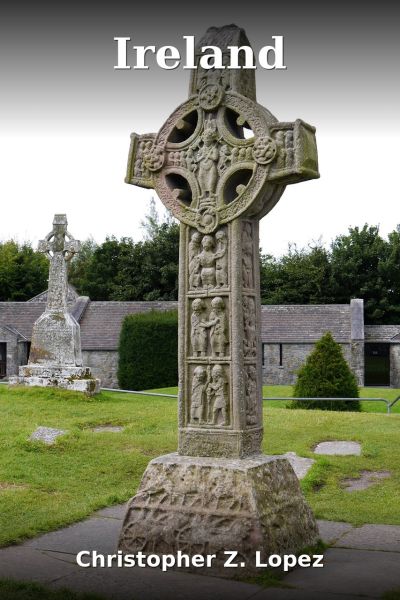
Ireland's history begins with its ancient Mesolithic settlers and the Neolithic monument builders of Newgrange, progressing through the Bronze and Iron Ages to the arrival of Christianity in the 5th century. Saint Patrick’s mission catalyzed a distinctive monastic "Golden Age" of scholarship and art, exemplified by the Book of Kells, and saw Irish missionaries like Columba and Columbanus re-evangelize Europe. This era ended with the disruptive Viking raids of the 8th century, which eventually led to the founding of Ireland's first towns—Dublin, Waterford, and Limerick—and a hybrid Hiberno-Norse culture. The Viking presence was curtailed by the rise of Brian Boru, culminating in the Battle of Clontarf (1014), but the island's political fragmentation left it vulnerable to the Norman invasion of 1169. The Normans established a feudal Lordship centered on the Pale, yet over centuries many Anglo-Norman lords became "more Irish than the Irish," adopting Gaelic customs and law, while a Gaelic resurgence reclaimed vast territories.
The Tudor conquest of the 16th century marked a decisive shift toward centralized English control, driven by Reformation politics and strategic fears of Spanish intervention. Henry VIII's break with Rome and the subsequent "Surrender and Regrant" policy attempted to anglicize the nobility, while Elizabeth I's wars—culminating in the Nine Years' War and the Flight of the Earls (1607)—shattered Gaelic Ulster. This paved the way for the systematic Plantation of Ulster, importing Protestant settlers from England and Scotland and creating a deep sectarian and ethnic divide. The 17th century brought cataclysmic violence: the 1641 Rebellion, the brutal Cromwellian conquest with its massive land confiscations ("To hell or to Connacht"), and the Williamite War, which secured Protestant dominance. The ensuing Penal Laws institutionalized Catholic disenfranchisement, creating a Protestant Ascendancy that monopolized land and power throughout the 18th century, even as a "Patriot" movement led by Henry Grattan briefly won legislative independence for the Irish Parliament in 1782.
The 1798 Rebellion, inspired by French revolutionary ideals, was crushed with savage reprisals, prompting Britain to pass the Act of Union (1801), abolishing the Irish Parliament. The 19th century was defined by Daniel O’Connell’s campaigns for Catholic Emancipation (achieved 1829) and Repeal, and the catastrophic Great Famine (1845–52), which killed over a million and forced millions more to emigrate, decimating the Irish language and radicalizing nationalism. The post-Famine era saw the rise of Fenian republicanism and the Land War, led by Michael Davitt and Charles Stewart Parnell, which forced landmark land reforms transferring ownership to tenants. Parnell’s Home Rule party brought self-government to the brink of passage, but fierce Ulster Unionist resistance—armed via the UVF—and the outbreak of World War I delayed implementation. The 1916 Easter Rising, though initially a military failure, transformed public opinion through the execution of its leaders, leading to Sinn Féin’s 1918 electoral landslide, the declaration of Dáil Éireann, and the War of Independence (1919–21).
The Anglo-Irish Treaty (1921) established the Irish Free State as a British dominion but partitioned the island, retaining six Ulster counties in the UK. The Treaty split nationalists, triggering a bitter Civil War (1922–23) that killed former comrades like Michael Collins and Arthur Griffith. The new state, governed first by Cumann na nGaedheal and then by Éamon de Valera’s Fianna Fáil, gradually dismantled the Treaty’s ties to Britain, culminating in the 1937 Constitution (*Bunreacht na hÉireann*) and the 1938 return of the Treaty Ports. Ireland remained neutral ("The Emergency") during World War II, asserting sovereignty at significant economic cost. The post-war decades were marked by stagnation, protectionism, and mass emigration until the late 1950s, when T.K. Whitaker and Seán Lemass pivoted toward free trade and foreign investment. In Northern Ireland, systemic discrimination against Catholics sparked the Civil Rights Movement in the late 1960s, descending into the three-decade conflict known as The Troubles, involving the IRA, loyalist paramilitaries, and the British Army.
The conflict ended with the 1998 Good Friday Agreement, establishing power-sharing and cross-border institutions. Simultaneously, the Republic experienced the "Celtic Tiger" boom (mid-1990s–2007), fueled by EU membership, low corporate tax, and a skilled workforce, transforming Ireland into a wealthy, modern, multicultural society. The 2008 global financial crisis burst a massive property bubble, necessitating a humiliating EU/IMF bailout and harsh austerity. Recovery followed, driven by multinational exports, but left a legacy of housing shortages and inequality. Socially, Ireland underwent a revolution: the Catholic Church's authority collapsed amid abuse scandals, leading to landmark referendums legalizing same-sex marriage (2015) and abortion (2018). Today, Ireland navigates the complexities of Brexit, the ongoing quest for a united Ireland by consent, and the challenges of a globalized economy, standing as a resilient nation that has repeatedly reinvented itself while confronting the shadows of its past.
What You'll Find Inside:
- A sweeping narrative of Ireland from ancient megalithic tombs and Mesolithic hunter-gatherers through the Celtic Iron Age and the arrival of Christianity.
- Detailed coverage of medieval and early modern upheavals, including Viking and Norman invasions, Tudor plantations, the Flight of the Earls, Cromwellian conquest, and the Penal Laws.
- The transformative 19th and 20th centuries: the Great Famine, Home Rule, the Easter Rising, War of Independence, partition, and the Irish Civil War.
- The Troubles in Northern Ireland, the peace process culminating in the Good Friday Agreement, and the economic rollercoaster of the Celtic Tiger, recession, and recovery.
- Modern Ireland’s social and political evolution, including EU membership, Brexit challenges, and landmark referendums on marriage equality and abortion.
Who's It For:
This book is ideal for history enthusiasts, students, and members of the Irish diaspora seeking a comprehensive, chronological account of Ireland’s complex past. Readers interested in European history, nationalist movements, and post-colonial state-building will benefit from its detailed exploration of Ireland’s struggle for independence, sectarian conflict, and modern transformation. It serves both general readers curious about Irish heritage and those looking for a solid foundation in the political, cultural, and economic forces that shaped the island from prehistory to the present.
Table of Contents:
- Introduction
- Chapter 1 Ancient Origins and Early Peoples
- Chapter 2 The Coming of Christianity and the Golden Age
- Chapter 3 Viking Raids and the End of an Era
- Chapter 4 Norman Invasion and English Rule
- Chapter 5 The Pale and the Gaelic Resurgence
- Chapter 6 Tudor Conquest and Plantation
- Chapter 7 The O'Neill Rebellion and the Flight of the Earls
- Chapter 8 Cromwellian Conquest and the Penal Laws
- Chapter 9 Protestant Ascendancy and the Grattan Parliament
- Chapter 10 The Act of Union and the Rise of Nationalism
- Chapter 11 The Great Famine and its Aftermath
- Chapter 12 Fenianism and the Land War
- Chapter 13 Home Rule and the Road to Rebellion
- Chapter 14 The Easter Rising and the War of Independence
- Chapter 15 Partition and the Irish Free State
- Chapter 16 Civil War and the Birth of a Republic
- Chapter 17 De Valera, Fianna Fáil, and Economic Challenges
- Chapter 18 World War II and Neutrality
- Chapter 19 Post-War Ireland and Emigration
- Chapter 20 The Troubles: Origins and Early Years
- Chapter 21 The Troubles: Escalation and Conflict
- Chapter 22 Peace Processes and the Good Friday Agreement
- Chapter 23 Economic Boom and the Celtic Tiger
- Chapter 24 Recession, Austerity, and Recovery
- Chapter 25 Modern Ireland: Challenges and Opportunities
Author:
Published By:
Date Published:
November 27, 2026
Type:
Nonfiction
Language:
English
Word Count:
46,505 words
Reading Time:
3 hours 15 minutes
Sample:
Order:
Order Ireland (Hardcover) on MixCache.com:
Buy NowPrint copy is made to order and ships worldwide. Includes the ebook free, ready to read instantly.
$5 account credit for all new MixCache.com accounts, usable toward any ebook purchase!*