
Browse by Category
Fiction
- Action & Adventure
- African American
- Anthologies
- Children's Fiction
- Classics
- Comics & Graphic Novels
- Coming of Age
- Contemporary
- Cultural & Regional
- Drama
- Erotica
- Fantasy
- General
- Historical Fiction
- Horror
- Humor & Satire
- Literary Fiction
- Mystery, Thriller & Suspense
- Poetry
- Religious & Inspirational
- Romance
- Science Fiction
- Short Stories
- War & Military
- Westerns
- Women's Fiction
- Young Adult
Non-Fiction
- Antiques & Collectibles
- Arts & Photography
- Biographies & Memoirs
- Business & Money
- Children's Non-Fiction
-
Computers & Technology
- Artificial Intelligence
- Computer Science
- Cybersecurity & Cryptography
- Data Science & Analytics
- Databases & Big Data
- Game Development & Design
- General
- Hardware & DIY
- Mobile App Development
- Networking & Cloud Computing
- Operating Systems
- Programming
- Robotics
- Software
- Software Engineering
- User Experience (UX) & Design
- Web Development & Design
- Cooking, Food & Wine
- Crafts, Hobbies & Home
- Education & Teaching
- Engineering
- General
- Health, Fitness & Dieting
-
History
- African History
- African History - North Africa
- African History - Sub-Saharan Africa
- American History
- American History - 20th Century
- American History - Civil War
- American History - Colonial Period
- Ancient History
- Asian History
- Asian History - China
- Asian History - India
- Asian History - Japan
- Asian History - Southeast Asia
- European History
- European History - Ancient Greece
- European History - Ancient Rome
- European History - Medieval
- European History - Modern
- European History - Renaissance
- General
- Middle Eastern History
- Military History
- Military History - Aviation
- Military History - Naval
- Social & Cultural History
- World History
- Humor & Entertainment
- Industrial Technology
- Language Learning
- Law
- LGBTQ+ Non-Fiction
- Literary Criticism
- Medical Books
- Parenting & Relationships
- Philosophy
- Politics & Social Sciences
- Reference
- Religion & Spirituality
-
Science & Math
- Agricultural Sciences
- Astronomy & Space Science
- Behavioral Sciences
- Biological Sciences
- Botany & Plant Science
- Chemistry
- Earth Sciences
- Engineering - Chemical
- Engineering - Civil
- Engineering - Electrical
- Engineering - Mechanical
- Environment
- General
- Geology
- Mathematics
- Nature & Ecology
- Oceanography
- Paleontology
- Physics
- Statistics
- Self-Help
- Sports & Outdoors
- Study Aids
- Sustainability & Green Living
- Textbooks
- Transportation
- Travel
- True Crime
- Urban Planning & Development
- Veterinary Medicine
- Writing & Publishing
Jump to Section

Want unlimited access to all books published by MixCache.com (plus their audiobooks)? Try MixCache.com Total Access. Look for the MTA badge on book covers to identify included titles.
Access to infinite ebooks: Don't see the book you want? Suggest it and we'll create it (free!) for you from scratch with our powerful AI book writer. Then read it with MTA - besides profiting from any sales it makes!
Art Dealers and Samizdat
MTA
Underground Culture, Censorship Evasion, and the Soviet Dissident Network
About this book:
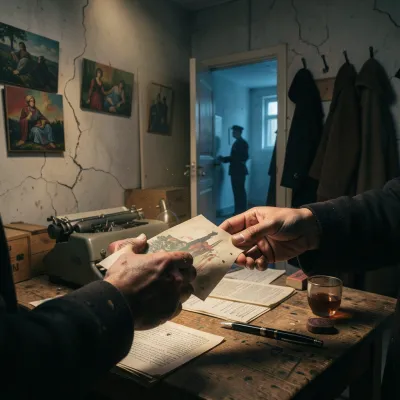
*Art Dealers and Samizdat* explores the intricate "parallel cultural economies" that flourished under the Soviet regime, where artists, writers, and musicians bypassed state censorship through clandestine networks of production and distribution. The book details the mechanics of *samizdat* (self-publishing), *tamizdat* (smuggling works abroad), and *magnitizdat* (unlicensed audio tapes), illustrating how these practices were not merely acts of political defiance but essential logistics. It reveals a sophisticated underground infrastructure sustained by trust, improvisation, and the strategic use of domestic spaces, such as kitchens and apartments, as galleries and workshops.
The narrative highlights the pivotal roles of various intermediaries—including typists, couriers, and "shadow" art dealers—who converted scarcity and risk into cultural capital. These actors navigated a complex landscape of "gray zones," using evasive aesthetics, irony, and coded language to outmaneuver a pervasive surveillance apparatus. The book also examines the crucial influence of Western diplomats and journalists who served as conduits for exporting dissent, thereby creating an international market and a layer of protection for unofficial creators.
Beyond the major centers of Moscow and Leningrad, the text explores regional variations in the Baltics, Ukraine, and the Caucasus, where cultural resistance was often intertwined with national identity. It also sheds light on the frequently overlooked labor of women in the underground and the rebellious energy of youth subcultures like rockers and punks. These groups collectively built a resilient, decentralized ecosystem that challenged the state’s monopoly on truth and artistic value, proving that culture could thrive without official permission.
Following the collapse of the Soviet Union in 1991, the book analyzes how this underground heritage transitioned into a global market and entered public memory. It concludes by drawing parallels between Soviet-era tactics and contemporary digital resistance. The strategies of the past—such as peer-to-peer distribution, encryption, and the creation of alternative infrastructures—serve as a blueprint for modern creators navigating new forms of surveillance and algorithmic control, suggesting that the spirit of the underground remains a vital force for cultural autonomy.
What You'll Find Inside:
- The book explores how Soviet dissidents created parallel cultural networks through samizdat (self-publishing), tamizdat (smuggling texts abroad), and magnitizdat (underground audio recordings) to bypass state censorship.
- It details the ingenious logistics and risk management strategies used by underground cultural intermediaries - from paper quotas and carbon copies to courier schedules and trust networks that enabled culture to move despite repression.
- The text examines how aesthetic strategies like allegory, irony, and visual codes allowed artists to embed dissenting meanings in seemingly innocuous works that could evade censors while communicating with initiated audiences.
- It analyzes the role of Western diplomats, journalists, and cultural brokers as essential relays who carried underground culture across borders, creating transnational exchanges that both protected and endangered dissidents.
- The book draws practical lessons for today's digital age, showing how Soviet underground techniques anticipate modern struggles with surveillance, encryption, and decentralized information networks.
Who's It For:
This book is essential reading for historians of Soviet culture, dissident movements, and underground networks who want to understand the practical logistics and economics of cultural resistance. It will particularly benefit artists, curators, and cultural workers interested in how creative expression persists under censorship, as well as scholars of information control seeking historical parallels to contemporary digital activism. Anyone studying the intersection of art, politics, and logistics in repressive regimes will find valuable insights in the detailed case studies of samizdat networks, underground exhibitions, and the shadow market of Soviet unofficial culture.
Author:
Published By:
Date Published:
May 3, 2026
Type:
Nonfiction
Language:
English
Word Count:
63,199 words
Reading Time:
4 hours 26 minutes
Sample:
MixCache.com Total Access
Get unlimited access to this book + all books published by MixCache.com for $11.99/month
Subscribe to MTAOr purchase this book individually below
Order:
Buy the Art Dealers and Samizdat ebook on MixCache.com:
Buy Now
Full ebook will be available immediately
- read online or download as a PDF file.
$5 account credit for all new MixCache.com accounts, usable toward any ebook purchase!*




Ratings & Reviews
Ask Questions About This Book
Have a question about the content? Ask our AI assistant!
Start by asking a question about "Art Dealers and Samizdat"
Example: "Does this book mention William Shakespeare?"
Thinking...