
Browse by Category
Fiction
- Action & Adventure
- African American
- Anthologies
- Children's Fiction
- Classics
- Comics & Graphic Novels
- Coming of Age
- Contemporary
- Cultural & Regional
- Drama
- Erotica
- Fantasy
- General
- Historical Fiction
- Horror
- Humor & Satire
- Literary Fiction
- Mystery, Thriller & Suspense
- Poetry
- Religious & Inspirational
- Romance
- Science Fiction
- Short Stories
- War & Military
- Westerns
- Women's Fiction
- Young Adult
Non-Fiction
- Antiques & Collectibles
- Arts & Photography
- Biographies & Memoirs
- Business & Money
- Children's Non-Fiction
-
Computers & Technology
- Artificial Intelligence
- Computer Science
- Cybersecurity & Cryptography
- Data Science & Analytics
- Databases & Big Data
- Game Development & Design
- General
- Hardware & DIY
- Mobile App Development
- Networking & Cloud Computing
- Operating Systems
- Programming
- Robotics
- Software
- Software Engineering
- User Experience (UX) & Design
- Web Development & Design
- Cooking, Food & Wine
- Crafts, Hobbies & Home
- Education & Teaching
- Engineering
- General
- Health, Fitness & Dieting
-
History
- African History
- African History - North Africa
- African History - Sub-Saharan Africa
- American History
- American History - 20th Century
- American History - Civil War
- American History - Colonial Period
- Ancient History
- Asian History
- Asian History - China
- Asian History - India
- Asian History - Japan
- Asian History - Southeast Asia
- European History
- European History - Ancient Greece
- European History - Ancient Rome
- European History - Medieval
- European History - Modern
- European History - Renaissance
- General
- Middle Eastern History
- Military History
- Military History - Aviation
- Military History - Naval
- Social & Cultural History
- World History
- Humor & Entertainment
- Industrial Technology
- Language Learning
- Law
- LGBTQ+ Non-Fiction
- Literary Criticism
- Medical Books
- Parenting & Relationships
- Philosophy
- Politics & Social Sciences
- Reference
- Religion & Spirituality
-
Science & Math
- Agricultural Sciences
- Astronomy & Space Science
- Behavioral Sciences
- Biological Sciences
- Botany & Plant Science
- Chemistry
- Earth Sciences
- Engineering - Chemical
- Engineering - Civil
- Engineering - Electrical
- Engineering - Mechanical
- Environment
- General
- Geology
- Mathematics
- Nature & Ecology
- Oceanography
- Paleontology
- Physics
- Statistics
- Self-Help
- Sports & Outdoors
- Study Aids
- Sustainability & Green Living
- Textbooks
- Transportation
- Travel
- True Crime
- Urban Planning & Development
- Veterinary Medicine
- Writing & Publishing
Jump to Section

Want unlimited access to all books published by MixCache.com (plus their audiobooks)? Try MixCache.com Total Access. Look for the MTA badge on book covers to identify included titles.
Access to infinite ebooks: Don't see the book you want? Suggest it and we'll create it (free!) for you from scratch with our powerful AI book writer. Then read it with MTA - besides profiting from any sales it makes!
Romania's Rural Traditions
MTA
Folklore Agriculture and Post Communist Change
About this book:
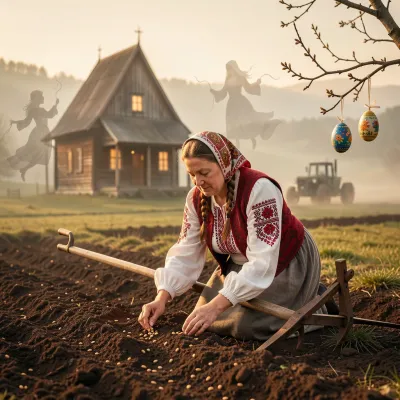
Romania's rural traditions form a resilient tapestry woven from centuries‑old folklore, agricultural practices, religious observances, and communal life deeply tied to the land and seasonal cycles. Village existence follows rhythms dictated by nature, with daily routines, craftsmanship, and oral storytelling preserving myths such as the Solomonar, the iele, and the strigoi, while traditional farming—crop rotation, seed saving, livestock grazing, and the use of animal power—maintains a sustainable connection to the earth. Religious festivals, especially Easter and Christmas, reinforce community bonds through rituals like egg painting, candle lighting, caroling, and communal feasts, blending Orthodox Christian faith with pre‑Christian customs.
The communist era brought forced collectivization, industrialization, and rural exodus, disrupting traditional structures and displacing populations to urban centers and abroad. After 1989, land restitution revived private holdings and sparked a resurgence of ancestral farming methods, craftsmanship, and religious expression, though challenges persisted from economic instability, aging demographics, and the outflow of youth seeking work in cities or Western Europe. EU integration since 2007 has offered structural funds for infrastructure, modernization, and rural development, yet also introduced bureaucratic hurdles, market competition, and pressures toward standardization that threaten local distinctiveness.
In response, rural communities have embraced selective modernity—mobile phones, internet, and ecotourism—to sustain traditions while creating new economic opportunities. Artisans, local markets, women’s cooperatives, and youth initiatives revitalize crafts, gastronomy, music, dance, and architecture, often blending heritage with innovation. The diaspora contributes remittances, investment, and ideas, while efforts in education, vocational training, and cultural preservation aim to transmit knowledge across generations. Looking forward, Romania’s rural future hinges on balancing adaptation with authenticity, leveraging sustainable agriculture, ecotourism, digital connectivity, and the enduring vitality of community life to preserve its unique heritage within the European context.
What You'll Find Inside:
- Explores the enduring daily and seasonal rhythms of Romanian village life, rooted in agricultural cycles and community bonds.
- Examines Romania's rich folklore—myths, legends, oral traditions, and mythical creatures—and their role in shaping cultural identity.
- Details traditional farming practices, seed saving, livestock management, and the shift from collective farms to private holdings after communism.
- Highlights the central role of religious festivals (Easter, Christmas, Sânzienele) in reinforcing community cohesion and preserving Orthodox Christian customs.
- Analyzes post‑Communist reforms, EU integration impacts, and the challenges and opportunities for rural economies and cultural preservation.
Who's It For:
This book is ideal for scholars of anthropology, history, sociology, and rural economics seeking an in‑depth case study of cultural resilience in Eastern Europe. It also appeals to general readers with a passion for European cultures, traditional lifestyles, and the interplay between heritage and modernization, as well as practitioners involved in rural development, ecotourism, and cultural preservation initiatives.
Author:
Published By:
Date Published:
August 7, 2026
Type:
Nonfiction
Language:
English
Word Count:
35,429 words
Reading Time:
2 hours 29 minutes
Sample:
MixCache.com Total Access
Get unlimited access to this book + all books published by MixCache.com for $11.99/month
Subscribe to MTAOr purchase this book individually below
Order:
Buy the Romania's Rural Traditions ebook on MixCache.com:
Buy Now
Full ebook will be available immediately
- read online or download as a PDF file.
$5 account credit for all new MixCache.com accounts, usable toward any ebook purchase!*



Ratings & Reviews
Ask Questions About This Book
Have a question about the content? Ask our AI assistant!
Start by asking a question about "Romania's Rural Traditions"
Example: "Does this book mention William Shakespeare?"
Thinking...