
Browse by Category
Fiction
- Action & Adventure
- African American
- Anthologies
- Children's Fiction
- Classics
- Comics & Graphic Novels
- Coming of Age
- Contemporary
- Cultural & Regional
- Drama
- Erotica
- Fantasy
- General
- Historical Fiction
- Horror
- Humor & Satire
- Literary Fiction
- Mystery, Thriller & Suspense
- Poetry
- Religious & Inspirational
- Romance
- Science Fiction
- Short Stories
- War & Military
- Westerns
- Women's Fiction
- Young Adult
Non-Fiction
- Antiques & Collectibles
- Arts & Photography
- Biographies & Memoirs
- Business & Money
- Children's Non-Fiction
-
Computers & Technology
- Artificial Intelligence
- Computer Science
- Cybersecurity & Cryptography
- Data Science & Analytics
- Databases & Big Data
- Game Development & Design
- General
- Hardware & DIY
- Mobile App Development
- Networking & Cloud Computing
- Operating Systems
- Programming
- Robotics
- Software
- Software Engineering
- User Experience (UX) & Design
- Web Development & Design
- Cooking, Food & Wine
- Crafts, Hobbies & Home
- Education & Teaching
- Engineering
- General
- Health, Fitness & Dieting
-
History
- African History
- African History - North Africa
- African History - Sub-Saharan Africa
- American History
- American History - 20th Century
- American History - Civil War
- American History - Colonial Period
- Ancient History
- Asian History
- Asian History - China
- Asian History - India
- Asian History - Japan
- Asian History - Southeast Asia
- European History
- European History - Ancient Greece
- European History - Ancient Rome
- European History - Medieval
- European History - Modern
- European History - Renaissance
- General
- Middle Eastern History
- Military History
- Military History - Aviation
- Military History - Naval
- Social & Cultural History
- World History
- Humor & Entertainment
- Industrial Technology
- Language Learning
- Law
- LGBTQ+ Non-Fiction
- Literary Criticism
- Medical Books
- Parenting & Relationships
- Philosophy
- Politics & Social Sciences
- Reference
- Religion & Spirituality
-
Science & Math
- Agricultural Sciences
- Astronomy & Space Science
- Behavioral Sciences
- Biological Sciences
- Botany & Plant Science
- Chemistry
- Earth Sciences
- Engineering - Chemical
- Engineering - Civil
- Engineering - Electrical
- Engineering - Mechanical
- Environment
- General
- Geology
- Mathematics
- Nature & Ecology
- Oceanography
- Paleontology
- Physics
- Statistics
- Self-Help
- Sports & Outdoors
- Study Aids
- Sustainability & Green Living
- Textbooks
- Transportation
- Travel
- True Crime
- Urban Planning & Development
- Veterinary Medicine
- Writing & Publishing
Jump to Section
MixCache.com Total Access
Unlimited reading and audiobooks for every book published by MixCache.com.
Included titles carry the MTA badge.
Learn more →
Namibia's Liberation Struggle: From German Colony to Independent Nation
MTA
Decades of Resistance Against Colonial Rule and Apartheid Influence
About this book:
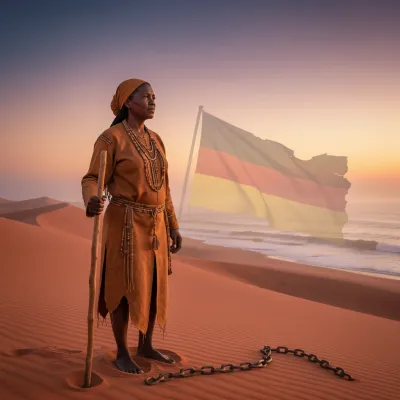
The book traces Namibia’s path from a German colony to an independent nation, beginning with the Scramble for Africa and the establishment of German South West Africa in 1884. Early indigenous resistance, including the 1904 Herero and Nama uprisings, was met with the brutal genocide ordered by Lothar von Trotha, which devastated the Herero and Nama peoples and left a lasting trauma. After Germany’s defeat in World War I, the territory became a South African mandate under the League of Nations, but Pretoria effectively annexed it, imposing apartheid policies that entrenched racial segregation, economic exploitation, and political repression, sparking a growing nationalist consciousness among the Ovambo and other groups.
In response to apartheid’s intensification, African nationalism emerged, culminating in the formation of the South West Africa People’s Organization (SWAPO) in 1960. SWAPO combined internal mobilization with international diplomacy, led by figures such as Sam Nujoma, who went into exile to lobby the United Nations and garner global support. After years of peaceful petitions proved ineffective, SWAPO launched an armed struggle in 1966 through its military wing, the People’s Liberation Army of Namibia (PLAN). The conflict evolved into a protracted Bush War, heavily influenced by Cold War dynamics, with South Africa conducting cross-border operations into Angola and facing PLAN guerrillas backed by frontline states like Tanzania, Zambia, and an independent Angola under the MPLA. The Battle of Cuito Cuanavale in 1987‑88 proved a turning point, undermining South African military invincibility and creating a stalemate that forced Pretoria to negotiate.
International pressure, reinforced by the UN’s adoption of Resolution 435 and the Tripartite Agreement of December 1988, led to a ceasefire, the withdrawal of South African forces, and the deployment of the United Nations Transition Assistance Group (UNTAG). UNTAG supervised the ceasefire, repatriated refugees, monitored elections, and ensured a peaceful transition. In November 1989, Namibia held its first democratic elections, with SWAPO winning a decisive majority. The Constituent Assembly unanimously adopted a democratic constitution, and on 21 March 1990, Sam Nujoma was inaugurated as the nation’s first president. The early years of independence focused on national reconciliation, institution‑building, economic reform, and addressing the entrenched inequalities of apartheid, while Namibia consolidated its sovereignty through the peaceful reintegration of Walvis Bay and pursued a non‑aligned foreign policy, laying the foundations for a stable, multi‑racial republic.
What You'll Find Inside:
- The book details the Herero and Namaqua genocide (1904-1908) as the first genocide of the 20th century, examining its catastrophic impact on indigenous populations and its enduring legacy of trauma in Namibian society.
- It traces the formation and evolution of SWAPO from migrant labor organizations to becoming the liberation movement that led Namibia's armed struggle and eventual path to independence.
- The work analyzes how Namibia's struggle became a Cold War proxy conflict, with regional battles like Cuito Cuanavale serving as decisive turning points that altered the balance of power in southern Africa.
- It chronicles international diplomatic efforts, UN resolutions, and peacekeeping operations (UNTAG) that facilitated Namibia's transition to independence through supervised elections and refugee repatriation.
- The book examines post-independence nation-building challenges, including national reconciliation, land reform, establishing democratic institutions, and addressing apartheid's socioeconomic legacy.
Who's It For:
This book is essential reading for students and scholars of African history, decolonization studies, and liberation movements. It will particularly benefit researchers interested in Cold War proxy conflicts in Africa, genocide studies, and post-conflict nation-building. General readers seeking to understand Namibia's path from colonial oppression to independence will also find this comprehensive account valuable.
Table of Contents:
- Introduction
- Chapter 1: The Scramble for Africa and German Colonization of Namibia
- Chapter 2: Early Resistance: Uprisings Against German Rule
- Chapter 3: The Herero and Namaqua Genocide: A Legacy of Trauma
- Chapter 4: South African Mandate: The League of Nations and Betrayal
- Chapter 5: Imposition of Apartheid: Segregation and Discrimination in South West Africa
- Chapter 6: The Rise of African Nationalism and Early Political Awakening
- Chapter 7: The Ovambo People: A Pillar of Resistance
- Chapter 8: The Formation of SWAPO: A New Era of Organized Struggle
- Chapter 9: Sam Nujoma's Early Life and Political Awakening
- Chapter 10: Exile and International Diplomacy: SWAPO on the World Stage
- Chapter 11: The Armed Struggle Begins: PLAN and Guerrilla Warfare
- Chapter 12: Decolonization in Africa: A Shifting Geopolitical Landscape
- Chapter 13: Cold War Frontline: Namibia's Role in Regional Conflicts
- Chapter 14: International Pressure Mounts: The UN and the Quest for Self-Determination
- Chapter 15: The Turnhalle Conference: South Africa's Attempt at an Internal Settlement
- Chapter 16: Intensification of the Bush War: Battles and Casualties
- Chapter 17: Refugee Camps and the Namibian Diaspora
- Chapter 18: The Role of Frontline States in Namibia's Liberation
- Chapter 19: Constructive Engagement and Its Failures
- Chapter 20: The Battle of Cuito Cuanavale: A Turning Point
- Chapter 21: Diplomacy and Negotiations: Towards a Peaceful Resolution
- Chapter 22: UNTAG: The United Nations Transition Assistance Group
- Chapter 23: The First Democratic Elections and the Birth of a Nation
- Chapter 24: Sam Nujoma: From Liberation Leader to First President
- Chapter 25: Building a New Namibia: Challenges and Triumphs of Independence
Author:
Published By:
Date Published:
July 20, 2026
Type:
Nonfiction
Language:
English
Word Count:
44,849 words
Reading Time:
3 hours 8 minutes
Sample:
MixCache.com Total Access
Get unlimited access to this book + all books published by MixCache.com for $11.99/month
Subscribe to MTAOr purchase this book individually below
Order:
Buy the Namibia's Liberation Struggle: From German Colony to Independent Nation ebook on MixCache.com:
Buy Now
Full ebook will be available immediately
- read online or download as a PDF file.
$5 account credit for all new MixCache.com accounts, usable toward any ebook purchase!*




Ratings & Reviews
Ask Questions About This Book
Have a question about the content? Ask our AI assistant!
Start by asking a question about "Namibia's Liberation Struggle: From German Colony to Independent Nation"
Example: "Does this book mention William Shakespeare?"
Thinking...