
Browse by Category
Fiction
- Action & Adventure
- African American
- Anthologies
- Children's Fiction
- Classics
- Comics & Graphic Novels
- Coming of Age
- Contemporary
- Cultural & Regional
- Drama
- Erotica
- Fantasy
- General
- Historical Fiction
- Horror
- Humor & Satire
- Literary Fiction
- Mystery, Thriller & Suspense
- Poetry
- Religious & Inspirational
- Romance
- Science Fiction
- Short Stories
- War & Military
- Westerns
- Women's Fiction
- Young Adult
Non-Fiction
- Antiques & Collectibles
- Arts & Photography
- Biographies & Memoirs
- Business & Money
- Children's Non-Fiction
-
Computers & Technology
- Artificial Intelligence
- Computer Science
- Cybersecurity & Cryptography
- Data Science & Analytics
- Databases & Big Data
- Game Development & Design
- General
- Hardware & DIY
- Mobile App Development
- Networking & Cloud Computing
- Operating Systems
- Programming
- Robotics
- Software
- Software Engineering
- User Experience (UX) & Design
- Web Development & Design
- Cooking, Food & Wine
- Crafts, Hobbies & Home
- Education & Teaching
- Engineering
- General
- Health, Fitness & Dieting
-
History
- African History
- African History - North Africa
- African History - Sub-Saharan Africa
- American History
- American History - 20th Century
- American History - Civil War
- American History - Colonial Period
- Ancient History
- Asian History
- Asian History - China
- Asian History - India
- Asian History - Japan
- Asian History - Southeast Asia
- European History
- European History - Ancient Greece
- European History - Ancient Rome
- European History - Medieval
- European History - Modern
- European History - Renaissance
- General
- Middle Eastern History
- Military History
- Military History - Aviation
- Military History - Naval
- Social & Cultural History
- World History
- Humor & Entertainment
- Industrial Technology
- Language Learning
- Law
- LGBTQ+ Non-Fiction
- Literary Criticism
- Medical Books
- Parenting & Relationships
- Philosophy
- Politics & Social Sciences
- Reference
- Religion & Spirituality
-
Science & Math
- Agricultural Sciences
- Astronomy & Space Science
- Behavioral Sciences
- Biological Sciences
- Botany & Plant Science
- Chemistry
- Earth Sciences
- Engineering - Chemical
- Engineering - Civil
- Engineering - Electrical
- Engineering - Mechanical
- Environment
- General
- Geology
- Mathematics
- Nature & Ecology
- Oceanography
- Paleontology
- Physics
- Statistics
- Self-Help
- Sports & Outdoors
- Study Aids
- Sustainability & Green Living
- Textbooks
- Transportation
- Travel
- True Crime
- Urban Planning & Development
- Veterinary Medicine
- Writing & Publishing
Jump to Section
MixCache.com Total Access
Unlimited reading and audiobooks for every book published by MixCache.com.
Included titles carry the MTA badge.
Learn more →
Eswatini's Traditional Monarchy: Modern Challenges in Africa's Last Absolute Kingdom
MTA
How King Mswati III Balances Tradition and Globalization
About this book:
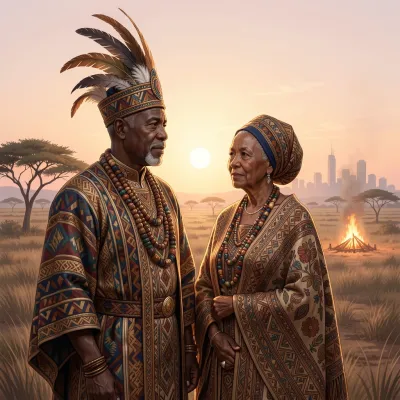
Eswatini remains Africa’s last absolute monarchy, a system in which King Mswati III wields extensive executive, legislative, and judicial authority while sharing a symbolic spiritual leadership with the Ndlovukazi, the Queen Mother. The monarchy’s legitimacy rests on centuries of Swazi tradition, from the dynastic Dlamini lineage and the dual leadership model to the foundational concepts of kukhonta (allegiance to the king and land) and the pervasive influence of customary law. Central to this identity are the nation‑defining rituals of the Incwala and Umhlanga ceremonies, which reinforce royal power, communal unity, and cultural continuity, and which the king actively leads to affirm his role as both spiritual head and national father figure.
Historically, the Swazi kingdom emerged from migrations and conflicts in the 15th–19th centuries, endured the pressures of colonialism through shrewd diplomacy and resistance, and retained its monarchical form after independence in 1968 when King Sobhuza II repealed the Westminster‑style constitution and restored absolute rule. King Mswati III inherited this system and has sought to balance its preservation with the demands of globalization: promoting economic diversification beyond sugar into textiles, tourism, mining, and services; investing in infrastructure and human capital; and engaging regionally through SACU and SADC while maintaining distinctive diplomatic ties, notably with Taiwan. Simultaneously, the kingdom confronts profound challenges—calls for democratic reform and greater political participation, human‑rights concerns regarding freedom of expression and assembly, gender inequalities entrenched in customary law, a devastating HIV/AIDS epidemic, pervasive poverty and youth unemployment, and environmental strains from climate change and land pressure.
In response, Eswatini has pursued a dual strategy of cultural preservation and measured modernization. The monarchy supports public‑health campaigns, education reforms that blend traditional knowledge with modern skills, women’s‑rights initiatives such as the SODV Act of 2022, and community‑based natural‑resource management that integrates customary stewardship with scientific conservation. Civil society, though often constrained, advocates for reforms and provides essential services, while the government attempts to harmonize customary and Roman‑Dutch legal systems and to manage dissent through laws that critics say suppress opposition. The future of the monarchy hinges on its ability to deliver tangible improvements in livelihoods, rights, and opportunities—particularly for the youth—while maintaining the cultural symbols and traditional structures that continue to command deep loyalty and define Eswatini’s unique path in a globalized world.
What You'll Find Inside:
- The unique dual monarchy system where the Ingwenyama (King) serves as spiritual and political leader while the Ndlovukazi (Queen Mother) provides counterbalancing spiritual authority and cultural guardianship.
- The profound cultural and political significance of traditional ceremonies like Incwala (First Fruits) and Umhlanga (Reed Dance) in maintaining national unity, royal legitimacy, and cultural continuity.
- The historical evolution of Swazi sovereignty from pre-colonial kingdom formation through colonial resistance to becoming Africa's last absolute monarchy under King Mswati III.
- The ongoing negotiation between traditional governance structures (including customary law and tinkhundla system) and modern pressures for democratic reform, human rights compliance, and political participation.
- Economic diversification strategies moving beyond sugar dependence through manufacturing, tourism, and mining while attempting to preserve cultural heritage and traditional land tenure systems.
Who's It For:
This book is essential reading for scholars and students of African studies, political anthropology, and comparative monarchy systems who seek to understand how Africa's last absolute monarchy navigates 21st-century globalization. It will particularly benefit researchers examining the tension between traditional governance and democratic reform, as well as policymakers and development practitioners working in Southern Africa. Diplomats, international relations professionals, and anyone interested in cultural preservation amidst economic modernization will find valuable insights into Eswatini's unique path forward.
Table of Contents:
- Introduction
- Chapter 1 The Lion and the Jewel: Understanding Eswatini's Unique Monarchy
- Chapter 2 A Kingdom Forged in Time: Historical Roots of Swazi Tradition
- Chapter 3 King Mswati III: Accession, Authority, and the Royal Lineage
- Chapter 4 The Incwala Ceremony: A Symbol of Unity and Royal Power
- Chapter 5 Reed Dance (Umhlanga): Celebrating Chastity, Culture, and the King
- Chapter 6 Traditional Governance: Chiefs, Councils, and Community Structures
- Chapter 7 Modernity's Embrace: Economic Development and Global Integration
- Chapter 8 The Struggle for Democracy: Calls for Reform and Political Dissent
- Chapter 9 Human Rights in a Traditional Context: Navigating Universal Norms
- Chapter 10 Land, Livestock, and Livelihoods: Economic Realities in Eswatini
- Chapter 11 Health Challenges: HIV/AIDS, Poverty, and Public Health Initiatives
- Chapter 12 Education in Transition: Balancing Tradition and Modern Learning
- Chapter 13 Women in Eswatini: Roles, Rights, and Cultural Expectations
- Chapter 14 Youth and the Future: Aspirations, Opportunities, and Challenges
- Chapter 15 Eswatini's Foreign Relations: Diplomacy in a Globalized World
- Chapter 16 Regional Dynamics: Eswatini within the Southern African Context
- Chapter 17 The Monarchy and the Media: Portrayal, Perception, and Control
- Chapter 18 Cultural Preservation vs. Modernization: An Ongoing Dialogue
- Chapter 19 Environmental Stewardship: Protecting Eswatini's Natural Heritage
- Chapter 20 Tourism: Showcasing Culture and Driving Economic Growth
- Chapter 21 The Role of Law: Customary Law and Roman-Dutch Influence
- Chapter 22 Economic Diversification: Beyond Agriculture and Sugar
- Chapter 23 Civil Society and Advocacy: Voices for Change
- Chapter 24 The Future of the Monarchy: Succession and Sustained Relevance
- Chapter 25 Eswatini's Enduring Legacy: Tradition, Resilience, and a Kingdom's Path Forward
Author:
Published By:
Date Published:
July 18, 2026
Type:
Nonfiction
Language:
English
Word Count:
43,695 words
Reading Time:
3 hours 4 minutes
Sample:
MixCache.com Total Access
Get unlimited access to this book + all books published by MixCache.com for $11.99/month
Subscribe to MTAOr purchase this book individually below
Order:
Buy the Eswatini's Traditional Monarchy: Modern Challenges in Africa's Last Absolute Kingdom ebook on MixCache.com:
Buy Now
Full ebook will be available immediately
- read online or download as a PDF file.
$5 account credit for all new MixCache.com accounts, usable toward any ebook purchase!*





Ratings & Reviews
Ask Questions About This Book
Have a question about the content? Ask our AI assistant!
Start by asking a question about "Eswatini's Traditional Monarchy: Modern Challenges in Africa's Last Absolute Kingdom"
Example: "Does this book mention William Shakespeare?"
Thinking...