
Browse by Category
Fiction
- Action & Adventure
- African American
- Anthologies
- Children's Fiction
- Classics
- Comics & Graphic Novels
- Coming of Age
- Contemporary
- Cultural & Regional
- Drama
- Erotica
- Fantasy
- General
- Historical Fiction
- Horror
- Humor & Satire
- Literary Fiction
- Mystery, Thriller & Suspense
- Poetry
- Religious & Inspirational
- Romance
- Science Fiction
- Short Stories
- War & Military
- Westerns
- Women's Fiction
- Young Adult
Non-Fiction
- Antiques & Collectibles
- Arts & Photography
- Biographies & Memoirs
- Business & Money
- Children's Non-Fiction
-
Computers & Technology
- Artificial Intelligence
- Computer Science
- Cybersecurity & Cryptography
- Data Science & Analytics
- Databases & Big Data
- Game Development & Design
- General
- Hardware & DIY
- Mobile App Development
- Networking & Cloud Computing
- Operating Systems
- Programming
- Robotics
- Software
- Software Engineering
- User Experience (UX) & Design
- Web Development & Design
- Cooking, Food & Wine
- Crafts, Hobbies & Home
- Education & Teaching
- Engineering
- General
- Health, Fitness & Dieting
-
History
- African History
- African History - North Africa
- African History - Sub-Saharan Africa
- American History
- American History - 20th Century
- American History - Civil War
- American History - Colonial Period
- Ancient History
- Asian History
- Asian History - China
- Asian History - India
- Asian History - Japan
- Asian History - Southeast Asia
- European History
- European History - Ancient Greece
- European History - Ancient Rome
- European History - Medieval
- European History - Modern
- European History - Renaissance
- General
- Middle Eastern History
- Military History
- Military History - Aviation
- Military History - Naval
- Social & Cultural History
- World History
- Humor & Entertainment
- Industrial Technology
- Language Learning
- Law
- LGBTQ+ Non-Fiction
- Literary Criticism
- Medical Books
- Parenting & Relationships
- Philosophy
- Politics & Social Sciences
- Reference
- Religion & Spirituality
-
Science & Math
- Agricultural Sciences
- Astronomy & Space Science
- Behavioral Sciences
- Biological Sciences
- Botany & Plant Science
- Chemistry
- Earth Sciences
- Engineering - Chemical
- Engineering - Civil
- Engineering - Electrical
- Engineering - Mechanical
- Environment
- General
- Geology
- Mathematics
- Nature & Ecology
- Oceanography
- Paleontology
- Physics
- Statistics
- Self-Help
- Sports & Outdoors
- Study Aids
- Sustainability & Green Living
- Textbooks
- Transportation
- Travel
- True Crime
- Urban Planning & Development
- Veterinary Medicine
- Writing & Publishing
Jump to Section
MixCache.com Total Access
Unlimited reading and audiobooks for every book published by MixCache.com.
Included titles carry the MTA badge.
Learn more →
Education In Sweden
MTA
A Comprehensive Overview from Early Childhood to Higher Education
About this book:
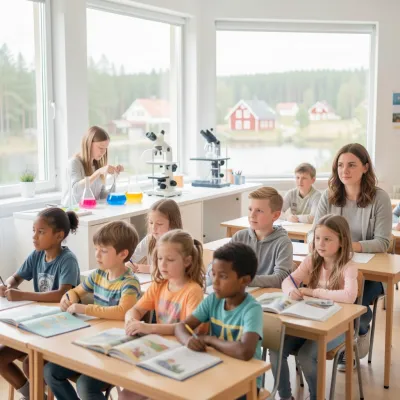
The Swedish education system, as detailed in this comprehensive overview, is founded on a deep-rooted philosophy of equity, accessibility, and lifelong learning, encapsulated by the principle of "a school for all." Historically evolving from church-run institutions to the comprehensive *Grundskola* reform of 1962, the system prioritizes providing equivalent education regardless of socioeconomic background, gender, or geography. This commitment is operationalized through a highly decentralized governance model where Sweden's 290 municipalities hold primary responsibility for operating and financing schools from preschool through adult education, while national agencies like the National Agency for Education (Skolverket) and the Swedish Schools Inspectorate set curricula, guidelines, and ensure quality and coherence. Education is predominantly publicly funded, with municipal income taxes covering over 90% of pre-university costs, and a voucher system allowing free choice between municipal and independent schools.
The system spans early childhood to higher education, beginning with the universally accessible *förskola* (preschool) for children aged one to five, emphasizing play-based learning, outdoor pedagogy (*ute pedagogik*), and holistic development. This is followed by the voluntary preschool class and the nine-year compulsory *grundskola* (grades 1-9), which provides a unified curriculum focusing on core subjects, critical thinking, democratic values, and individualized support without requiring formal diagnoses. Upper secondary *gymnasium* offers diverse national programs—both higher education preparatory (e.g., Natural Science, Social Science) and vocational (e.g., Health and Social Care, Construction)—integrating theoretical knowledge with mandatory work-based learning (APL). Higher education, comprising universities and university colleges, operates under the Bologna Process, emphasizing research, student-centered learning, and strong industry ties, while adult education initiatives like municipal *Komvux*, folk high schools, and Higher Vocational Education (*Yrkeshögskolan*) embody Sweden’s exceptional commitment to lifelong learning, with nearly half the adult population engaging in study.
Central to the Swedish model are its emphasis on equity and inclusion, manifested through comprehensive special needs support within mainstream settings, extensive student health services (*elevhälsan*) covering physical, mental, and social well-being, and policies promoting gender equality, multilingualism, and democratic citizenship through civics education (*samhällskunskap*). Teacher education is rigorous and research-based, conducted within universities, with ongoing professional development and career roles like "First Teacher" aimed at retaining expertise. Digitalization is strategically integrated to enhance learning outcomes and critical competence, not merely for technology’s sake. However, the system faces ongoing debates regarding the impact of free school choice on segregation, challenges in teacher recruitment and retention, balancing knowledge acquisition with broader competencies, and ensuring equitable outcomes across diverse student groups despite strong ideological commitments. Looking ahead, the system continues to adapt through policy reforms focused on strengthening foundational knowledge, enhancing school leadership, deepening labor market ties in vocational education, leveraging technology responsibly, and reinforcing its core values of democracy, human rights, and social justice to meet future societal and technological demands.
What You'll Find Inside:
- The core philosophy of 'a school for all' ensuring equitable access to education regardless of background, gender, or socioeconomic status.
- The decentralized governance structure where municipalities operate and finance schools while national agencies maintain curriculum coherence and quality standards.
- The free school choice system enabling families to select municipal or independent schools without tuition fees, fostering educational diversity.
- Comprehensive special needs education focused on inclusive practices and individualized support within mainstream settings.
- Extensive lifelong learning initiatives including municipal adult education, folk high schools, and higher vocational education for continuous skill development.
Who's It For:
Educators and researchers seeking detailed analysis of Sweden's education model will find this book invaluable. Policymakers can learn from Sweden's approaches to equity, inclusion, and lifelong learning initiatives. Parents and guardians, both within Sweden and internationally, will gain clarity on the system's structure and opportunities. Anyone interested in global education trends or the future of schooling will benefit from this comprehensive overview.
Table of Contents:
- Introduction
- Chapter 1: The Swedish Education System: Foundations and Philosophy
- Chapter 2: Early Childhood Education: Förskola and Pedagogical Approaches
- Chapter 3: Compulsory Schooling: Structure, Curriculum, and Objectives
- Chapter 4: The Role of Municipalities in Swedish Education
- Chapter 5: Free School Choice and Independent Schools
- Chapter 6: Special Needs Education and Inclusive Practices
- Chapter 7: Assessment and Grading in Compulsory Education
- Chapter 8: Upper Secondary Education: Programs and Pathways
- Chapter 9: Vocational Education and Training in Sweden
- Chapter 10: Adult Education and Lifelong Learning Initiatives
- Chapter 11: Higher Education: Universities and University Colleges
- Chapter 12: Admission to Higher Education and Student Support
- Chapter 13: Research and Development in Swedish Academia
- Chapter 14: Teacher Education and Professional Development
- Chapter 15: The Impact of Digitalization on Swedish Education
- Chapter 16: Equity, Equality, and Social Justice in Education
- Chapter 17: Internationalization and Student Mobility
- Chapter 18: Funding and Governance of the Education System
- Chapter 19: Challenges and Debates in Contemporary Swedish Education
- Chapter 20: Educational Reforms and Policy Changes
- Chapter 21: The Role of Parents and Guardians in Education
- Chapter 22: Health and Well-being in Schools
- Chapter 23: Civics Education and Democratic Values
- Chapter 24: Comparing Swedish Education Internationally
- Chapter 25: Future Directions and Prospects for Swedish Education
Author:
Published By:
Date Published:
July 5, 2026
Type:
Nonfiction
Language:
English
Word Count:
37,088 words
Reading Time:
2 hours 36 minutes
Sample:
MixCache.com Total Access
Get unlimited access to this book + all books published by MixCache.com for $11.99/month
Subscribe to MTAOr purchase this book individually below
Order:
Buy the Education In Sweden ebook on MixCache.com:
Buy Now
Full ebook will be available immediately
- read online or download as a PDF file.
$5 account credit for all new MixCache.com accounts, usable toward any ebook purchase!*




Ratings & Reviews
Ask Questions About This Book
Have a question about the content? Ask our AI assistant!
Start by asking a question about "Education In Sweden"
Example: "Does this book mention William Shakespeare?"
Thinking...