
Browse by Category
Fiction
- Action & Adventure
- African American
- Anthologies
- Children's Fiction
- Classics
- Comics & Graphic Novels
- Coming of Age
- Contemporary
- Cultural & Regional
- Drama
- Erotica
- Family Life
- Fantasy
- General
- Historical Fiction
- Horror
- Humor & Satire
- Literary Fiction
- Mystery, Thriller & Suspense
- Poetry
- Religious & Inspirational
- Romance
- Science Fiction
- Short Stories
- War & Military
- Westerns
- Women's Fiction
- Young Adult
Non-Fiction
- Antiques & Collectibles
- Arts & Photography
- Biographies & Memoirs
- Business & Money
- Children's Non-Fiction
-
Computers & Technology
- Artificial Intelligence
- Computer Science
- Cybersecurity & Cryptography
- Data Science & Analytics
- Databases & Big Data
- Game Development & Design
- General
- Hardware & DIY
- Mobile App Development
- Networking & Cloud Computing
- Operating Systems
- Programming
- Robotics
- Software
- Software Engineering
- User Experience (UX) & Design
- Web Development & Design
- Cooking, Food & Wine
- Crafts, Hobbies & Home
- Education & Teaching
- Engineering
- General
- Health, Fitness & Dieting
-
History
- African History
- African History - North Africa
- African History - Sub-Saharan Africa
- American History
- American History - 20th Century
- American History - Civil War
- American History - Colonial Period
- Ancient History
- Asian History
- Asian History - China
- Asian History - India
- Asian History - Japan
- Asian History - Southeast Asia
- European History
- European History - Ancient Greece
- European History - Ancient Rome
- European History - Medieval
- European History - Modern
- European History - Renaissance
- General
- Middle Eastern History
- Military History
- Military History - Aviation
- Military History - Naval
- Social & Cultural History
- World History
- Humor & Entertainment
- Industrial Technology
- Language Learning
- Law
- LGBTQ+ Non-Fiction
- Literary Criticism
- Medical Books
- Parenting & Relationships
- Philosophy
- Politics & Social Sciences
- Reference
- Religion & Spirituality
-
Science & Math
- Agricultural Sciences
- Astronomy & Space Science
- Behavioral Sciences
- Biological Sciences
- Botany & Plant Science
- Chemistry
- Earth Sciences
- Engineering - Chemical
- Engineering - Civil
- Engineering - Electrical
- Engineering - Mechanical
- Environment
- General
- Geology
- Mathematics
- Nature & Ecology
- Oceanography
- Paleontology
- Physics
- Statistics
- Self-Help
- Sports & Outdoors
- Study Aids
- Sustainability & Green Living
- Textbooks
- Transportation
- Travel
- True Crime
- Urban Planning & Development
- Veterinary Medicine
- Writing & Publishing
Jump to Section
MixCache.com Total Access
Unlimited reading and audiobooks for every book published by MixCache.com.
Included titles carry the MTA badge.
Learn more →
Science and Technology in Asia
MTA
Inventions, Knowledge Exchange, and the Pathways of Modernization
About this book:
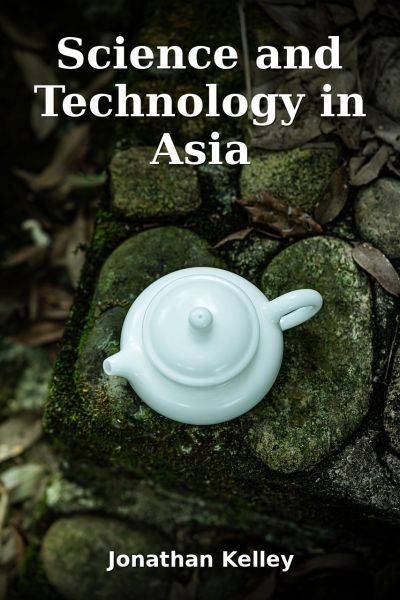
Science and Technology in Asia charts a multi-millennia history of innovation and exchange across the continent, arguing that there was no single linear path to modernization but rather a series of overlapping and interconnected pathways. The book begins with the deep roots of Asian ingenuity, from the early foundries that mastered bronze and iron to the observatories that mapped the heavens. It explores foundational knowledge systems—from the mathematical traditions of Sanskrit and Siniform worlds to the transformative power of paper and print—and the critical inventions that reshaped global power dynamics, such as gunpowder and the compass. The narrative then follows the intricate routes of exchange along the Silk Roads and sea lanes, where artisans, scholars, and merchants acted as knowledge brokers, creating hybrid technologies and shared scientific cultures.
The arrival of encounters with European powers marked a pivotal turning point, introducing new sciences and technologies that were both selectively adopted and challenged by existing Asian systems. This era of imperial encounters, characterized by surveys, steam power, and colonial infrastructures, was a period of profound transformation and contested knowledge. In response, diverse pathways to modernization emerged. Japan’s state-led Meiji Restoration and its subsequent rise as an industrial powerhouse demonstrated a unique model of rapid technological absorption. In the mid-20th century, newly independent nations like India and China embarked on ambitious state-led development projects, building scientific institutions, nuclear capabilities, and space programs during the Cold War. The narrative culminates with Asia's post-war economic surge, exemplified by the rise of the “Tigers” and the global dominance of electronics and semiconductors.
Today, Asia stands at the forefront of a new technological wave. China's "Reform and Opening" has transformed it into a global power in AI, biotechnology, and renewable energy. India has forged its own distinctive trajectory, excelling in space exploration, pharmaceuticals, and digital public infrastructure. Across the continent, dynamic hubs in ASEAN and other regions are driving innovation. The book concludes by looking to the future, examining the frontiers of AI, biotech, and sustainable energy transitions, arguing that Asia’s deep historical legacy of innovation and exchange positions it to shape the technological landscape of the 21st century and beyond.
What You'll Find Inside:
- A comprehensive history of Asia’s scientific and technological evolution, from ancient metallurgy and water management to modern space exploration and AI.
- Examination of 'knowledge brokers'—merchants, monks, and scholars—who facilitated the exchange of techniques and texts across the Silk Roads and maritime lanes.
- Analysis of the distinct modernization pathways taken by Japan, China, India, and the ASEAN nations through state-led initiatives and industrial planning.
- Insights into how traditional practices in medicine (Ayurveda, TCM), mathematics (Sanskrit and Siniform traditions), and craft guilds laid the groundwork for modern R&D.
- Exploration of the 20th-century electronics boom and the rise of global supply chains that positioned Asia as the central hub for semiconductor and software innovation.
Who's It For:
This book is ideal for historians, students of international relations, and professionals in the science and technology sectors who are interested in the historical roots of Asia’s current global dominance. It will specifically benefit readers looking to understand the interplay between cultural traditions, colonial legacies, and statecraft in shaping modern innovation. Additionally, policymakers and business strategists focused on emerging markets will find valuable context on the region's diverse development trajectories.
Introduction
This book traces how scientific ideas, technological inventions, and the circulation of knowledge have shaped Asian societies across millennia. From early metallurgy and sky-watching to modern industrial research and digital infrastructures, Asia offers a mosaic of settings in which people observed nature, solved problems, and built institutions to sustain inquiry. Rather than a single linear path, the region’s history reveals multiple pathways of modernization—overlapping, diverging, and reconnecting—across West, South, Central, East, and Southeast Asia.
A central theme is exchange: knowledge rarely stayed put. Merchants, monks, scholars, craft masters, envoys, and migrants ferried techniques and texts along caravan trails and sea lanes, across frontiers and languages. Instruments, materials, and methods changed hands and meaning as they moved, prompting adaptation and fresh invention. These circulations did not erase local traditions; they layered them, producing hybrids that were at once global and rooted.
Institutions mattered. Courts, temples, and academies sponsored observation, calculation, and experimentation; guilds and workshops standardized craft practices and guarded secrets; later, factories, universities, and research laboratories reorganized expertise at industrial scale.
Enjoying it? The full book includes every chapter.
Table of Contents:
- Introduction Free
- Chapter 1 Foundries of the Ancient World: Early Metallurgy in West, South, and East Asia Free
- Chapter 2 Mapping the Heavens: Astronomy, Calendars, and Cosmology
- Chapter 3 Numbers and Knowledge: Mathematical Traditions from Sanskrit to Siniform Worlds
- Chapter 4 Paper, Print, and the Power of Texts
- Chapter 5 Gunpowder, Compass, and the Mechanics of Empire
- Chapter 6 Water, Wheels, and Rice: Hydraulics, Irrigation, and Agro-Technologies
- Chapter 7 Healing the Body: Medical Traditions and Pharmacopoeias
- Chapter 8 Artisans, Guilds, and Workshop Worlds
- Chapter 9 Routes of Exchange: Silk Roads, Sea Lanes, and Knowledge Brokers
- Chapter 10 Courts, Temples, and Academies: Institutions of Learning
- Chapter 11 Islamicate Sciences in South and Central Asia
- Chapter 12 Korea and Japan: Transmission, Innovation, and Statecraft
- Chapter 13 Southeast Asia: Maritime Technologies and Island Networks
- Chapter 14 Encounters with Europe: Jesuits, Merchants, and New Sciences
- Chapter 15 Empires, Surveys, and Steam: Colonial Technologies and Power
- Chapter 16 Meiji and Beyond: State-Led Modernization in Japan
- Chapter 17 Republican China and the Rise of Modern Laboratories
- Chapter 18 Railways, Dams, and Institutes: Engineering South Asia
- Chapter 19 War, Planning, and Development: Science in the Mid-Twentieth Century
- Chapter 20 Tigers and Chips: Electronics in Japan, Korea, and Taiwan
- Chapter 21 Reform and Opening: Science, Technology, and Industry in China
- Chapter 22 Spacecraft, Software, and Pharma: India’s R&D Trajectories
- Chapter 23 ASEAN Innovations: Singapore, Malaysia, Thailand, and Vietnam
- Chapter 24 Networks, Standards, and Supply Chains: Asia in Globalization
- Chapter 25 Frontiers Ahead: AI, Biotech, Energy, and Sustainable Transitions
Included when you buy the full book.
Author:
Published By:
Date Published:
January 11, 2026
Type:
Nonfiction
Language:
English
Word Count:
78,830 words
Reading Time:
5 hours 31 minutes
Sample:
Order:
Buy the Science and Technology in Asia ebook on MixCache.com:
Buy NowIncludes every chapter. Not sure yet? Read the opening free.
Full ebook will be available immediately
- read online or download as a PDF file.
$5 account credit for all new MixCache.com accounts, usable toward any ebook purchase!*
MixCache.com Total Access
Get unlimited access to this book + all books published by MixCache.com for $11.99/month
Subscribe to MTA




Ratings & Reviews
Ask Questions About This Book
Have a question about the content? Ask our AI assistant!
Start by asking a question about "Science and Technology in Asia"
Example: "Does this book mention William Shakespeare?"
Thinking...