
Browse by Category
Fiction
- Action & Adventure
- African American
- Anthologies
- Children's Fiction
- Classics
- Comics & Graphic Novels
- Coming of Age
- Contemporary
- Cultural & Regional
- Drama
- Erotica
- Fantasy
- General
- Historical Fiction
- Horror
- Humor & Satire
- Literary Fiction
- Mystery, Thriller & Suspense
- Poetry
- Religious & Inspirational
- Romance
- Science Fiction
- Short Stories
- War & Military
- Westerns
- Women's Fiction
- Young Adult
Non-Fiction
- Antiques & Collectibles
- Arts & Photography
- Biographies & Memoirs
- Business & Money
- Children's Non-Fiction
-
Computers & Technology
- Artificial Intelligence
- Computer Science
- Cybersecurity & Cryptography
- Data Science & Analytics
- Databases & Big Data
- Game Development & Design
- General
- Hardware & DIY
- Mobile App Development
- Networking & Cloud Computing
- Operating Systems
- Programming
- Robotics
- Software
- Software Engineering
- User Experience (UX) & Design
- Web Development & Design
- Cooking, Food & Wine
- Crafts, Hobbies & Home
- Education & Teaching
- Engineering
- General
- Health, Fitness & Dieting
-
History
- African History
- African History - North Africa
- African History - Sub-Saharan Africa
- American History
- American History - 20th Century
- American History - Civil War
- American History - Colonial Period
- Ancient History
- Asian History
- Asian History - China
- Asian History - India
- Asian History - Japan
- Asian History - Southeast Asia
- European History
- European History - Ancient Greece
- European History - Ancient Rome
- European History - Medieval
- European History - Modern
- European History - Renaissance
- General
- Middle Eastern History
- Military History
- Military History - Aviation
- Military History - Naval
- Social & Cultural History
- World History
- Humor & Entertainment
- Industrial Technology
- Language Learning
- Law
- LGBTQ+ Non-Fiction
- Literary Criticism
- Medical Books
- Parenting & Relationships
- Philosophy
- Politics & Social Sciences
- Reference
- Religion & Spirituality
-
Science & Math
- Agricultural Sciences
- Astronomy & Space Science
- Behavioral Sciences
- Biological Sciences
- Botany & Plant Science
- Chemistry
- Earth Sciences
- Engineering - Chemical
- Engineering - Civil
- Engineering - Electrical
- Engineering - Mechanical
- Environment
- General
- Geology
- Mathematics
- Nature & Ecology
- Oceanography
- Paleontology
- Physics
- Statistics
- Self-Help
- Sports & Outdoors
- Study Aids
- Sustainability & Green Living
- Textbooks
- Transportation
- Travel
- True Crime
- Urban Planning & Development
- Veterinary Medicine
- Writing & Publishing
Jump to Section
MixCache.com Total Access
Unlimited reading and audiobooks for every book published by MixCache.com.
Included titles carry the MTA badge.
Learn more →
Education In South Korea
MTA
A Comprehensive Overview from Early Childhood to Higher Education
About this book:
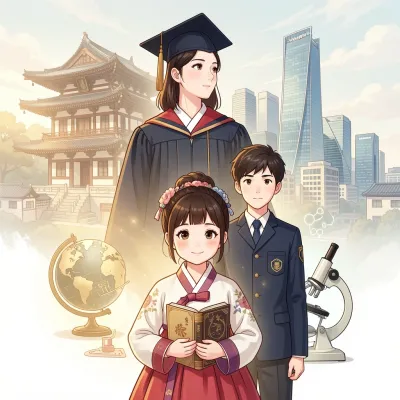
South Korea’s education system traces its roots to Confucian academies and the Joseon dynasty’s gwageo examinations, evolving through missionary schools, Japanese colonial reforms, and post‑war reconstruction into a highly centralized, merit‑driven model. The Ministry of Education sets a uniform National Curriculum, while seventeen Metropolitan and Provincial Offices of Education manage implementation, funding, and teacher deployment. From early childhood—where nurseries (eorinijip) under the Ministry of Health and Welfare and kindergartens (yuchiwon) under the MOE provide care and the Nuri Curriculum—through six years of compulsory, free primary education that establishes literacy, numeracy, and moral education, students enter a departmentalized middle‑high school structure. General high schools prepare most pupils for university, while specialized tracks (Science, Foreign Language, Arts, Sports, International, Meister, and vocational schools) cater to distinct aptitudes. Parallel to the public system, hagwons—private cram schools—offer intensive test preparation, especially for the Suneung, the nationwide College Scholastic Ability Test that dominates senior‑year study and university admissions.
Higher education comprises research‑oriented universities (including the elite SKY trio) and two‑year colleges, with admissions blending Suneung scores, internal school records, extracurriculars, and essays. Vocational education, expanded since the 1960s, supplies skilled labor through specialized high schools, Meister schools, and institutions like Korea Polytechnics, emphasizing industry‑aligned training and lifelong learning. Teacher preparation is rigorous: candidates graduate from universities of education or subject‑specific majors with education minors, pass a national certification exam, and undergo continuous professional development. The system increasingly integrates educational technology—smart classrooms, digital textbooks, AI tutors, and VR/AR—while also addressing special education, multicultural integration, and gender equity through individualized education programs, language support, and policies encouraging female participation in STEM.
Despite its impressive academic outcomes—high PISA rankings, rapid industrialization, and strong social mobility—the system faces intense criticism for academic pressure, reliance on hagwons, rote‑learning tendencies, student stress and mental‑health issues, socioeconomic inequities, and a declining birth rate. Ongoing reforms pursue a more holistic, student‑centered approach: the Free Semester System, competency‑based curriculum revisions, diversification of university admissions, expanded counseling, and efforts to reduce hagwon dependence. These changes aim to balance rigor with well‑being, foster creativity and digital literacy, and prepare learners for a globalized, innovation‑driven economy while preserving the cultural values of effort, respect for learning, and societal contribution that have long underpinned South Korea’s educational success.
What You'll Find Inside:
- Explores the historical and cultural foundations of South Korea's education system, rooted in Confucian values and the philosophy of Hongik Ingan, shaping its rigorous academic and societal goals.
- Analyzes the competitive structure of the system, including the role of hagwons and the high-stakes Suneung university entrance exam, which define academic and career trajectories.
- Details the centralized governance and standardized curriculum that ensure consistency and excellence, while also addressing the tension between uniformity and localized innovation.
- Examines ongoing challenges such as student stress, gender disparities, and inclusivity efforts, alongside reforms aimed at fostering creativity and emotional well-being.
- Discusses the global influence of South Korean education, including its innovations in EdTech, internationalization efforts, and lessons for other nations navigating academic rigor and equity.
Who's It For:
This book is essential for educators, policymakers, and researchers in comparative education seeking insights into South Korea's unique educational paradigms. It also appeals to professionals in education policy and social sciences interested in understanding cultural influences on learning systems. Additionally, it benefits parents and students curious about the historical and contemporary dynamics of one of the world's most rigorous education systems.
Table of Contents:
- Introduction
- Chapter 1: Historical Foundations and Evolution of Korean Education
- Chapter 2: The Philosophy and Goals of South Korean Education
- Chapter 3: Structure and Governance of the Education System
- Chapter 4: Early Childhood Education: Nurseries and Kindergartens
- Chapter 5: Primary Education: Curriculum and Pedagogy
- Chapter 6: Secondary Education: Middle School and High School Pathways
- Chapter 7: The Role of Hagwons (Private Cram Schools)
- Chapter 8: The Suneung: South Korea's University Entrance Exam
- Chapter 9: Higher Education System: Universities and Colleges
- Chapter 10: Vocational Education and Technical Training
- Chapter 11: Teacher Education and Professional Development
- Chapter 12: Educational Technology and Digital Learning Initiatives
- Chapter 13: Special Education and Inclusive Practices
- Chapter 14: Multicultural Education andぴIntegration of Diverse Learners
- Chapter 15: Gender and Education in South Korea
- Chapter 16: Educational Funding and Policies
- Chapter 17: Internationalization of South Korean Education
- Chapter 18: Challenges and Criticisms of the Education System
- Chapter 19: Stress, Competition, and Student Well-being
- Chapter 20: Educational Reforms and Future Directions
- Chapter 21: The Impact of Education on Korean Society and Economy
- Chapter 22: Parental Involvement and Expectations
- Chapter 23: Arts and Physical Education in the Curriculum
- Chapter 24: Global Perspectives on South Korean Education
- Chapter 25: Case Studies and Personal Narratives in Korean Education
Author:
Published By:
Date Published:
June 28, 2026
Type:
Nonfiction
Language:
English
Word Count:
41,031 words
Reading Time:
2 hours 52 minutes
Sample:
MixCache.com Total Access
Get unlimited access to this book + all books published by MixCache.com for $11.99/month
Subscribe to MTAOr purchase this book individually below
Order:
Buy the Education In South Korea ebook on MixCache.com:
Buy Now
Full ebook will be available immediately
- read online or download as a PDF file.
$5 account credit for all new MixCache.com accounts, usable toward any ebook purchase!*


Ratings & Reviews
Ask Questions About This Book
Have a question about the content? Ask our AI assistant!
Start by asking a question about "Education In South Korea"
Example: "Does this book mention William Shakespeare?"
Thinking...