Browse by Category
Fiction
- Action & Adventure
- African American
- Anthologies
- Children's Fiction
- Classics
- Comics & Graphic Novels
- Coming of Age
- Contemporary
- Cultural & Regional
- Drama
- Erotica
- Fantasy
- General
- Historical Fiction
- Horror
- Humor & Satire
- Literary Fiction
- Mystery, Thriller & Suspense
- Poetry
- Religious & Inspirational
- Romance
- Science Fiction
- Short Stories
- War & Military
- Westerns
- Women's Fiction
- Young Adult
Non-Fiction
- Antiques & Collectibles
- Arts & Photography
- Biographies & Memoirs
- Business & Money
- Children's Non-Fiction
-
Computers & Technology
- Artificial Intelligence
- Computer Science
- Cybersecurity & Cryptography
- Data Science & Analytics
- Databases & Big Data
- Game Development & Design
- General
- Hardware & DIY
- Mobile App Development
- Networking & Cloud Computing
- Operating Systems
- Programming
- Robotics
- Software
- Software Engineering
- User Experience (UX) & Design
- Web Development & Design
- Cooking, Food & Wine
- Crafts, Hobbies & Home
- Education & Teaching
- Engineering
- General
- Health, Fitness & Dieting
-
History
- African History
- African History - North Africa
- African History - Sub-Saharan Africa
- American History
- American History - 20th Century
- American History - Civil War
- American History - Colonial Period
- Ancient History
- Asian History
- Asian History - China
- Asian History - India
- Asian History - Japan
- Asian History - Southeast Asia
- European History
- European History - Ancient Greece
- European History - Ancient Rome
- European History - Medieval
- European History - Modern
- European History - Renaissance
- General
- Middle Eastern History
- Military History
- Military History - Aviation
- Military History - Naval
- Social & Cultural History
- World History
- Humor & Entertainment
- Industrial Technology
- Language Learning
- Law
- LGBTQ+ Non-Fiction
- Literary Criticism
- Medical Books
- Parenting & Relationships
- Philosophy
- Politics & Social Sciences
- Reference
- Religion & Spirituality
-
Science & Math
- Agricultural Sciences
- Astronomy & Space Science
- Behavioral Sciences
- Biological Sciences
- Botany & Plant Science
- Chemistry
- Earth Sciences
- Engineering - Chemical
- Engineering - Civil
- Engineering - Electrical
- Engineering - Mechanical
- Environment
- General
- Geology
- Mathematics
- Nature & Ecology
- Oceanography
- Paleontology
- Physics
- Statistics
- Self-Help
- Sports & Outdoors
- Study Aids
- Sustainability & Green Living
- Textbooks
- Transportation
- Travel
- True Crime
- Urban Planning & Development
- Veterinary Medicine
- Writing & Publishing
Jump to Section
MixCache.com Total Access
Unlimited reading and audiobooks for every book published by MixCache.com.
Included titles carry the MTA badge.
Learn more →
Education In Pakistan
MTA
A Comprehensive Overview from Early Childhood to Higher Education
About this book:
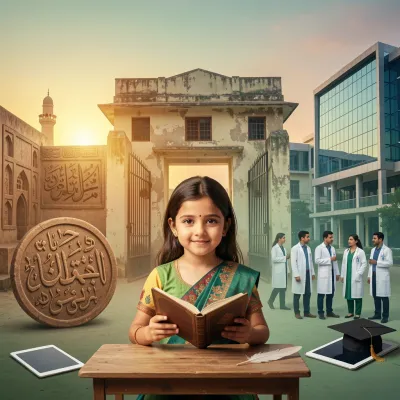
Educationin Pakistan has evolved through a complex historical trajectory, beginning with ancient Indus Valley learning traditions, influenced by Islamic educational institutions like madrasas during Muslim rule, and significantly transformed under British colonial policies that prioritized English-medium Western education for elite intermediaries. Post-independence, Pakistan inherited a weak educational infrastructure with low literacy rates, prompting early policy efforts focused on universal primary education and Islamic ideological integration. The system is now structured across six levels—pre-primary to university—with governance shared between federal and provincial authorities following the 18th Constitutional Amendment, which devolved elementary and secondary education to provinces while the federal Higher Education Commission (HEC) oversees higher education and technical vocational training. Key regulatory bodies include provincial Boards of Intermediate and Secondary Education (BISEs) for examinations and the HEC for quality assurance in universities, creating a multifaceted yet often fragmented administrative landscape.
Persistent challenges plague the Pakistani education system, hindering equitable access and quality learning. Millions of children remain out of school, particularly girls and those from marginalized communities, due to poverty, indirect costs of schooling, geographical remoteness, inadequate infrastructure (including lack of sanitation facilities for girls), and socio-cultural norms prioritizing boys' education or early marriage. Teacher shortages, absenteeism, inadequate training, and reliance on rote learning undermine instructional quality, while significant disparities exist between well-resourced private institutions—often offering international curricula—and underfunded public schools. Gender disparities persist, with girls facing lower retention rates at secondary and higher levels due to safety concerns, cultural expectations, and economic barriers. Children with special needs encounter limited access to inclusive education due to infrastructural, curricular, and teacher training gaps, while madrasa education remains largely segregated despite reform efforts to integrate modern subjects. Socio-economic factors like poverty, language barriers (Urdu/English vs. regional languages), and the urban-rural divide further exacerbate inequalities, creating a stratified system where educational quality often correlates with family wealth.
Reform initiatives aim to address these systemic issues, with the Single National Curriculum (SNC) representing a major effort to standardize content across public, private, and madrasa schools from Grade 1 to 12, emphasizing conceptual understanding, critical thinking, and 21st-century skills over rote memorization. Accompanying this are examination reforms shifting toward continuous and competency-based assessment, strengthened teacher training programs aligned with National Professional Standards for Teachers (NPST), and investments in digital learning initiatives to bridge the technology gap, accelerated by the COVID-19 pandemic. Technical and Vocational Education and Training (TVET) is being revitalized through competency-based frameworks, industry partnerships, and outcome-based funding models like the Punjab Skills Development Fund (PSDF) to enhance employability. Public-private partnerships, such as those led by the Sindh Education Foundation (SEF) and Citizens Foundation (TCF), demonstrate successful models for expanding access to quality education in underserved areas, while international collaborations and aid from entities like the World Bank, USAID, and UNESCO have supported infrastructure development, teacher training, and policy reforms. Case studies highlight the impact of focused interventions, including the Pakistan Reading Project (PRP) for literacy and the Virtual University of Pakistan for accessible higher education.
Future directions center on aligning education with national development goals, including Vision 2025 and the Sustainable Development Goals (SDGs), by prioritizing equitable access, improving learning outcomes, enhancing teacher quality and accountability, rebalancing budget allocations toward early childhood and primary education, and fostering inclusive practices for children with disabilities and marginalized groups. Strengthening governance through merit-based recruitment, depoliticization of appointments, and robust data systems is deemed essential, alongside expanding student support services and career counseling to holistically address academic, mental health, and workforce readiness needs. Sustained investment, research-driven policy making, and leveraging technology for personalized learning are viewed as critical to transforming Pakistan’s human capital, reducing socio-economic disparities, and building a resilient, competitive education system capable of contributing to national prosperity and social cohesion. The overarching imperative remains to ensure every child has the opportunity to realize their full potential through quality education.
What You'll Find Inside:
- Historical foundations of education in Pakistan tracing evolution from Indus Valley Civilization through colonial rule to post-independence reforms
- Comprehensive analysis of Pakistan's education system structure and governance across early childhood, primary, secondary, TVET, and higher education levels
- Critical examination of challenges in educational access, equity, and quality, particularly for marginalized communities, girls, and children with special needs
- Overview of major reform initiatives including Single National Curriculum implementation, teacher professional development, and educational technology integration
- In-depth coverage of specialized areas: gender disparities in education, madrassa education integration, technical and vocational training, and education financing mechanisms
Who's It For:
This book is designed for policymakers, educators, researchers, and students seeking a comprehensive understanding of Pakistan's education system. It serves as an essential resource for those involved in educational planning and reform, providing data-driven insights for informed decision-making. Academics will find it valuable for research and analysis, while general readers interested in education in developing nations will gain an accessible yet rigorous exploration of the challenges and opportunities shaping Pakistan's educational landscape.
Table of Contents:
- Introduction
- Chapter 1: Historical Foundations of Education in Pakistan
- Chapter 2: Structure and Governance of the Pakistani Education System
- Chapter 3: Early Childhood Education: Policies and Practices
- Chapter 4: Primary Education: Access, Quality, and Challenges
- Chapter 5: Secondary Education: Curriculum and Reform
- Chapter 6: Technical and Vocational Education and Training (TVET)
- Chapter 7: Higher Education Landscape: Universities and Institutions
- Chapter 8: Curriculum Development and Educational Standards
- Chapter 9: Teacher Education and Professional Development
- Chapter 10: Education Financing and Budget Allocation
- Chapter 11: Role of Public and Private Sectors in Education
- Chapter 12: Challenges in Educational Access and Equity
- Chapter 13: Gender Disparities in Education
- Chapter 14: Education for Children with Special Needs
- Chapter 15: Madrassa Education: Integration and Reform
- Chapter 16: Impact of Socio-Economic Factors on Education
- Chapter 17: Language Policy in Education
- Chapter 18: Examinations, Assessments, and Certifications
- Chapter 19: Educational Technology and Digital Learning Initiatives
- Chapter 20: International Collaborations and Educational Aid
- Chapter 21: Education and National Development Goals
- Chapter 22: Educational Research and Innovation
- Chapter 23: Student Support Services and Career Counseling
- Chapter 24: Key Reforms and Future Directions in Pakistani Education
- Chapter 25: Case Studies of Successful Educational Initiatives
Author:
Published By:
Date Published:
June 30, 2026
Type:
Nonfiction
Language:
English
Word Count:
46,078 words
Reading Time:
3 hours 14 minutes
Sample:
Order:
Order Education In Pakistan (Hardcover) on MixCache.com:
Buy NowPrint copy is made to order and ships worldwide. Includes the ebook free, ready to read instantly.
$5 account credit for all new MixCache.com accounts, usable toward any ebook purchase!*