
Browse by Category
Fiction
- Action & Adventure
- African American
- Anthologies
- Children's Fiction
- Classics
- Comics & Graphic Novels
- Coming of Age
- Contemporary
- Cultural & Regional
- Drama
- Erotica
- Fantasy
- General
- Historical Fiction
- Horror
- Humor & Satire
- Literary Fiction
- Mystery, Thriller & Suspense
- Poetry
- Religious & Inspirational
- Romance
- Science Fiction
- Short Stories
- War & Military
- Westerns
- Women's Fiction
- Young Adult
Non-Fiction
- Antiques & Collectibles
- Arts & Photography
- Biographies & Memoirs
- Business & Money
- Children's Non-Fiction
-
Computers & Technology
- Artificial Intelligence
- Computer Science
- Cybersecurity & Cryptography
- Data Science & Analytics
- Databases & Big Data
- Game Development & Design
- General
- Hardware & DIY
- Mobile App Development
- Networking & Cloud Computing
- Operating Systems
- Programming
- Robotics
- Software
- Software Engineering
- User Experience (UX) & Design
- Web Development & Design
- Cooking, Food & Wine
- Crafts, Hobbies & Home
- Education & Teaching
- Engineering
- General
- Health, Fitness & Dieting
-
History
- African History
- African History - North Africa
- African History - Sub-Saharan Africa
- American History
- American History - 20th Century
- American History - Civil War
- American History - Colonial Period
- Ancient History
- Asian History
- Asian History - China
- Asian History - India
- Asian History - Japan
- Asian History - Southeast Asia
- European History
- European History - Ancient Greece
- European History - Ancient Rome
- European History - Medieval
- European History - Modern
- European History - Renaissance
- General
- Middle Eastern History
- Military History
- Military History - Aviation
- Military History - Naval
- Social & Cultural History
- World History
- Humor & Entertainment
- Industrial Technology
- Language Learning
- Law
- LGBTQ+ Non-Fiction
- Literary Criticism
- Medical Books
- Parenting & Relationships
- Philosophy
- Politics & Social Sciences
- Reference
- Religion & Spirituality
-
Science & Math
- Agricultural Sciences
- Astronomy & Space Science
- Behavioral Sciences
- Biological Sciences
- Botany & Plant Science
- Chemistry
- Earth Sciences
- Engineering - Chemical
- Engineering - Civil
- Engineering - Electrical
- Engineering - Mechanical
- Environment
- General
- Geology
- Mathematics
- Nature & Ecology
- Oceanography
- Paleontology
- Physics
- Statistics
- Self-Help
- Sports & Outdoors
- Study Aids
- Sustainability & Green Living
- Textbooks
- Transportation
- Travel
- True Crime
- Urban Planning & Development
- Veterinary Medicine
- Writing & Publishing
Jump to Section
MixCache.com Total Access
Unlimited reading and audiobooks for every book published by MixCache.com.
Included titles carry the MTA badge.
Learn more →
Education In Latvia
MTA
A Comprehensive Overview from Early Childhood to Higher Education
About this book:
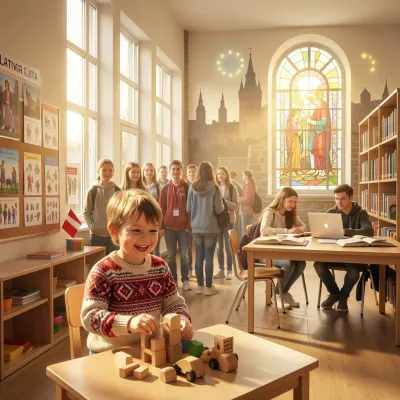
Latvia’s education system has evolved from informal folk traditions and church schools through periods of foreign influence, Soviet centralization, and post‑independence reforms that re‑established Latvian as the language of instruction and aligned the system with European standards. Governed by the Ministry of Education and Science and implemented largely by municipalities, the structure comprises early childhood education, compulsory nine‑year basic education (primary grades 1‑4 and lower secondary grades 5‑9), general and vocational secondary education, and higher education organized under the Bologna Process. Quality assurance is overseen by the Academic Information Centre, and the system emphasizes decentralization, inclusivity, and a balance between national standards and local responsiveness.
Early childhood education focuses on holistic, play‑based development in nurseries and kindergartens, with a compulsory pre‑school year for five‑‑six‑year‑olds that fosters readiness for school. Primary education builds foundational literacy, numeracy, and integrated environmental studies, supplemented by foreign languages, arts, music, and ethics. Basic education deepens subject‑specific knowledge, introduces specialized sciences, history, foreign languages, and technology, culminating in centralized state examinations at the end of grade 9 that guide students toward academic or vocational pathways. Assessment throughout is primarily formative, with national exams providing benchmarks for progression and policy feedback.
Secondary education splits into academic tracks (gymnasiums and secondary schools) preparing students for university through advanced study, elective profiles, and rigorous Grade 12 state examinations, and vocational secondary education that blends theory with extensive practical training, internships, and industry partnerships, awarding both a professional qualification and a general secondary certificate. Teacher preparation requires university‑level pedagogical training and supervised practice, supported by continuous professional development in inclusive education, digital literacy, and competency‑based methods. Higher education offers bachelor’s, master’s, and doctoral programs, increasingly internationalized through English‑taught degrees, Erasmus+ mobility, and research collaboration, while maintaining strong ties to the labor market and emphasizing quality assurance, accreditation, and graduate employability.
Adult education and lifelong learning provide vocational retraining, language acquisition, digital literacy, and non‑formal opportunities, driven by employer needs, EU funding, and flexible online platforms. Educational technology is integrated across all levels, from interactive tools in early childhood to virtual laboratories in higher education, supported by national strategies for infrastructure, digital literacy, and teacher training. Language policy upholds Latvian as the state language and primary medium of instruction while accommodating minority languages and promoting foreign language proficiency, especially English. Ongoing challenges include demographic decline, funding equity, teacher recruitment, curriculum relevance, and integrating national minorities, yet Latvia continues to reform through the “Skola 2030” competency‑based initiative, performance‑based funding discussions, and a commitment to internationalization, innovation, and inclusive, sustainable development.
What You'll Find Inside:
- Explore the historical evolution of Latvia's education system, from ancient folk traditions and Soviet influences to post-independence reforms and modernization.
- Understand the governance structure involving the Ministry of Education and Science, municipal responsibilities, and legislative frameworks shaping educational policies.
- Dive into early childhood through secondary education, covering nurseries, kindergartens, primary and basic education, with insights into both academic and vocational secondary pathways.
- Discover Latvia's higher education landscape, including Bachelor's, Master's, and Doctoral programs, aligned with European Bologna Process standards and featuring quality assurance mechanisms.
- Examine current challenges, digital learning initiatives, language policies, and future perspectives, including efforts to address demographic shifts, equity, and international competitiveness.
Who's It For:
This book is essential for educators, researchers, and policymakers interested in understanding Latvia's education system and its alignment with European standards. It serves those seeking insights into inclusive practices, vocational training, or comparative education frameworks. Additionally, it appeals to international stakeholders exploring educational models in the Baltic region or studying post-Soviet educational transitions.
Table of Contents:
- Introduction
- Chapter 1: Historical Development of Latvian Education
- Chapter 2: Structure and Governance of the Latvian Education System
- Chapter 3: Early Childhood Education: Nurseries and Kindergartens
- Chapter 4: Pre-school Education Curriculum and Pedagogy
- Chapter 5: Primary Education: Grades 1-4
- Chapter 6: Basic Education: Grades 5-9
- Chapter 7: Curriculum and Assessment in Basic Education
- Chapter 8: General Secondary Education: Academic Tracks
- Chapter 9: Vocational Secondary Education: Skills for the Future
- Chapter 10: Special Education Needs and Inclusive Practices
- Chapter 11: Teacher Education and Professional Development
- Chapter 12: Higher Education Landscape: Universities and Colleges
- Chapter 13: Bachelor's Degree Programs in Latvia
- Chapter 14: Master's Degree Programs and Research Opportunities
- Chapter 15: Doctoral Studies and Academic Research
- Chapter 16: Quality Assurance and Accreditation in Higher Education
- Chapter 17: Internationalization of Latvian Education
- Chapter 18: Funding and Financing of the Education System
- Chapter 19: Educational Technology and Digital Learning Initiatives
- Chapter 20: Adult Education and Lifelong Learning
- Chapter 21: Challenges and Reforms in Latvian Education
- Chapter 22: The Role of Language in Latvian Education
- Chapter 23: Educational Outcomes and Student Achievements
- Chapter 24: Comparing Latvian Education with European Standards
- Chapter 25: Future Perspectives and Development of Education in Latvia
Author:
Published By:
Date Published:
June 28, 2026
Type:
Nonfiction
Language:
English
Word Count:
40,807 words
Reading Time:
2 hours 51 minutes
Sample:
MixCache.com Total Access
Get unlimited access to this book + all books published by MixCache.com for $11.99/month
Subscribe to MTAOr purchase this book individually below
Order:
Buy the Education In Latvia ebook on MixCache.com:
Buy Now
Full ebook will be available immediately
- read online or download as a PDF file.
$5 account credit for all new MixCache.com accounts, usable toward any ebook purchase!*



Ratings & Reviews
Ask Questions About This Book
Have a question about the content? Ask our AI assistant!
Start by asking a question about "Education In Latvia"
Example: "Does this book mention William Shakespeare?"
Thinking...