
Browse by Category
Fiction
- Action & Adventure
- African American
- Anthologies
- Children's Fiction
- Classics
- Comics & Graphic Novels
- Coming of Age
- Contemporary
- Cultural & Regional
- Drama
- Erotica
- Fantasy
- General
- Historical Fiction
- Horror
- Humor & Satire
- Literary Fiction
- Mystery, Thriller & Suspense
- Poetry
- Religious & Inspirational
- Romance
- Science Fiction
- Short Stories
- War & Military
- Westerns
- Women's Fiction
- Young Adult
Non-Fiction
- Antiques & Collectibles
- Arts & Photography
- Biographies & Memoirs
- Business & Money
- Children's Non-Fiction
-
Computers & Technology
- Artificial Intelligence
- Computer Science
- Cybersecurity & Cryptography
- Data Science & Analytics
- Databases & Big Data
- Game Development & Design
- General
- Hardware & DIY
- Mobile App Development
- Networking & Cloud Computing
- Operating Systems
- Programming
- Robotics
- Software
- Software Engineering
- User Experience (UX) & Design
- Web Development & Design
- Cooking, Food & Wine
- Crafts, Hobbies & Home
- Education & Teaching
- Engineering
- General
- Health, Fitness & Dieting
-
History
- African History
- African History - North Africa
- African History - Sub-Saharan Africa
- American History
- American History - 20th Century
- American History - Civil War
- American History - Colonial Period
- Ancient History
- Asian History
- Asian History - China
- Asian History - India
- Asian History - Japan
- Asian History - Southeast Asia
- European History
- European History - Ancient Greece
- European History - Ancient Rome
- European History - Medieval
- European History - Modern
- European History - Renaissance
- General
- Middle Eastern History
- Military History
- Military History - Aviation
- Military History - Naval
- Social & Cultural History
- World History
- Humor & Entertainment
- Industrial Technology
- Language Learning
- Law
- LGBTQ+ Non-Fiction
- Literary Criticism
- Medical Books
- Parenting & Relationships
- Philosophy
- Politics & Social Sciences
- Reference
- Religion & Spirituality
-
Science & Math
- Agricultural Sciences
- Astronomy & Space Science
- Behavioral Sciences
- Biological Sciences
- Botany & Plant Science
- Chemistry
- Earth Sciences
- Engineering - Chemical
- Engineering - Civil
- Engineering - Electrical
- Engineering - Mechanical
- Environment
- General
- Geology
- Mathematics
- Nature & Ecology
- Oceanography
- Paleontology
- Physics
- Statistics
- Self-Help
- Sports & Outdoors
- Study Aids
- Sustainability & Green Living
- Textbooks
- Transportation
- Travel
- True Crime
- Urban Planning & Development
- Veterinary Medicine
- Writing & Publishing
Jump to Section
MixCache.com Total Access
Unlimited reading and audiobooks for every book published by MixCache.com.
Included titles carry the MTA badge.
Learn more →
Education In Korea
MTA
A Comprehensive Overview from Early Childhood to Higher Education
About this book:
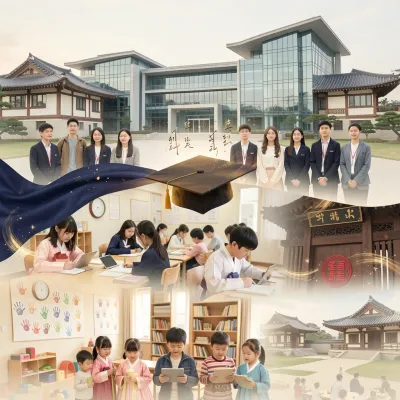
**Summary of "Education In Korea"**
South Korea’s education system, renowned for its rigor and academic excellence, is deeply rooted in centuries-old Confucian traditions and the national philosophy of *Hongik Ingan*, emphasizing moral development and societal contribution. Structured as a 6-3-3-4 system (elementary-middle-high-university), it is governed centrally by the Ministry of Education with regional implementation, ensuring standardized yet adaptable learning pathways. The system places immense emphasis on character education, particularly in elementary schools, and integrates play-based learning in early childhood settings, though academic pressure escalates significantly with age.
At the secondary level, students face intense competition for university admission, epitomized by the *Suneung* (College Scholastic Ability Test), which, coupled with private *hagwon* tutoring, drives educational and financial demands. While general, vocational, and specialized high schools offer varied pathways, the *Suneung* remains the primary gateway to prestigious institutions, disproportionately influencing life trajectories. Special education, multicultural education, and teacher training reflect ongoing efforts to enhance inclusivity and quality, though disparities persist.
Despite its achievements, Korea grapples with significant challenges, including educational inequality fueled by the costly *hagwon* culture, mental health crises among students due to relentless academic stress, and a rigid curriculum historically favoring rote learning. Reforms aim to foster creativity, reduce competition, and promote equity through updated curricula, diversified university admissions, and expanded support services. The integration of technology, such as AI, is reshaping pedagogy and access, while globalization efforts seek to attract international students and align education with global standards.
Looking forward, Korea’s future hinges on balancing its traditional academic strengths with evolving needs for holistic development, adaptability, and global competitiveness. Addressing demographic decline through internationalization, embracing lifelong learning frameworks, and continuing to prioritize innovation and teacher development are key. While challenges remain, the system’s foundational commitment to education and its capacity for reform suggest a trajectory toward meeting 21st-century demands, ensuring Korea’s sustained educational prowess in an increasingly complex world.
What You'll Find Inside:
- Historical evolution of Korean education from ancient Confucian roots to modern reforms, emphasizing the dual philosophical influences of 'Hongik Ingan' and Confucian ethics on pedagogy.
- Detailed analysis of the Korean education system's structure, including the 6-3-3-4 ladder system, governance by the Ministry of Education, and the pivotal role of the 'Suneung' (College Scholastic Ability Test) in university admissions.
- Exploration of the 'hagwon' (private tutoring) phenomenon and its profound impact on educational inequality, student workload, and the competitive dynamics of Korean schooling.
- Critical examination of challenges such as educational disparities, multicultural education initiatives, and the integration of technology in classrooms, alongside policies addressing mental health and well-being.
- Insight into modern reforms, including curriculum changes, competency-based learning, internationalization efforts, and the future directions for Korean education in response to demographic and technological shifts.
Who's It For:
This book is essential for educators, policymakers, and researchers seeking to understand the complexities of South Korea's education system, from its historical foundations to contemporary challenges. It is particularly beneficial for those interested in comparative education systems, educational equity, and the intersection of cultural values with pedagogical practices. Additionally, international students, parents, and professionals exploring opportunities in Korean higher education or vocational training will find valuable insights into navigating and adapting to this dynamic educational landscape.
Table of Contents:
- Introduction
- Chapter 1: Historical Foundations of Korean Education
- Chapter 2: The Philosophical Underpinnings of Korean Pedagogy
- Chapter 3: Structure and Governance of the Korean Education System
- Chapter 4: Early Childhood Education: Nurseries and Kindergartens
- Chapter 5: The Role of Play and Development in Early Learning
- Chapter 6: Primary Education: Curriculum and Instruction
- Chapter 7: Character Education and Moral Development in Elementary Schools
- Chapter 8: Secondary Education: Middle School Dynamics
- Chapter 9: High School Pathways: General, Vocational, and Specialized
- Chapter 10: The Suneung: Korea's College Scholastic Ability Test
- Chapter 11: Private Tutoring and the Hagwon Phenomenon
- Chapter 12: Educational Inequality and Access
- Chapter 13: Special Education in Korea: Policies and Practices
- Chapter 14: Multicultural Education and Diversity in the Classroom
- Chapter 15: Teacher Education and Professional Development
- Chapter 16: Higher Education Landscape: Universities and Colleges
- Chapter 17: Research and Innovation in Korean Higher Education
- Chapter 18: Internationalization of Korean Education
- Chapter 19: Technical and Vocational Education and Training (TVET)
- Chapter 20: Lifelong Learning and Adult Education Initiatives
- Chapter 21: The Impact of Technology on Korean Education
- Chapter 22: Educational Reforms and Future Directions
- Chapter 23: Mental Health and Well-being in the Student Population
- Chapter 24: Parental Involvement and Educational Aspirations
- Chapter 25: Challenges and Prospects for Korean Education in the 21st Century
Author:
Published By:
Date Published:
June 27, 2026
Type:
Nonfiction
Language:
English
Word Count:
42,908 words
Reading Time:
3 hours
Sample:
MixCache.com Total Access
Get unlimited access to this book + all books published by MixCache.com for $11.99/month
Subscribe to MTAOr purchase this book individually below
Order:
Buy the Education In Korea ebook on MixCache.com:
Buy Now
Full ebook will be available immediately
- read online or download as a PDF file.
$5 account credit for all new MixCache.com accounts, usable toward any ebook purchase!*


Ratings & Reviews
Ask Questions About This Book
Have a question about the content? Ask our AI assistant!
Start by asking a question about "Education In Korea"
Example: "Does this book mention William Shakespeare?"
Thinking...