
Browse by Category
Fiction
- Action & Adventure
- African American
- Anthologies
- Children's Fiction
- Classics
- Comics & Graphic Novels
- Coming of Age
- Contemporary
- Cultural & Regional
- Drama
- Erotica
- Fantasy
- General
- Historical Fiction
- Horror
- Humor & Satire
- Literary Fiction
- Mystery, Thriller & Suspense
- Poetry
- Religious & Inspirational
- Romance
- Science Fiction
- Short Stories
- War & Military
- Westerns
- Women's Fiction
- Young Adult
Non-Fiction
- Antiques & Collectibles
- Arts & Photography
- Biographies & Memoirs
- Business & Money
- Children's Non-Fiction
-
Computers & Technology
- Artificial Intelligence
- Computer Science
- Cybersecurity & Cryptography
- Data Science & Analytics
- Databases & Big Data
- Game Development & Design
- General
- Hardware & DIY
- Mobile App Development
- Networking & Cloud Computing
- Operating Systems
- Programming
- Robotics
- Software
- Software Engineering
- User Experience (UX) & Design
- Web Development & Design
- Cooking, Food & Wine
- Crafts, Hobbies & Home
- Education & Teaching
- Engineering
- General
- Health, Fitness & Dieting
-
History
- African History
- African History - North Africa
- African History - Sub-Saharan Africa
- American History
- American History - 20th Century
- American History - Civil War
- American History - Colonial Period
- Ancient History
- Asian History
- Asian History - China
- Asian History - India
- Asian History - Japan
- Asian History - Southeast Asia
- European History
- European History - Ancient Greece
- European History - Ancient Rome
- European History - Medieval
- European History - Modern
- European History - Renaissance
- General
- Middle Eastern History
- Military History
- Military History - Aviation
- Military History - Naval
- Social & Cultural History
- World History
- Humor & Entertainment
- Industrial Technology
- Language Learning
- Law
- LGBTQ+ Non-Fiction
- Literary Criticism
- Medical Books
- Parenting & Relationships
- Philosophy
- Politics & Social Sciences
- Reference
- Religion & Spirituality
-
Science & Math
- Agricultural Sciences
- Astronomy & Space Science
- Behavioral Sciences
- Biological Sciences
- Botany & Plant Science
- Chemistry
- Earth Sciences
- Engineering - Chemical
- Engineering - Civil
- Engineering - Electrical
- Engineering - Mechanical
- Environment
- General
- Geology
- Mathematics
- Nature & Ecology
- Oceanography
- Paleontology
- Physics
- Statistics
- Self-Help
- Sports & Outdoors
- Study Aids
- Sustainability & Green Living
- Textbooks
- Transportation
- Travel
- True Crime
- Urban Planning & Development
- Veterinary Medicine
- Writing & Publishing
Jump to Section
MixCache.com Total Access
Unlimited reading and audiobooks for every book published by MixCache.com.
Included titles carry the MTA badge.
Learn more →
Education In Montenegro
MTA
A Comprehensive Overview from Early Childhood to Higher Education
About this book:
## Summary of "Education In Montenegro"
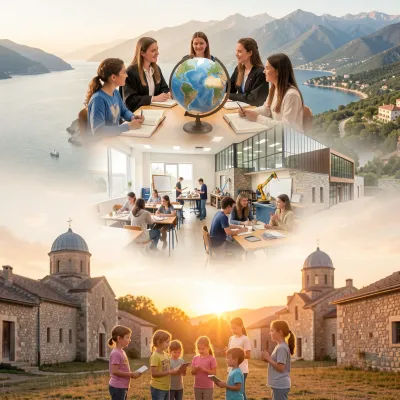
This comprehensive overview traces Montenegro's education system from its historical foundations rooted in ecclesiastical and theocratic traditions through its contemporary evolution into a modern, European-integrated framework. The system is centrally governed by the Ministry of Education, Science and Innovation, operating under a unified structure spanning early childhood to higher education. Key stages include compulsory nine-year primary education emphasizing foundational literacy and numeracy, followed by a dual-track secondary system offering both university-preparatory gymnasiums and practical vocational schools. The University of Montenegro stands as the primary public higher education provider, fully enacting the Bologna Process's 3+2+3 degree structure, while private institutions add diversity. These components are underpinned by robust legislative frameworks, state-funded public schooling, and significant investments in inclusive education policies and special needs support systems aiming to ensure equitable access for all learners.
Montenegro's education system is actively aligned with European Union standards, significantly influencing reforms in curriculum, quality assurance, and international cooperation. The Bologna Process has restructured higher education degrees and facilitated global mobility through programs like Erasmus+, while the European Credit Transfer System (ECTS) standardizes academic credit recognition. Inclusive pedagogy mandates support for students with special educational needs within mainstream settings, supported by Individualized Education Programs and specialized resource centers. Vocational and lifelong learning initiatives, overseen by the Centre for Vocational Education, address labor market demands and adult reskilling. A national quality assurance agency (AKOKVO) safeguards academic standards, and substantial investments in Information and Communication Technology (ICT) infrastructure aim to modernize learning environments and develop digital literacy skills across all levels, preparing students for a technology-driven future.
Beyond structural elements, the system prioritizes continuous teacher training and professional development through bodies like the Bureau for Educational Services, ensuring educators remain at the forefront of pedagogical innovation and technological integration. The impact of education on Montenegrin society is profound, serving as a catalyst for civic engagement, cultural preservation, economic growth, and social equity. It empowers individuals from all backgrounds to acquire skills, fosters intercultural understanding, and generates a skilled workforce vital for national competitiveness. However, persistent challenges include equitable resource distribution, aligning curricula with evolving economic needs, and managing funding constraints. Strategic future directions emphasize integrating 21st-century skills, enhancing digital ecosystems, strengthening human capital, and deepening international partnerships to solidify Montenegro's position as a dynamic contributor to the European and global educational landscape, underpinning its aspirations for continued prosperity and EU integration.
What You'll Find Inside:
- Historical evolution of Montenegrin education from monastic schools and ecclesiastical influence to modern system aligned with European standards
- Structure and governance of Montenegro's education system including the Ministry of Education, Science and Innovation, supporting agencies, councils, and decentralization to local authorities
- Comprehensive overview of all educational levels from early childhood education through primary, secondary, and higher education, detailing policies, curricula, and assessment methods
- In-depth analysis of inclusive education policies, support systems, and practices for students with special educational needs and diverse learners
- Examination of vocational education and training, teacher professional development, and ICT integration as key drivers for modernizing Montenegro's education system
Who's It For:
This book is essential reading for policymakers, education administrators, and researchers seeking to understand Montenegro's educational transformation. It provides valuable insights for educators and practitioners working in Balkan or European educational contexts, as well as international development professionals involved in education reform initiatives. The comprehensive coverage makes it particularly useful for university students studying comparative education or those interested in how small nations align their systems with European standards while preserving cultural identity.
Table of Contents:
- Introduction
- Chapter 1: Historical Foundations of Montenegrin Education
- Chapter 2: Educational Administration and Governance in Montenegro
- Chapter 3: Funding and Economics of Education
- Chapter 4: Early Childhood Education: Policies and Practices
- Chapter 5: Curriculum Development in Preschool Education
- Chapter 6: Primary Education Structure and Objectives
- Chapter 7: Key Subjects and Pedagogical Approaches in Primary Schools
- Chapter 8: Assessment and Evaluation in Primary Education
- Chapter 9: Secondary Education: General and Vocational Tracks
- Chapter 10: Curriculum and Specializations in Secondary Schools
- Chapter 11: Matura Exam and University Entrance Requirements
- Chapter 12: Inclusive Education: Policies and Support Systems
- Chapter 13: Special Needs Education in Montenegro
- Chapter 14: Teacher Training and Professional Development
- Chapter 15: Higher Education Landscape: Universities and Colleges
- Chapter 16: Bologna Process Implementation in Montenegrin Higher Education
- Chapter 17: Quality Assurance in Higher Education
- Chapter 18: Research and Innovation in Montenegrin Academia
- Chapter 19: Adult Education and Lifelong Learning Initiatives
- Chapter 20: Vocational Education and Training (VET) for Workforce Development
- Chapter 21: The Role of ICT in Montenegrin Education
- Chapter 22: International Cooperation and Educational Exchange Programs
- Chapter 23: Challenges and Reforms in the Education System
- Chapter 24: Future Directions and Strategic Planning for Education
- Chapter 25: Impact of Education on Montenegrin Society and Economy
Author:
Published By:
Date Published:
July 4, 2026
Type:
Nonfiction
Language:
English
Word Count:
88,041 words
Reading Time:
6 hours 10 minutes
Sample:
MixCache.com Total Access
Get unlimited access to this book + all books published by MixCache.com for $11.99/month
Subscribe to MTAOr purchase this book individually below
Order:
Buy the Education In Montenegro ebook on MixCache.com:
Buy Now
Full ebook will be available immediately
- read online or download as a PDF file.
$5 account credit for all new MixCache.com accounts, usable toward any ebook purchase!*


Ratings & Reviews
Ask Questions About This Book
Have a question about the content? Ask our AI assistant!
Start by asking a question about "Education In Montenegro"
Example: "Does this book mention William Shakespeare?"
Thinking...