
Browse by Category
Fiction
- Action & Adventure
- African American
- Anthologies
- Children's Fiction
- Classics
- Comics & Graphic Novels
- Coming of Age
- Contemporary
- Cultural & Regional
- Drama
- Erotica
- Fantasy
- General
- Historical Fiction
- Horror
- Humor & Satire
- Literary Fiction
- Mystery, Thriller & Suspense
- Poetry
- Religious & Inspirational
- Romance
- Science Fiction
- Short Stories
- War & Military
- Westerns
- Women's Fiction
- Young Adult
Non-Fiction
- Antiques & Collectibles
- Arts & Photography
- Biographies & Memoirs
- Business & Money
- Children's Non-Fiction
-
Computers & Technology
- Artificial Intelligence
- Computer Science
- Cybersecurity & Cryptography
- Data Science & Analytics
- Databases & Big Data
- Game Development & Design
- General
- Hardware & DIY
- Mobile App Development
- Networking & Cloud Computing
- Operating Systems
- Programming
- Robotics
- Software
- Software Engineering
- User Experience (UX) & Design
- Web Development & Design
- Cooking, Food & Wine
- Crafts, Hobbies & Home
- Education & Teaching
- Engineering
- General
- Health, Fitness & Dieting
-
History
- African History
- African History - North Africa
- African History - Sub-Saharan Africa
- American History
- American History - 20th Century
- American History - Civil War
- American History - Colonial Period
- Ancient History
- Asian History
- Asian History - China
- Asian History - India
- Asian History - Japan
- Asian History - Southeast Asia
- European History
- European History - Ancient Greece
- European History - Ancient Rome
- European History - Medieval
- European History - Modern
- European History - Renaissance
- General
- Middle Eastern History
- Military History
- Military History - Aviation
- Military History - Naval
- Social & Cultural History
- World History
- Humor & Entertainment
- Industrial Technology
- Language Learning
- Law
- LGBTQ+ Non-Fiction
- Literary Criticism
- Medical Books
- Parenting & Relationships
- Philosophy
- Politics & Social Sciences
- Reference
- Religion & Spirituality
-
Science & Math
- Agricultural Sciences
- Astronomy & Space Science
- Behavioral Sciences
- Biological Sciences
- Botany & Plant Science
- Chemistry
- Earth Sciences
- Engineering - Chemical
- Engineering - Civil
- Engineering - Electrical
- Engineering - Mechanical
- Environment
- General
- Geology
- Mathematics
- Nature & Ecology
- Oceanography
- Paleontology
- Physics
- Statistics
- Self-Help
- Sports & Outdoors
- Study Aids
- Sustainability & Green Living
- Textbooks
- Transportation
- Travel
- True Crime
- Urban Planning & Development
- Veterinary Medicine
- Writing & Publishing
Jump to Section

Want unlimited access to all books published by MixCache.com (plus their audiobooks)? Try MixCache.com Total Access. Look for the MTA badge on book covers to identify included titles.
Access to infinite ebooks: Don't see the book you want? Suggest it and we'll create it (free!) for you from scratch with our powerful AI book writer. Then read it with MTA - besides profiting from any sales it makes!
Education In East Timor
MTA
A Comprehensive Overview from Early Childhood to Higher Education
About this book:
**Summary of "Education in East Timor"**
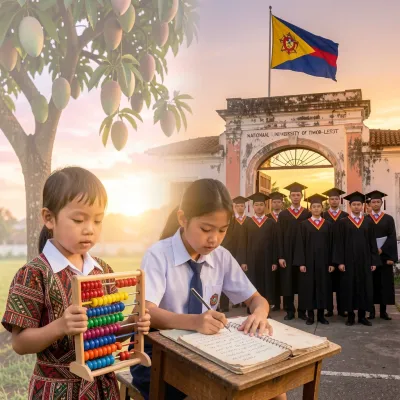
East Timor's education system is a testament to resilience and reconstruction, emerging from the devastation of Portuguese colonial rule, Indonesian occupation, and the 1999 scorched-earth campaign that destroyed much of its infrastructure. The nation's journey since independence has involved building a cohesive system under the Ministry of Education, Youth and Sport (MEJD), with early efforts shaped by the United Nations Transitional Administration and international aid. This included establishing a national curriculum emphasizing Timorese identity, implementing Mother Tongue Based Multilingual Education (MTB-MLE) to bridge linguistic diversity, and expanding access to basic and secondary education. However, challenges persist, including a shortage of qualified teachers, inadequate infrastructure—particularly in rural areas—and the need for continuous curriculum and assessment reforms to ensure quality and relevance.
The system encompasses early childhood education, nine years of basic education, secondary pathways (general and technical/vocational), and higher education anchored by the National University of Timor-Leste (UNTL). Key initiatives focus on integrating peacebuilding, environmental sustainability, and gender equality into the curriculum, while Technical and Vocational Education and Training (TVET) aims to address youth unemployment and economic diversification. Language policies prioritize Tetum and Portuguese, with ongoing efforts to develop MTB-MLE for early grades, though resource constraints and the need for bilingual teaching material pose difficulties. Adult literacy and lifelong learning programs are vital for addressing historical educational gaps and fostering community engagement, while technology adoption remains nascent due to infrastructural and digital divides.
Persistent disparities in access and quality between urban and rural areas, gender imbalances at higher education levels, and the integration of students with disabilities require targeted interventions. International aid and NGOs play an indispensable role in funding, infrastructure, and curriculum development, though coordination and sustainability remain critical. Moving forward, East Timor emphasizes consolidating learning outcomes over mere access, leveraging digital technology to bridge divides, strengthening inclusive practices, and aligning education with national development goals. The vision is to create a globally competitive, equitable system that empowers all citizens, reflecting the nation’s commitment to education as a cornerstone of peace, economic growth, and self-reliance.
What You'll Find Inside:
- Historical evolution of education from pre-colonial traditions through Portuguese rule, Indonesian occupation, and post-independence reconstruction efforts
- Comprehensive structure and governance of East Timor's education system from early childhood through higher education levels
- Analysis of key educational challenges and successes including access, quality, curriculum development, and teacher training across all levels
- Examination of education's role in national development, peacebuilding, gender equality, and inclusive education for marginalized groups
- Exploration of future directions including technology integration, lifelong learning initiatives, and strategies for improving educational equity and quality
Who's It For:
This book is designed for policymakers, educators, researchers, and international development partners working in or with East Timor. It will also benefit anyone interested in educational development in post-conflict nations, particularly those focused on understanding how education systems are rebuilt and transformed after periods of conflict and occupation.
Author:
Published By:
Date Published:
June 23, 2026
Type:
Nonfiction
Language:
English
Word Count:
64,767 words
Reading Time:
4 hours 32 minutes
Sample:
MixCache.com Total Access
Get unlimited access to this book + all books published by MixCache.com for $11.99/month
Subscribe to MTAOr purchase this book individually below
Order:
Buy the Education In East Timor ebook on MixCache.com:
Buy Now
Full ebook will be available immediately
- read online or download as a PDF file.
$5 account credit for all new MixCache.com accounts, usable toward any ebook purchase!*





Ratings & Reviews
Ask Questions About This Book
Have a question about the content? Ask our AI assistant!
Start by asking a question about "Education In East Timor"
Example: "Does this book mention William Shakespeare?"
Thinking...