
Browse by Category
Fiction
- Action & Adventure
- African American
- Anthologies
- Children's Fiction
- Classics
- Comics & Graphic Novels
- Coming of Age
- Contemporary
- Cultural & Regional
- Drama
- Erotica
- Fantasy
- General
- Historical Fiction
- Horror
- Humor & Satire
- Literary Fiction
- Mystery, Thriller & Suspense
- Poetry
- Religious & Inspirational
- Romance
- Science Fiction
- Short Stories
- War & Military
- Westerns
- Women's Fiction
- Young Adult
Non-Fiction
- Antiques & Collectibles
- Arts & Photography
- Biographies & Memoirs
- Business & Money
- Children's Non-Fiction
-
Computers & Technology
- Artificial Intelligence
- Computer Science
- Cybersecurity & Cryptography
- Data Science & Analytics
- Databases & Big Data
- Game Development & Design
- General
- Hardware & DIY
- Mobile App Development
- Networking & Cloud Computing
- Operating Systems
- Programming
- Robotics
- Software
- Software Engineering
- User Experience (UX) & Design
- Web Development & Design
- Cooking, Food & Wine
- Crafts, Hobbies & Home
- Education & Teaching
- Engineering
- General
- Health, Fitness & Dieting
-
History
- African History
- African History - North Africa
- African History - Sub-Saharan Africa
- American History
- American History - 20th Century
- American History - Civil War
- American History - Colonial Period
- Ancient History
- Asian History
- Asian History - China
- Asian History - India
- Asian History - Japan
- Asian History - Southeast Asia
- European History
- European History - Ancient Greece
- European History - Ancient Rome
- European History - Medieval
- European History - Modern
- European History - Renaissance
- General
- Middle Eastern History
- Military History
- Military History - Aviation
- Military History - Naval
- Social & Cultural History
- World History
- Humor & Entertainment
- Industrial Technology
- Language Learning
- Law
- LGBTQ+ Non-Fiction
- Literary Criticism
- Medical Books
- Parenting & Relationships
- Philosophy
- Politics & Social Sciences
- Reference
- Religion & Spirituality
-
Science & Math
- Agricultural Sciences
- Astronomy & Space Science
- Behavioral Sciences
- Biological Sciences
- Botany & Plant Science
- Chemistry
- Earth Sciences
- Engineering - Chemical
- Engineering - Civil
- Engineering - Electrical
- Engineering - Mechanical
- Environment
- General
- Geology
- Mathematics
- Nature & Ecology
- Oceanography
- Paleontology
- Physics
- Statistics
- Self-Help
- Sports & Outdoors
- Study Aids
- Sustainability & Green Living
- Textbooks
- Transportation
- Travel
- True Crime
- Urban Planning & Development
- Veterinary Medicine
- Writing & Publishing
Jump to Section

Want unlimited access to all books published by MixCache.com (plus their audiobooks)? Try MixCache.com Total Access. Look for the MTA badge on book covers to identify included titles.
Access to infinite ebooks: Don't see the book you want? Suggest it and we'll create it (free!) for you from scratch with our powerful AI book writer. Then read it with MTA - besides profiting from any sales it makes!
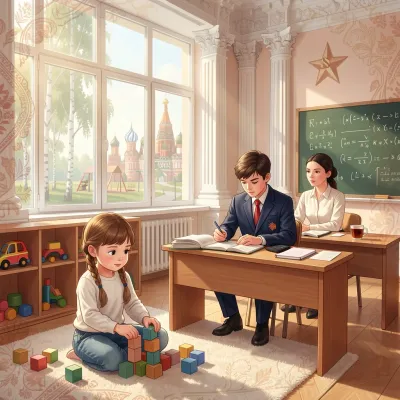
Education In Bulgaria
MTA
A Comprehensive Overview from Early Childhood to Higher Education
About this book:

# Summary of "Education In Bulgaria: A Comprehensive Overview from Early Childhood to Higher Education"
Bulgaria's educational system traces its roots to the 9th century, when the creation of the Glagolitic and Cyrillic alphabets and the establishment of literary schools in Preslav and Ohrid laid the foundation for a written culture and linguistic identity. Ottoman rule shifted education primarily to monastery schools that preserved Bulgarian language and heritage, while the 18th- and 19th-century National Revival sparked a surge in secular schooling, highlighted by Vasil Aprilov's landmark school in Gabrovo in 1835. After liberation in 1878, Bulgaria established a centralized national system with compulsory primary education, though teacher shortages posed challenges. The communist era (1944–1989) brought ideological control and Soviet-influenced technical training, and the post-1989 period initiated depoliticization, European alignment, and the emergence of private institutions.
The modern Bulgarian system is overseen by the Ministry of Education and Science and structured into early childhood education (nurseries for ages 10 months to 3 years, kindergartens for ages 3–6/7, with pre-school compulsory from age 4 since 2020), basic education (grades 1–8, divided into primary and lower secondary), secondary education (grades 8–12, encompassing general gymnasia and vocational schools), and higher education following the Bologna three-cycle model of Bachelor's, Master's, and Doctoral degrees. The system uses a six-point grading scale, and compulsory schooling extends to age 16. Higher education comprises universities, specialized higher schools, and colleges, governed by the principles of academic autonomy and quality assured by the National Evaluation and Accreditation Agency.
The book explores numerous cross-cutting themes. Specialized secondary schools in foreign languages, mathematics, sciences, arts, sports, and military training cater to exceptional talents through competitive admissions and intensive curricula. Inclusive education for students with special educational needs has become a legislative priority, supported by resource teachers, Individual Educational Plans, and assistive technologies, though challenges in funding, specialized personnel, and attitudinal barriers persist. Technology integration has been accelerated by national strategies and the COVID-19 pandemic, with efforts to improve digital infrastructure and teacher competencies, though disparities between urban and rural schools remain. Quality assurance operates through both external mechanisms like NEAA accreditation and regional inspectorates, and internal institutional self-assessment. Teacher training requires dual subject-matter and pedagogical qualifications, with ongoing professional development mandated throughout educators' careers.
Funding and governance reflect a balance between central state budget allocations, municipal responsibilities for pre-school and school education, and institutional autonomy, particularly in higher education where tuition fees supplement state funding. Bulgaria's active internationalization includes full participation in the Bologna Process, Erasmus+, CEEPUS, English-taught programs attracting nearly 17,000 international students, and joint degree partnerships. EU membership has profoundly shaped policy, providing structural funds and aligning national frameworks with European standards. Persistent challenges include the impact of socio-economic factors—family income, parental education, geographical location, and ethnicity—on educational outcomes, demographic decline and brain drain, early school leaving, and ensuring equitable quality across regions. The book concludes with an outlook toward greater curriculum personalization, deeper digital transformation, enhanced teacher professionalization, and continued efforts to build a more inclusive, globally competitive educational system.
What You'll Find Inside:
- Bulgaria's education system spans from early childhood through higher education, structured into compulsory basic education (grades 1–8) and secondary education (grades 9–12), with alignment to the Bologna Process for internationally recognized Bachelor’s, Master’s, and Doctoral degrees.
- The system emphasizes inclusive education, supported by legislation like the 2016 Pre-school and School Education Act, which mandates integration of students with special educational needs into mainstream schools through Individual Educational Plans and resource teachers.
- Historical influences—from medieval church schools and Ottoman-era monastery education to Soviet-style centralization and post-1989 democratic reforms—have shaped Bulgaria’s current educational structure, curriculum, and governance.
- Challenges such as regional disparities, teacher shortages, digital divides, and brain drain persist, but ongoing reforms focus on modernizing curricula, expanding STEM/STEAM education, improving teacher training, and increasing funding and internationalization.
- Bulgaria actively participates in European educational frameworks, including Erasmus+ and the European Higher Education Area, promoting student mobility, quality assurance via NEAA accreditation, and alignment with EU standards for lifelong learning and digital competence.
Who's It For:
This book is ideal for educators, policymakers, researchers, and students interested in comparative or international education systems, particularly those focused on Eastern Europe or EU member states. It also serves as a valuable resource for Bulgarian diaspora, foreign academics considering study or collaboration in Bulgaria, and institutions engaged in cross-border educational partnerships.
Author:
Published By:
Date Published:
June 20, 2026
Type:
Nonfiction
Language:
English
Word Count:
37,640 words
Reading Time:
2 hours 38 minutes
Sample:
MixCache.com Total Access
Get unlimited access to this book + all books published by MixCache.com for $11.99/month
Subscribe to MTAOr purchase this book individually below
Order:
Buy the Education In Bulgaria ebook on MixCache.com:
Buy Now
Full ebook will be available immediately
- read online or download as a PDF file.
$5 account credit for all new MixCache.com accounts, usable toward any ebook purchase!*



Ratings & Reviews
Ask Questions About This Book
Have a question about the content? Ask our AI assistant!
Start by asking a question about "Education In Bulgaria"
Example: "Does this book mention William Shakespeare?"
Thinking...