Browse by Category
Fiction
- Action & Adventure
- African American
- Anthologies
- Children's Fiction
- Classics
- Comics & Graphic Novels
- Coming of Age
- Contemporary
- Cultural & Regional
- Drama
- Erotica
- Fantasy
- General
- Historical Fiction
- Horror
- Humor & Satire
- Literary Fiction
- Mystery, Thriller & Suspense
- Poetry
- Religious & Inspirational
- Romance
- Science Fiction
- Short Stories
- War & Military
- Westerns
- Women's Fiction
- Young Adult
Non-Fiction
- Antiques & Collectibles
- Arts & Photography
- Biographies & Memoirs
- Business & Money
- Children's Non-Fiction
-
Computers & Technology
- Artificial Intelligence
- Computer Science
- Cybersecurity & Cryptography
- Data Science & Analytics
- Databases & Big Data
- Game Development & Design
- General
- Hardware & DIY
- Mobile App Development
- Networking & Cloud Computing
- Operating Systems
- Programming
- Robotics
- Software
- Software Engineering
- User Experience (UX) & Design
- Web Development & Design
- Cooking, Food & Wine
- Crafts, Hobbies & Home
- Education & Teaching
- Engineering
- General
- Health, Fitness & Dieting
-
History
- African History
- African History - North Africa
- African History - Sub-Saharan Africa
- American History
- American History - 20th Century
- American History - Civil War
- American History - Colonial Period
- Ancient History
- Asian History
- Asian History - China
- Asian History - India
- Asian History - Japan
- Asian History - Southeast Asia
- European History
- European History - Ancient Greece
- European History - Ancient Rome
- European History - Medieval
- European History - Modern
- European History - Renaissance
- General
- Middle Eastern History
- Military History
- Military History - Aviation
- Military History - Naval
- Social & Cultural History
- World History
- Humor & Entertainment
- Industrial Technology
- Language Learning
- Law
- LGBTQ+ Non-Fiction
- Literary Criticism
- Medical Books
- Parenting & Relationships
- Philosophy
- Politics & Social Sciences
- Reference
- Religion & Spirituality
-
Science & Math
- Agricultural Sciences
- Astronomy & Space Science
- Behavioral Sciences
- Biological Sciences
- Botany & Plant Science
- Chemistry
- Earth Sciences
- Engineering - Chemical
- Engineering - Civil
- Engineering - Electrical
- Engineering - Mechanical
- Environment
- General
- Geology
- Mathematics
- Nature & Ecology
- Oceanography
- Paleontology
- Physics
- Statistics
- Self-Help
- Sports & Outdoors
- Study Aids
- Sustainability & Green Living
- Textbooks
- Transportation
- Travel
- True Crime
- Urban Planning & Development
- Veterinary Medicine
- Writing & Publishing
Jump to Section

Want unlimited access to all books published by MixCache.com (plus their audiobooks)? Try MixCache.com Total Access. Look for the MTA badge on book covers to identify included titles.
Access to infinite ebooks: Don't see the book you want? Suggest it and we'll create it (free!) for you from scratch with our powerful AI book writer. Then read it with MTA - besides profiting from any sales it makes!
A History of Curaçao
About this book:
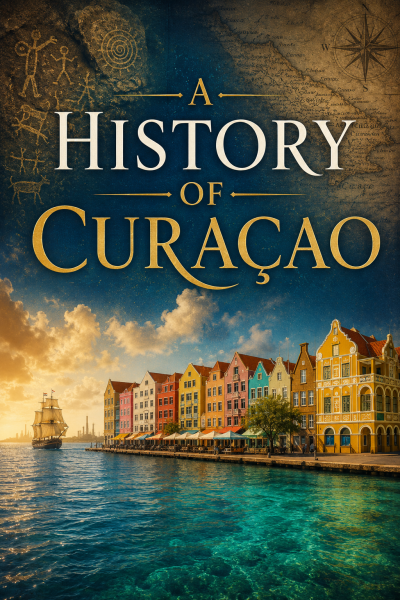
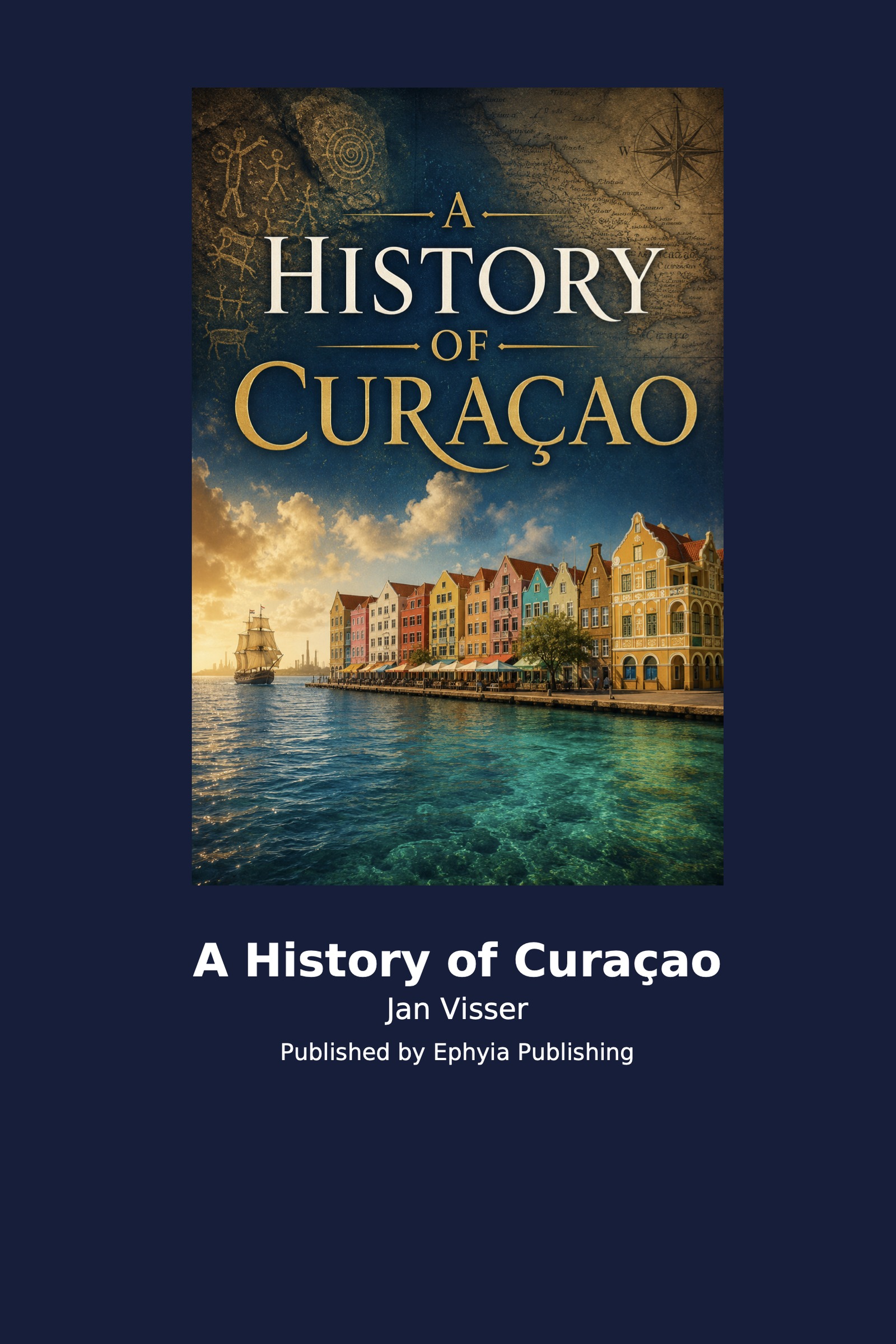
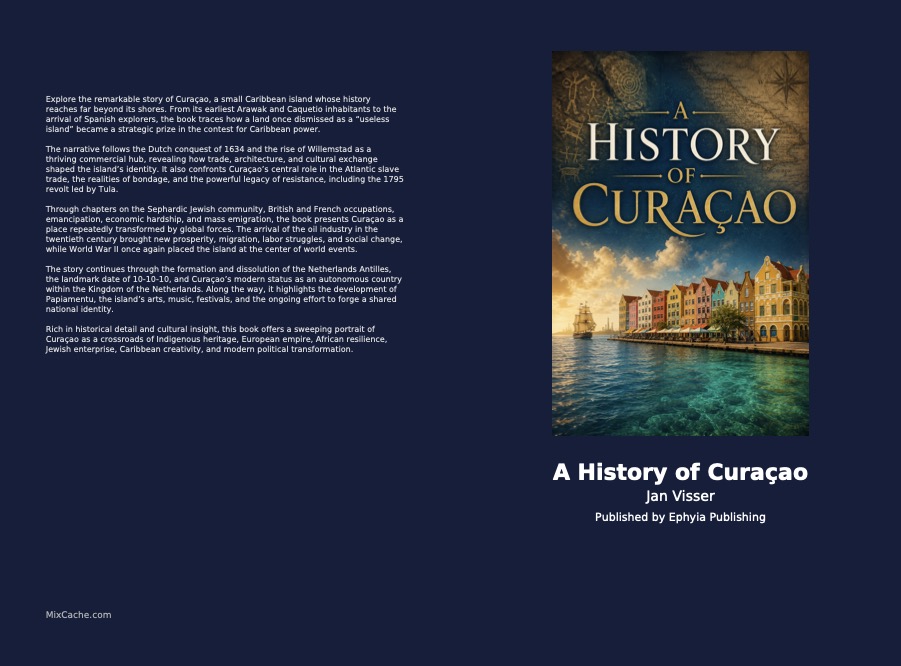
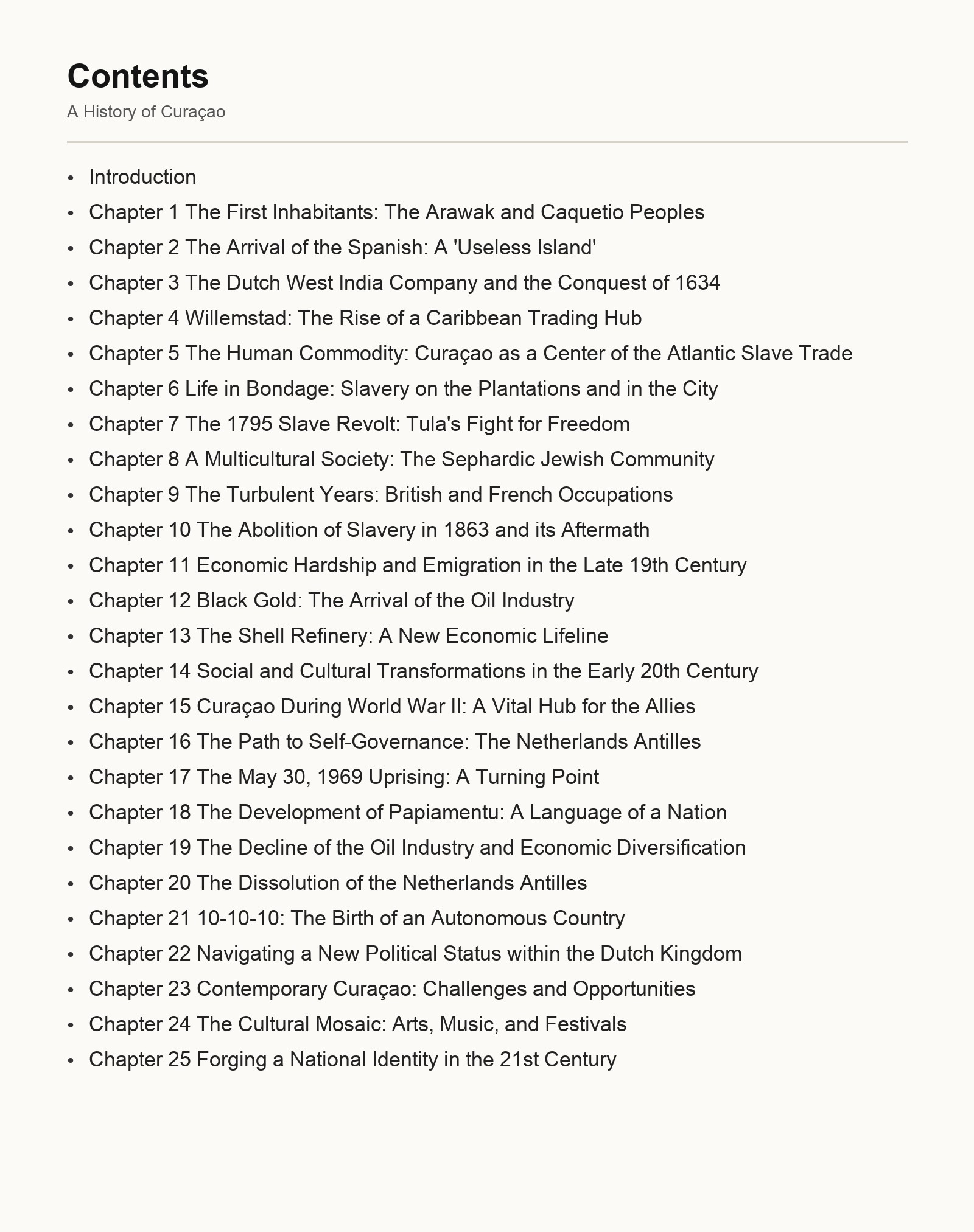
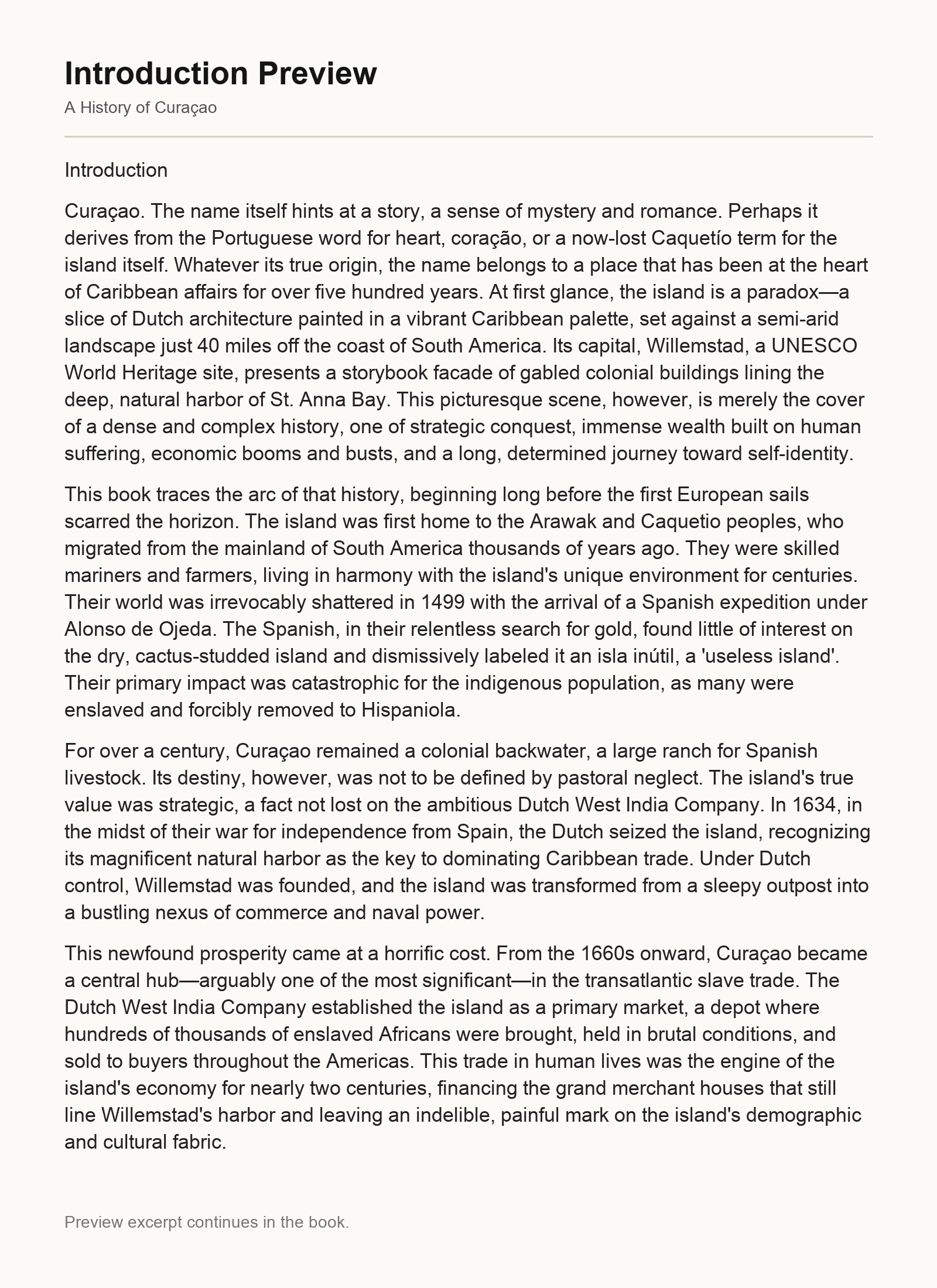
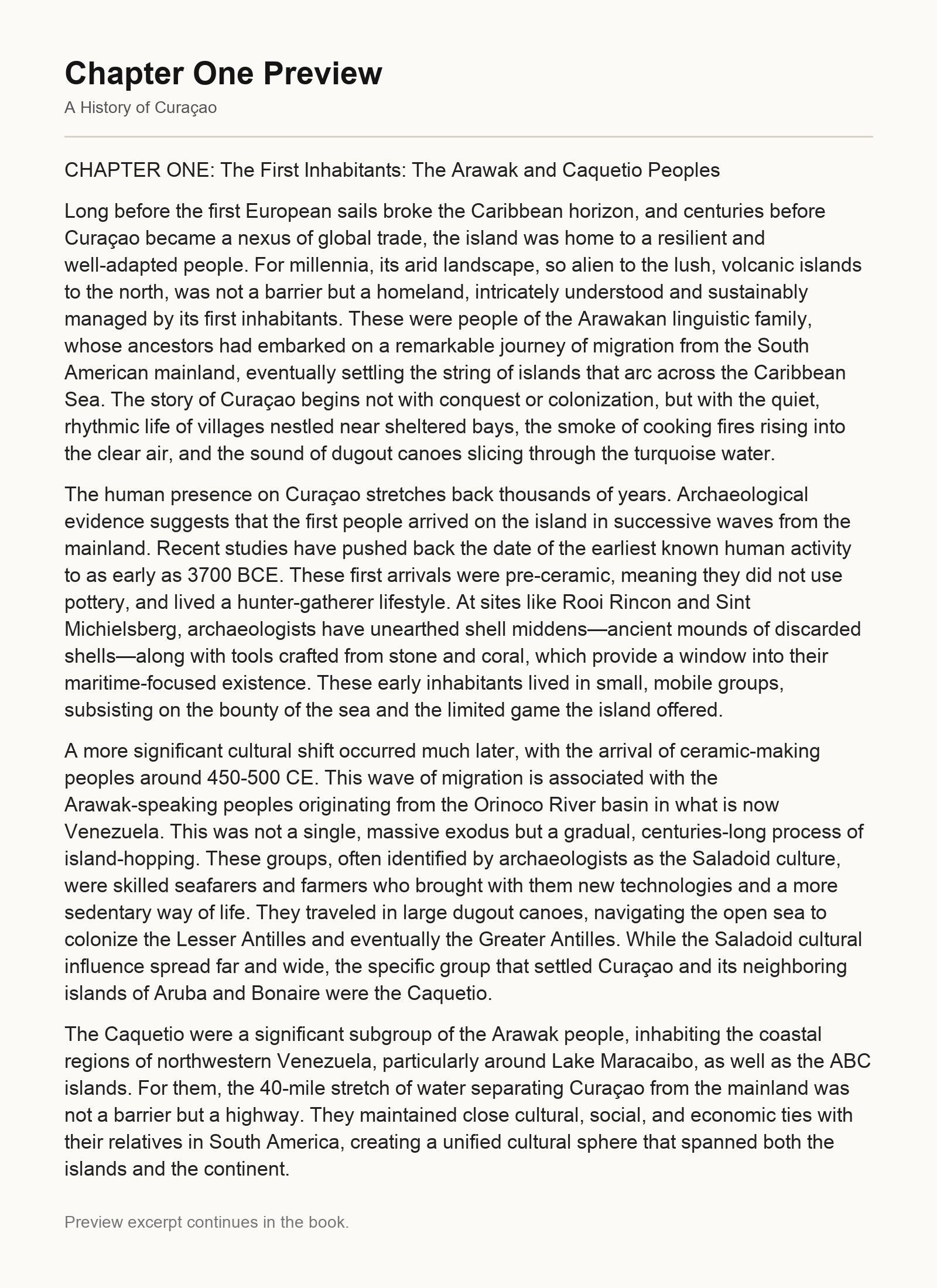
Explore the remarkable story of Curaçao, a small Caribbean island whose history reaches far beyond its shores. From its earliest Arawak and Caquetio inhabitants to the arrival of Spanish explorers, the book traces how a land once dismissed as a “useless island” became a strategic prize in the contest for Caribbean power.
The narrative follows the Dutch conquest of 1634 and the rise of Willemstad as a thriving commercial hub, revealing how trade, architecture, and cultural exchange shaped the island’s identity. It also confronts Curaçao’s central role in the Atlantic slave trade, the realities of bondage, and the powerful legacy of resistance, including the 1795 revolt led by Tula.
Through chapters on the Sephardic Jewish community, British and French occupations, emancipation, economic hardship, and mass emigration, the book presents Curaçao as a place repeatedly transformed by global forces. The arrival of the oil industry in the twentieth century brought new prosperity, migration, labor struggles, and social change, while World War II once again placed the island at the center of world events.
The story continues through the formation and dissolution of the Netherlands Antilles, the landmark date of 10-10-10, and Curaçao’s modern status as an autonomous country within the Kingdom of the Netherlands. Along the way, it highlights the development of Papiamentu, the island’s arts, music, festivals, and the ongoing effort to forge a shared national identity.
Rich in historical detail and cultural insight, this book offers a sweeping portrait of Curaçao as a crossroads of Indigenous heritage, European empire, African resilience, Jewish enterprise, Caribbean creativity, and modern political transformation.
What You'll Find Inside:
- The indigenous Arawak and Caquetio peoples' sophisticated adaptation to Curaçao's arid environment through agriculture, fishing, and trade networks long before European contact
- Curaçao's transformation into a major depot of the transatlantic slave trade from the 1660s, where hundreds of thousands of enslaved Africans were held, inspected, and sold to buyers throughout the Americas
- The 1795 slave revolt led by Tula, who demanded freedom based on revolutionary ideals from Haiti and France, marking a pivotal moment in the island's resistance to slavery
- The economic revolution brought by the Shell oil refinery in the 20th century, which transformed Curaçao from poverty to prosperity but created deep social and environmental challenges
- Curaçao's political journey from Spanish neglect through Dutch colonization to autonomy within the Dutch Kingdom, including the 1969 uprising and the 10-10-10 achievement of country status
Who's It For:
This book is ideal for students, scholars, and general readers interested in Caribbean history, colonialism, and post-colonial development. It provides a comprehensive account of Curaçao's 500-year history, making it particularly valuable for those studying the Atlantic slave trade, Dutch colonial history, or the political evolution of small island nations. Readers seeking to understand how a small island became a strategic player in global affairs through successive waves of indigenous habitation, European conquest, slavery, industrialization, and political self-determination will find this work especially insightful.
Author:
Published By:
Date Published:
June 15, 2026
Type:
Nonfiction
Language:
English
Word Count:
42,301 words
Reading Time:
2 hours 58 minutes
Sample:
Order:
Order A History of Curaçao (Hardcover) on MixCache.com:
Buy NowPrint copy is made to order and ships worldwide. Includes the ebook free, ready to read instantly.
$5 account credit for all new MixCache.com accounts, usable toward any ebook purchase!*