Browse by Category
Fiction
- Action & Adventure
- African American
- Anthologies
- Children's Fiction
- Classics
- Comics & Graphic Novels
- Coming of Age
- Contemporary
- Cultural & Regional
- Drama
- Erotica
- Fantasy
- General
- Historical Fiction
- Horror
- Humor & Satire
- Literary Fiction
- Mystery, Thriller & Suspense
- Poetry
- Religious & Inspirational
- Romance
- Science Fiction
- Short Stories
- War & Military
- Westerns
- Women's Fiction
- Young Adult
Non-Fiction
- Antiques & Collectibles
- Arts & Photography
- Biographies & Memoirs
- Business & Money
- Children's Non-Fiction
-
Computers & Technology
- Artificial Intelligence
- Computer Science
- Cybersecurity & Cryptography
- Data Science & Analytics
- Databases & Big Data
- Game Development & Design
- General
- Hardware & DIY
- Mobile App Development
- Networking & Cloud Computing
- Operating Systems
- Programming
- Robotics
- Software
- Software Engineering
- User Experience (UX) & Design
- Web Development & Design
- Cooking, Food & Wine
- Crafts, Hobbies & Home
- Education & Teaching
- Engineering
- General
- Health, Fitness & Dieting
-
History
- African History
- African History - North Africa
- African History - Sub-Saharan Africa
- American History
- American History - 20th Century
- American History - Civil War
- American History - Colonial Period
- Ancient History
- Asian History
- Asian History - China
- Asian History - India
- Asian History - Japan
- Asian History - Southeast Asia
- European History
- European History - Ancient Greece
- European History - Ancient Rome
- European History - Medieval
- European History - Modern
- European History - Renaissance
- General
- Middle Eastern History
- Military History
- Military History - Aviation
- Military History - Naval
- Social & Cultural History
- World History
- Humor & Entertainment
- Industrial Technology
- Language Learning
- Law
- LGBTQ+ Non-Fiction
- Literary Criticism
- Medical Books
- Parenting & Relationships
- Philosophy
- Politics & Social Sciences
- Reference
- Religion & Spirituality
-
Science & Math
- Agricultural Sciences
- Astronomy & Space Science
- Behavioral Sciences
- Biological Sciences
- Botany & Plant Science
- Chemistry
- Earth Sciences
- Engineering - Chemical
- Engineering - Civil
- Engineering - Electrical
- Engineering - Mechanical
- Environment
- General
- Geology
- Mathematics
- Nature & Ecology
- Oceanography
- Paleontology
- Physics
- Statistics
- Self-Help
- Sports & Outdoors
- Study Aids
- Sustainability & Green Living
- Textbooks
- Transportation
- Travel
- True Crime
- Urban Planning & Development
- Veterinary Medicine
- Writing & Publishing
Jump to Section
MixCache.com Total Access
Unlimited reading and audiobooks for every book published by MixCache.com.
Included titles carry the MTA badge.
Learn more →
The Hittites
MTA
Story of a Civilization
About this book:
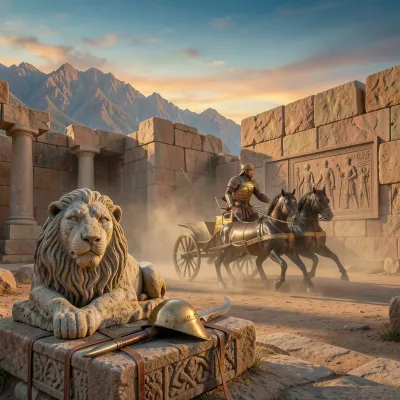
The Hittites emerged in central Anatolia during the second millennium BCE, blending incoming Indo‑European speakers with the indigenous Hattian population to forge a distinct identity centered on the capital Hattusa. Their early kings—Labarna, Hattusili I, and Mursili I—expanded the kingdom through conquest, while the Telepinu Edict instituted clear succession rules and curtailed noble factionalism, laying a legal‑institutional foundation for stable monarchy. Hattusa’s strategic location, fortified walls, and rich archives of cuneiform tablets reveal a sophisticated bureaucracy that recorded everything from royal annals and treaties to law codes, religious texts, and economic accounts.
Hittite society combined a relatively humane legal system emphasizing restitution over retribution with a syncretic religion that worshipped “a thousand gods,” integrating Hattian, Hurrian, and Indo‑European deities. The king served as chief priest, maintaining divine favor through elaborate festivals, sacrifices, and divination, while crises such as plague prompted fervent prayers and ritual renewal. Militarily, the Hittites fielded a powerful chariot corps supported by disciplined infantry and advanced logistics, enabling campaigns that reached Babylon and clashed with Egypt at Kadesh. Diplomacy—conducted in Akkadian cuneiform—featured royal marriages, gift exchanges, and treaties, most notably the Egyptian‑Hittite Peace Treaty, which established mutual non‑aggression and defense.
Under rulers like Suppiluliuma I, Hattusili III, and Puduhepa, the empire reached its zenith, dominating northern Syria, vassalizing Mitanni, and securing a vast network of tributary states that supplied metals, timber, horses, and trade goods. Internal stability was reinforced by legal reforms, religious standardization, and monumental architecture such as the Lion Gate and the Yazılıkaya sanctuary. However, mounting pressures—drought, famine, plague, incursions by the Sea Peoples, and the relentless expansion of Assyria—strained resources and eroded loyalty among vassals. The capital Hattusa was ultimately sacked and abandoned around 1180 BCE, marking the collapse of the Late Bronze Age imperial system.
In the aftermath, Neo‑Hittite kingdoms arose in Syria and Anatolia, preserving Luwian language and hieroglyphic script while adapting to new Iron Age realities. The Hittites’ legacy endured through their pioneering peace treaty, legal traditions, artistic motifs, and linguistic contributions, which influenced later Anatolian cultures and modern scholarship. Rediscovered in the early twentieth century through the Boğazköy excavations and Hrozný’s decipherment of Hittite as an Indo‑European language, the Hittites now stand as a testament to a sophisticated, interconnected civilization whose rise, zenith, and fall illuminate the fragility and resilience of ancient statecraft.
What You'll Find Inside:
- The Hittites emerged from a synthesis of Indo-European speakers and indigenous Hattians, forging a unique language and culture in central Anatolia.
- Hattusa served as a strategically fortified capital, blending natural defenses with monumental architecture such as the Yazılıkaya sanctuary and impressive gate complexes.
- Hittite law emphasized restitution over retribution and extended notable rights to slaves, reflecting a progressive legal tradition for its time.
- Diplomacy and royal correspondence, especially the Egyptian–Hittite Peace Treaty, highlight the Hittites' role as a major power in the Late Bronze Age international system.
- The empire's collapse stemmed from interconnected environmental, military, and internal pressures, yet its legacy endured through Neo-Hittite kingdoms and modern rediscovery.
Who's It For:
This book is ideal for undergraduate and graduate students of ancient history, archaeology, or Near Eastern studies, as well as informed general readers with an interest in Bronze Age civilizations. It will also appeal to specialists in linguistics and religious studies who wish to explore the Hittite language, legal texts, and syncretic religion. Readers seeking a comprehensive yet accessible narrative of how a fragmented Anatolian polity rose to imperial power and left a lasting cultural imprint will find the work particularly valuable.
Table of Contents:
- Introduction
- Chapter 1 In the Land of Hatti: Setting and Sources
- Chapter 2 From Anatolian Peoples to Hittites: Origins and Language
- Chapter 3 Hattusa Emerges: City and Capital
- Chapter 4 Old Kingdom Foundations: Labarna to Mursili I
- Chapter 5 The Telepinu Edict and the Shape of Kingship
- Chapter 6 Society and Law: The Hittite Laws in Context
- Chapter 7 Gods of a Thousand Places: Religion and Ritual
- Chapter 8 Warriors and Chariots: The Hittite Art of War
- Chapter 9 Diplomacy and Letters: Royal Correspondence
- Chapter 10 Empire Builders: Suppiluliuma I and the Rise to Power
- Chapter 11 Confronting Egypt: Muwatalli II and the Road to Kadesh
- Chapter 12 The Battle of Kadesh and Its Aftermath
- Chapter 13 Hattusili III and Puduhepa: Power, Piety, and Reform
- Chapter 14 The First Great Peace: The Egyptian–Hittite Treaty
- Chapter 15 Provinces and Vassals: Governing an Empire
- Chapter 16 Economy, Trade, and Technology: Metals, Timber, and Horses
- Chapter 17 Landscapes of Stone: Architecture, Fortifications, and Yazılıkaya
- Chapter 18 Festivals and Plague Prayers: Crisis and Continuity
- Chapter 19 Rivals on All Fronts: Mitanni, Arzawa, Assyria, and the West
- Chapter 20 Life in the Archives: Scribes, Scripts, and Cuneiform
- Chapter 21 The Late Bronze Age World and the Storms to Come
- Chapter 22 Collapse and Dispersal: The End of Empire
- Chapter 23 Neo-Hittite Kingdoms: Memory and Reinvention
- Chapter 24 Rediscovery: Archaeology at Boğazköy and the Decipherment of Hittite
- Chapter 25 Legacies of the Hittites: From Anatolia to Modern Imagination
Author:
Published By:
Date Published:
May 25, 2026
Type:
Nonfiction
Language:
English
Word Count:
44,397 words
Reading Time:
3 hours 7 minutes
Sample:
Order:
Order The Hittites (Hardcover) on MixCache.com:
Buy NowPrint copy is made to order and ships worldwide. Includes the ebook free, ready to read instantly.
$5 account credit for all new MixCache.com accounts, usable toward any ebook purchase!*