
Browse by Category
Fiction
- Action & Adventure
- African American
- Anthologies
- Children's Fiction
- Classics
- Comics & Graphic Novels
- Coming of Age
- Contemporary
- Cultural & Regional
- Drama
- Erotica
- Fantasy
- General
- Historical Fiction
- Horror
- Humor & Satire
- Literary Fiction
- Mystery, Thriller & Suspense
- Poetry
- Religious & Inspirational
- Romance
- Science Fiction
- Short Stories
- War & Military
- Westerns
- Women's Fiction
- Young Adult
Non-Fiction
- Antiques & Collectibles
- Arts & Photography
- Biographies & Memoirs
- Business & Money
- Children's Non-Fiction
-
Computers & Technology
- Artificial Intelligence
- Computer Science
- Cybersecurity & Cryptography
- Data Science & Analytics
- Databases & Big Data
- Game Development & Design
- General
- Hardware & DIY
- Mobile App Development
- Networking & Cloud Computing
- Operating Systems
- Programming
- Robotics
- Software
- Software Engineering
- User Experience (UX) & Design
- Web Development & Design
- Cooking, Food & Wine
- Crafts, Hobbies & Home
- Education & Teaching
- Engineering
- General
- Health, Fitness & Dieting
-
History
- African History
- African History - North Africa
- African History - Sub-Saharan Africa
- American History
- American History - 20th Century
- American History - Civil War
- American History - Colonial Period
- Ancient History
- Asian History
- Asian History - China
- Asian History - India
- Asian History - Japan
- Asian History - Southeast Asia
- European History
- European History - Ancient Greece
- European History - Ancient Rome
- European History - Medieval
- European History - Modern
- European History - Renaissance
- General
- Middle Eastern History
- Military History
- Military History - Aviation
- Military History - Naval
- Social & Cultural History
- World History
- Humor & Entertainment
- Industrial Technology
- Language Learning
- Law
- LGBTQ+ Non-Fiction
- Literary Criticism
- Medical Books
- Parenting & Relationships
- Philosophy
- Politics & Social Sciences
- Reference
- Religion & Spirituality
-
Science & Math
- Agricultural Sciences
- Astronomy & Space Science
- Behavioral Sciences
- Biological Sciences
- Botany & Plant Science
- Chemistry
- Earth Sciences
- Engineering - Chemical
- Engineering - Civil
- Engineering - Electrical
- Engineering - Mechanical
- Environment
- General
- Geology
- Mathematics
- Nature & Ecology
- Oceanography
- Paleontology
- Physics
- Statistics
- Self-Help
- Sports & Outdoors
- Study Aids
- Sustainability & Green Living
- Textbooks
- Transportation
- Travel
- True Crime
- Urban Planning & Development
- Veterinary Medicine
- Writing & Publishing
Jump to Section
MixCache.com Total Access
Unlimited reading and audiobooks for every book published by MixCache.com.
Included titles carry the MTA badge.
Learn more →A History Of The Panama Canal
About this book:
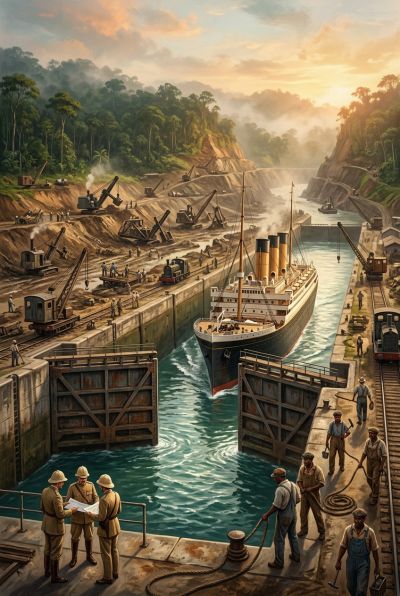
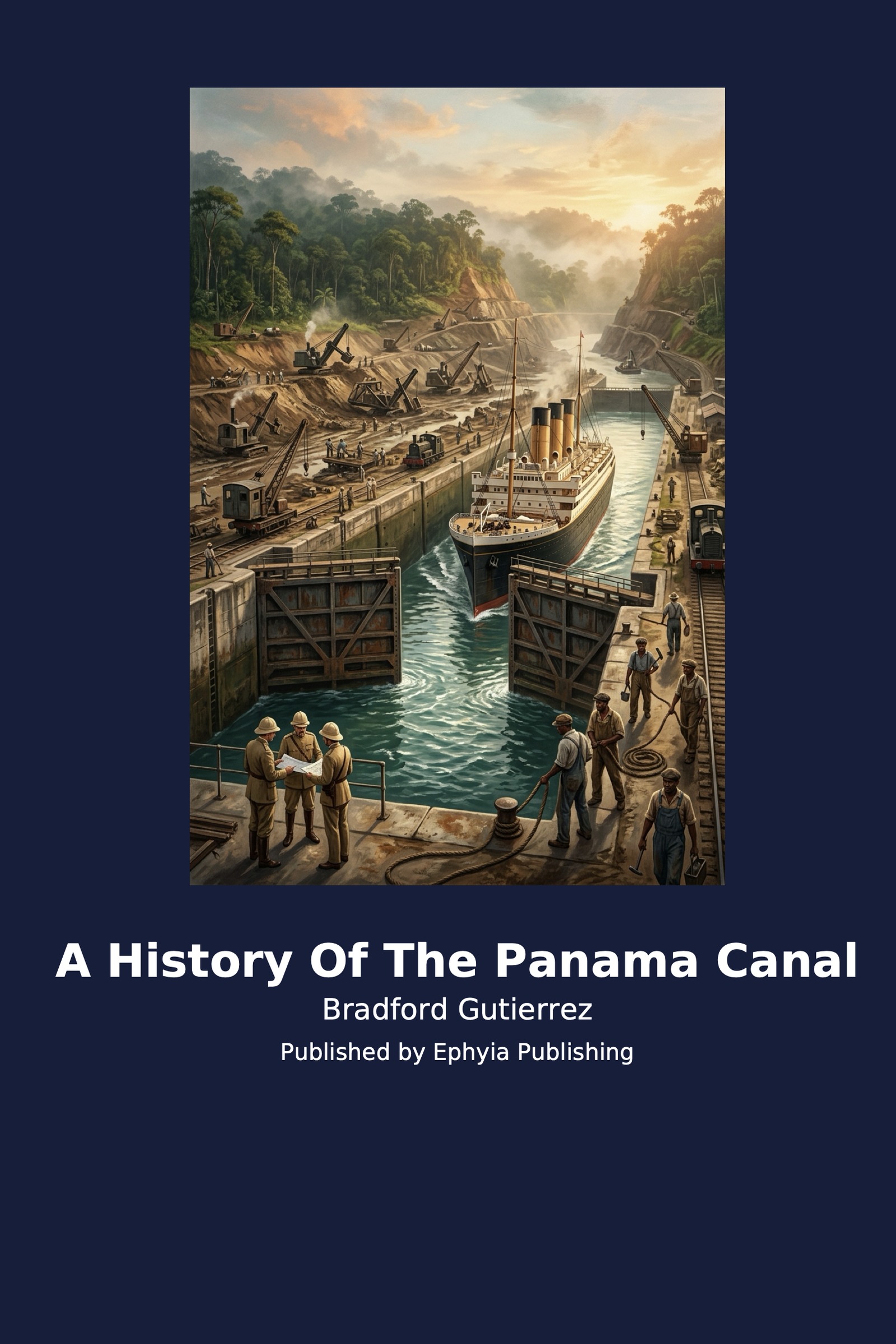
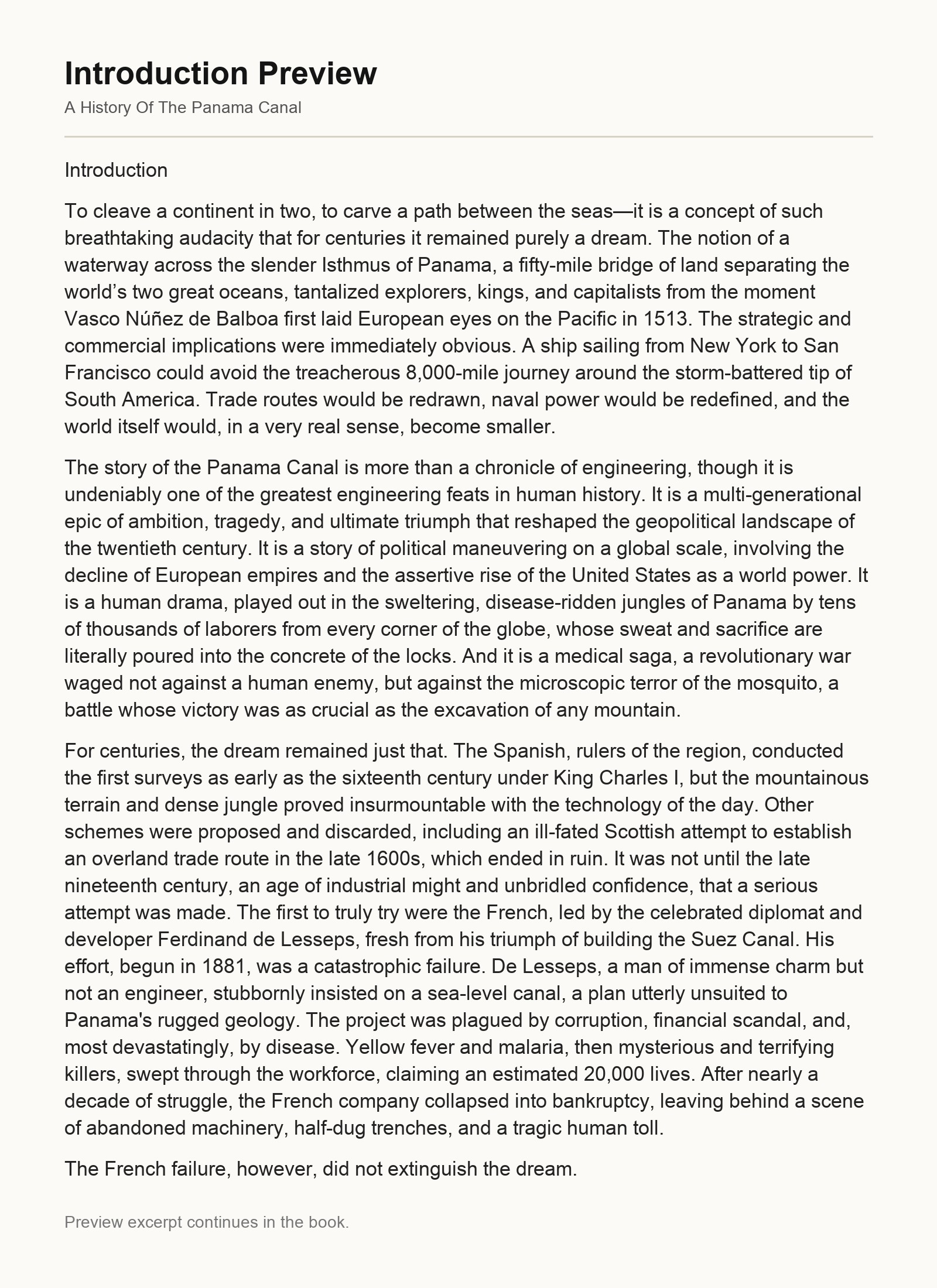
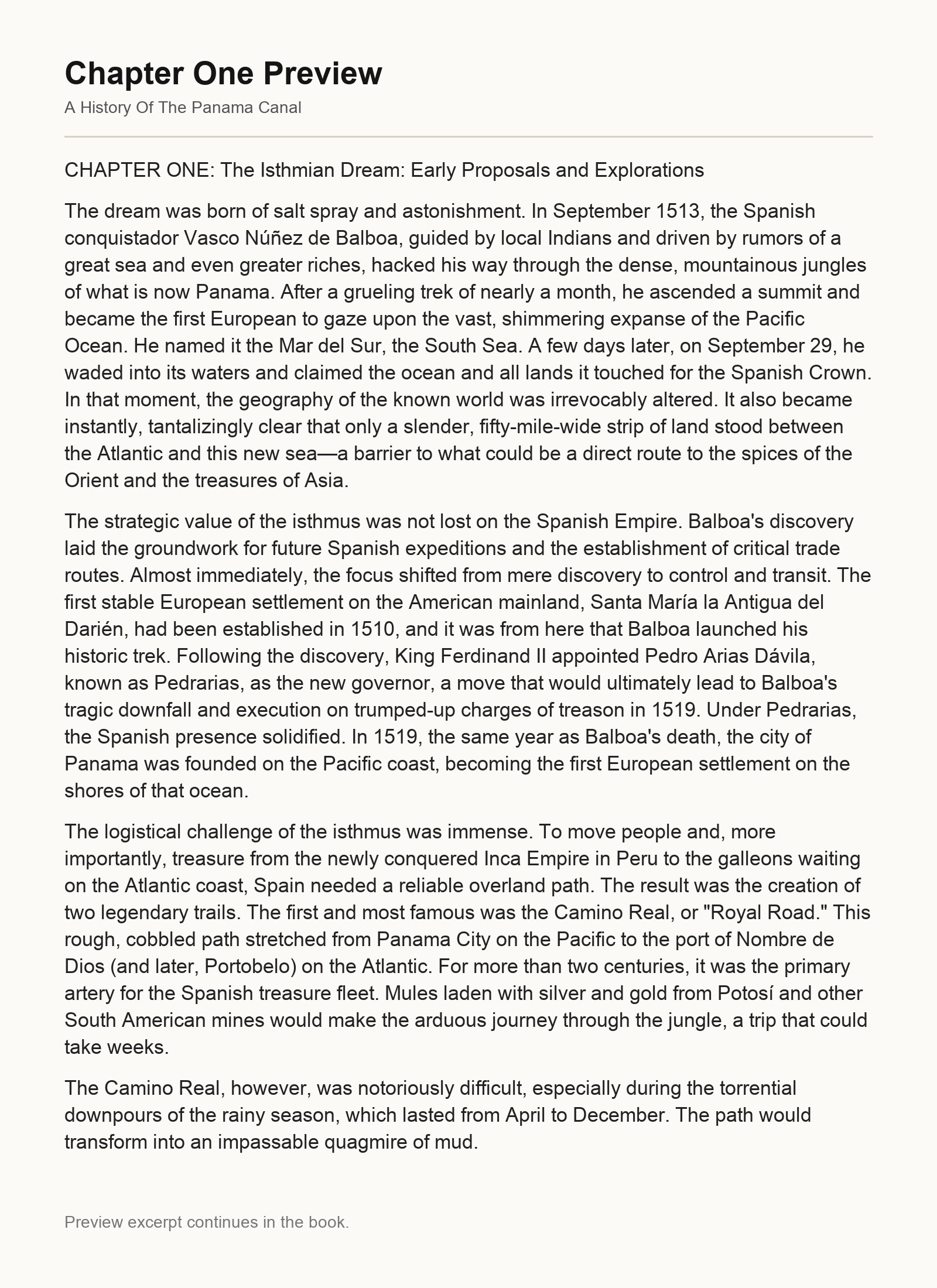
A sweeping narrative that traces the Panama Canal from sixteenth‑century conquistadors’ dreams to the twenty‑first‑century fight for water security, this book offers readers a front‑row seat to one of humanity’s most audacious engineering endeavors. You will follow the early Spanish overland trails, the ill‑fated Scottish Darien Scheme, and the frenzied proposals that arose after the California Gold Rush, gaining insight into how a narrow strip of land became the obsession of empires, financiers, and visionaries.
The work delves deeply into the dramatic French attempt led by Ferdinand de Lesseps, revealing how hubris, disease, and financial scandal turned a grand vision into a graveyard of machinery and lives. It then shifts to the American era, showing how Theodore Roosevelt’s “Big Stick” diplomacy, the ingenious lock‑and‑lake design of John Frank Stevens, and the Herculean labor of the Culebra Cut transformed a jungle obstacle into a navigable waterway. You will experience the ingenuity behind the Gatun Dam, the creation of the massive Gatun Lake, and the concrete lock system that still lifts ships 85 feet above sea level today.
Beyond steel and concrete, the book illuminates the human story: the segregated West Indian, European, and American workforce whose sweat, sacrifice, and often tragic loss built the canal; the revolutionary public‑health campaign of William C. Gorgas that conquered yellow fever and malaria; and the distinct society of the Canal Zone where Americans lived a privileged enclave while Panamanians watched from the outside. These chapters reveal how the canal shaped labor migration, cultural fusion, and a growing nationalist movement that would eventually demand sovereignty.
Readers will also witness the canal’s role in global conflict, from its quiet but vital support during World Wars I and II to the 1964 riots that ignited a decades‑long struggle for Panamanian control, culminating in the Torrijos‑Carter Treaties and the emotional handover on December 31, 1999. The narrative continues into the modern era, detailing the Panama Canal Authority’s market‑driven reforms, the multi‑billion‑dollar expansion that added Neopanamax locks, and the ongoing challenges of water management, climate change, and competition from rival routes.
Finally, the book looks ahead, exploring the Panama Canal’s evolving identity as a smart, green logistics hub, its potential future reservoirs, and its continued influence on world trade, energy flows, and Panama’s own national development. By the end, you will have gained a comprehensive understanding of how a fifty‑mile waterway altered maps, economies, and societies—and what it takes to keep such a marvel relevant in a rapidly changing world.
What You'll Find Inside:
- The French attempt to build a sea-level canal in the 1880s ended in catastrophic failure due to engineering miscalculations, disease (yellow fever and malaria), and financial scandal, resulting in an estimated 20,000+ deaths.
- American involvement under Theodore Roosevelt shifted from supporting Colombian negotiations to backing Panamanian independence through the Hay-Bunau-Varilla Treaty, which granted the U.S. perpetual control of the Canal Zone.
- The canal's engineering triumph featured a lock-and-lake system (not sea-level), including the massive Gatun Dam creating the world's largest artificial lake, the nine-mile Culebra Cut through the Continental Divide, and concrete locks that remain operational today.
- The project relied on a segregated international workforce where West Indian laborers performed the most dangerous jobs under the 'Gold and Silver Roll' system, while William Gorgas's mosquito eradication campaign made construction possible by defeating yellow fever and malaria.
- After decades of Panamanian nationalist struggle highlighted by the 1964 riots, the Torrijos-Carter Treaties led to the 1999 handover, followed by a $5.25 billion expansion completed in 2016 to accommodate Neopanamax ships and ensure the canal's 21st-century relevance.
Who's It For:
This book is ideal for history enthusiasts, engineering students, and general readers interested in how major infrastructure projects intersect with politics, human ambition, and global trade. It will particularly appeal to those fascinated by the Panama Canal's story as a lens into American imperialism, tropical disease control, segregated labor systems, and the eventual transfer of sovereignty from the United States to Panama. Readers seeking to understand how a single waterway reshaped global commerce, influenced 20th-century geopolitics, and continues to face 21st-century challenges like climate change will find this comprehensive account both informative and engaging.
Table of Contents:
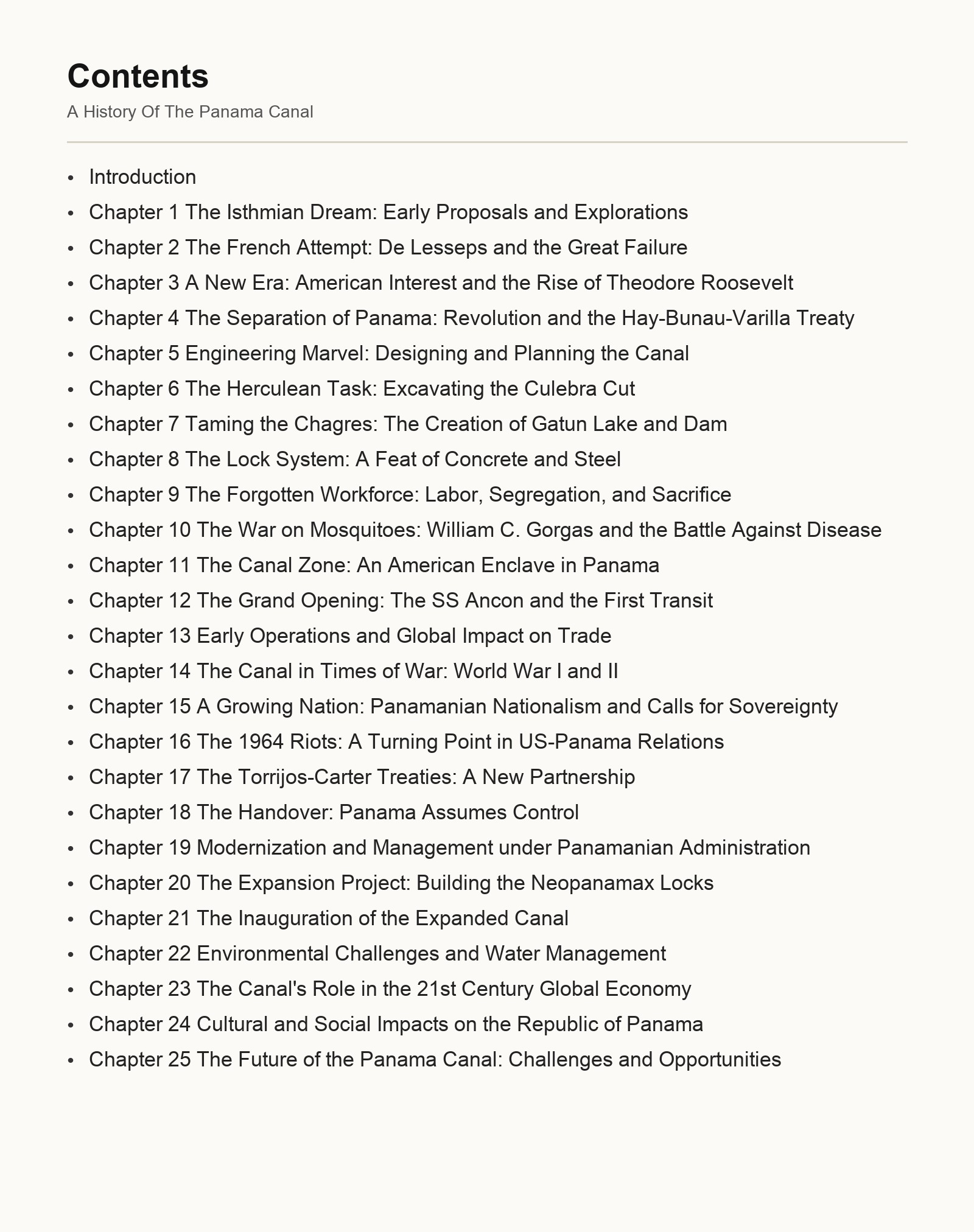
- Introduction
- Chapter 1 The Isthmian Dream: Early Proposals and Explorations
- Chapter 2 The French Attempt: De Lesseps and the Great Failure
- Chapter 3 A New Era: American Interest and the Rise of Theodore Roosevelt
- Chapter 4 The Separation of Panama: Revolution and the Hay-Bunau-Varilla Treaty
- Chapter 5 Engineering Marvel: Designing and Planning the Canal
- Chapter 6 The Herculean Task: Excavating the Culebra Cut
- Chapter 7 Taming the Chagres: The Creation of Gatun Lake and Dam
- Chapter 8 The Lock System: A Feat of Concrete and Steel
- Chapter 9 The Forgotten Workforce: Labor, Segregation, and Sacrifice
- Chapter 10 The War on Mosquitoes: William C. Gorgas and the Battle Against Disease
- Chapter 11 The Canal Zone: An American Enclave in Panama
- Chapter 12 The Grand Opening: The SS Ancon and the First Transit
- Chapter 13 Early Operations and Global Impact on Trade
- Chapter 14 The Canal in Times of War: World War I and II
- Chapter 15 A Growing Nation: Panamanian Nationalism and Calls for Sovereignty
- Chapter 16 The 1964 Riots: A Turning Point in US-Panama Relations
- Chapter 17 The Torrijos-Carter Treaties: A New Partnership
- Chapter 18 The Handover: Panama Assumes Control
- Chapter 19 Modernization and Management under Panamanian Administration
- Chapter 20 The Expansion Project: Building the Neopanamax Locks
- Chapter 21 The Inauguration of the Expanded Canal
- Chapter 22 Environmental Challenges and Water Management
- Chapter 23 The Canal's Role in the 21st Century Global Economy
- Chapter 24 Cultural and Social Impacts on the Republic of Panama
- Chapter 25 The Future of the Panama Canal: Challenges and Opportunities
Author:
Published By:
Date Published:
May 24, 2026
Type:
Nonfiction
Language:
English
Also Available In:
Word Count:
45,850 words
Reading Time:
3 hours 13 minutes
Sample:
Order:
Buy the A History Of The Panama Canal ebook on MixCache.com:
Buy NowThe full ebook will be available immediately to read instantly on any device.
$5 account credit for all new MixCache.com accounts, usable toward any ebook purchase!*




Ratings & Reviews
Ask Questions About This Book
Have a question about the content? Ask our AI assistant!
Start by asking a question about "A History Of The Panama Canal"
Example: "Does this book mention William Shakespeare?"
Thinking...