Browse by Category
Fiction
- Action & Adventure
- African American
- Anthologies
- Children's Fiction
- Classics
- Comics & Graphic Novels
- Coming of Age
- Contemporary
- Cultural & Regional
- Drama
- Erotica
- Fantasy
- General
- Historical Fiction
- Horror
- Humor & Satire
- Literary Fiction
- Mystery, Thriller & Suspense
- Poetry
- Religious & Inspirational
- Romance
- Science Fiction
- Short Stories
- War & Military
- Westerns
- Women's Fiction
- Young Adult
Non-Fiction
- Antiques & Collectibles
- Arts & Photography
- Biographies & Memoirs
- Business & Money
- Children's Non-Fiction
-
Computers & Technology
- Artificial Intelligence
- Computer Science
- Cybersecurity & Cryptography
- Data Science & Analytics
- Databases & Big Data
- Game Development & Design
- General
- Hardware & DIY
- Mobile App Development
- Networking & Cloud Computing
- Operating Systems
- Programming
- Robotics
- Software
- Software Engineering
- User Experience (UX) & Design
- Web Development & Design
- Cooking, Food & Wine
- Crafts, Hobbies & Home
- Education & Teaching
- Engineering
- General
- Health, Fitness & Dieting
-
History
- African History
- African History - North Africa
- African History - Sub-Saharan Africa
- American History
- American History - 20th Century
- American History - Civil War
- American History - Colonial Period
- Ancient History
- Asian History
- Asian History - China
- Asian History - India
- Asian History - Japan
- Asian History - Southeast Asia
- European History
- European History - Ancient Greece
- European History - Ancient Rome
- European History - Medieval
- European History - Modern
- European History - Renaissance
- General
- Middle Eastern History
- Military History
- Military History - Aviation
- Military History - Naval
- Social & Cultural History
- World History
- Humor & Entertainment
- Industrial Technology
- Language Learning
- Law
- LGBTQ+ Non-Fiction
- Literary Criticism
- Medical Books
- Parenting & Relationships
- Philosophy
- Politics & Social Sciences
- Reference
- Religion & Spirituality
-
Science & Math
- Agricultural Sciences
- Astronomy & Space Science
- Behavioral Sciences
- Biological Sciences
- Botany & Plant Science
- Chemistry
- Earth Sciences
- Engineering - Chemical
- Engineering - Civil
- Engineering - Electrical
- Engineering - Mechanical
- Environment
- General
- Geology
- Mathematics
- Nature & Ecology
- Oceanography
- Paleontology
- Physics
- Statistics
- Self-Help
- Sports & Outdoors
- Study Aids
- Sustainability & Green Living
- Textbooks
- Transportation
- Travel
- True Crime
- Urban Planning & Development
- Veterinary Medicine
- Writing & Publishing
Jump to Section
MixCache.com Total Access
Unlimited reading and audiobooks for every book published by MixCache.com.
Included titles carry the MTA badge.
Learn more →A History of Fiji
About this book:
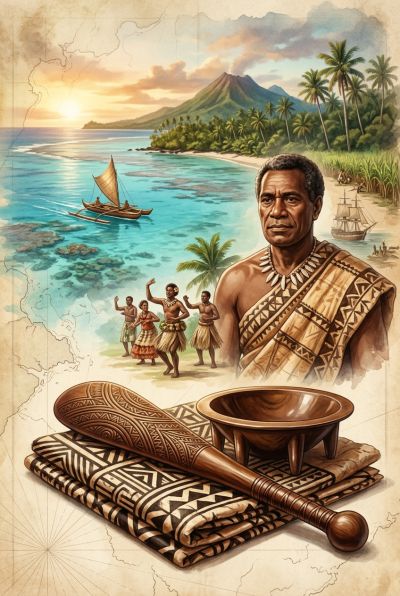
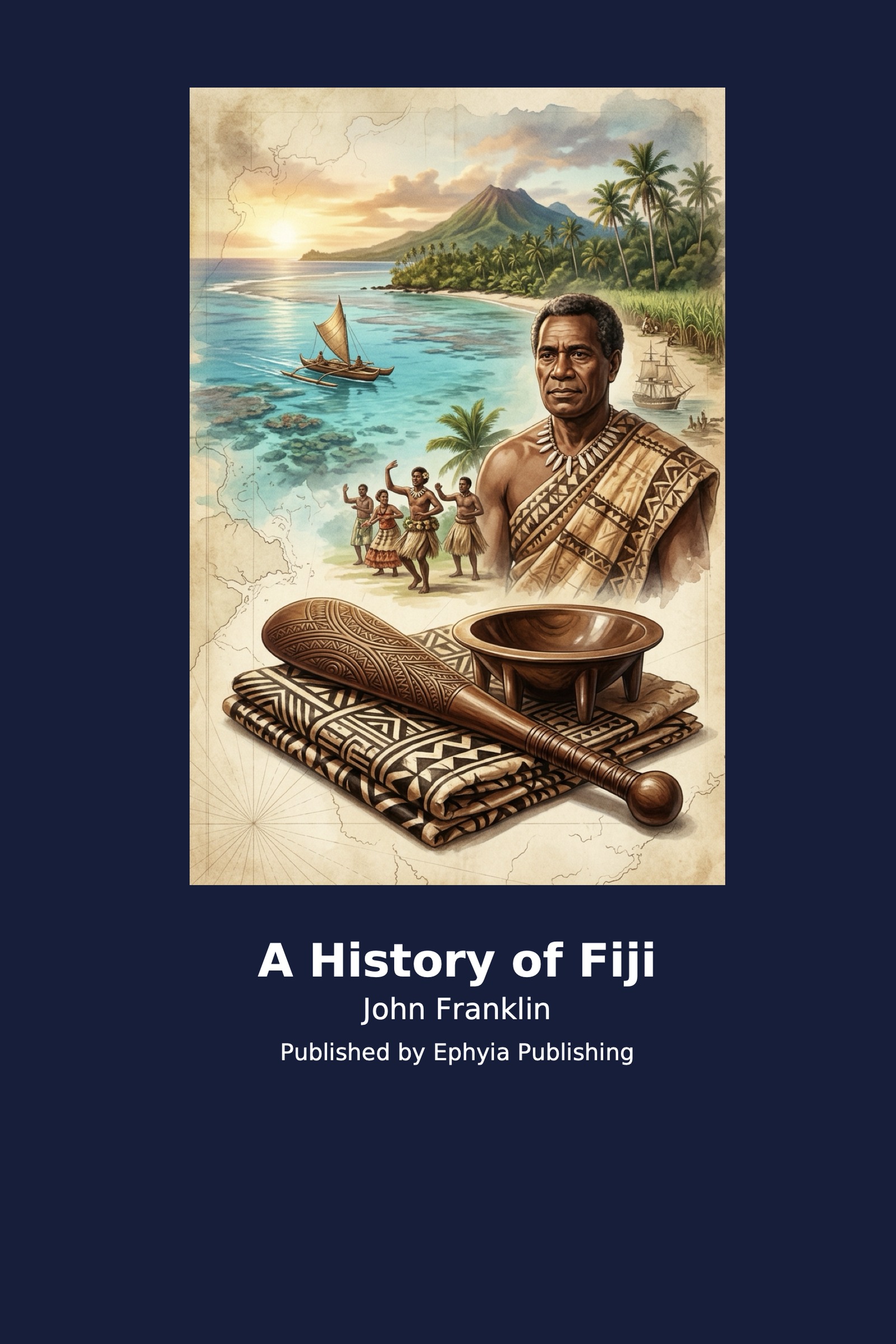



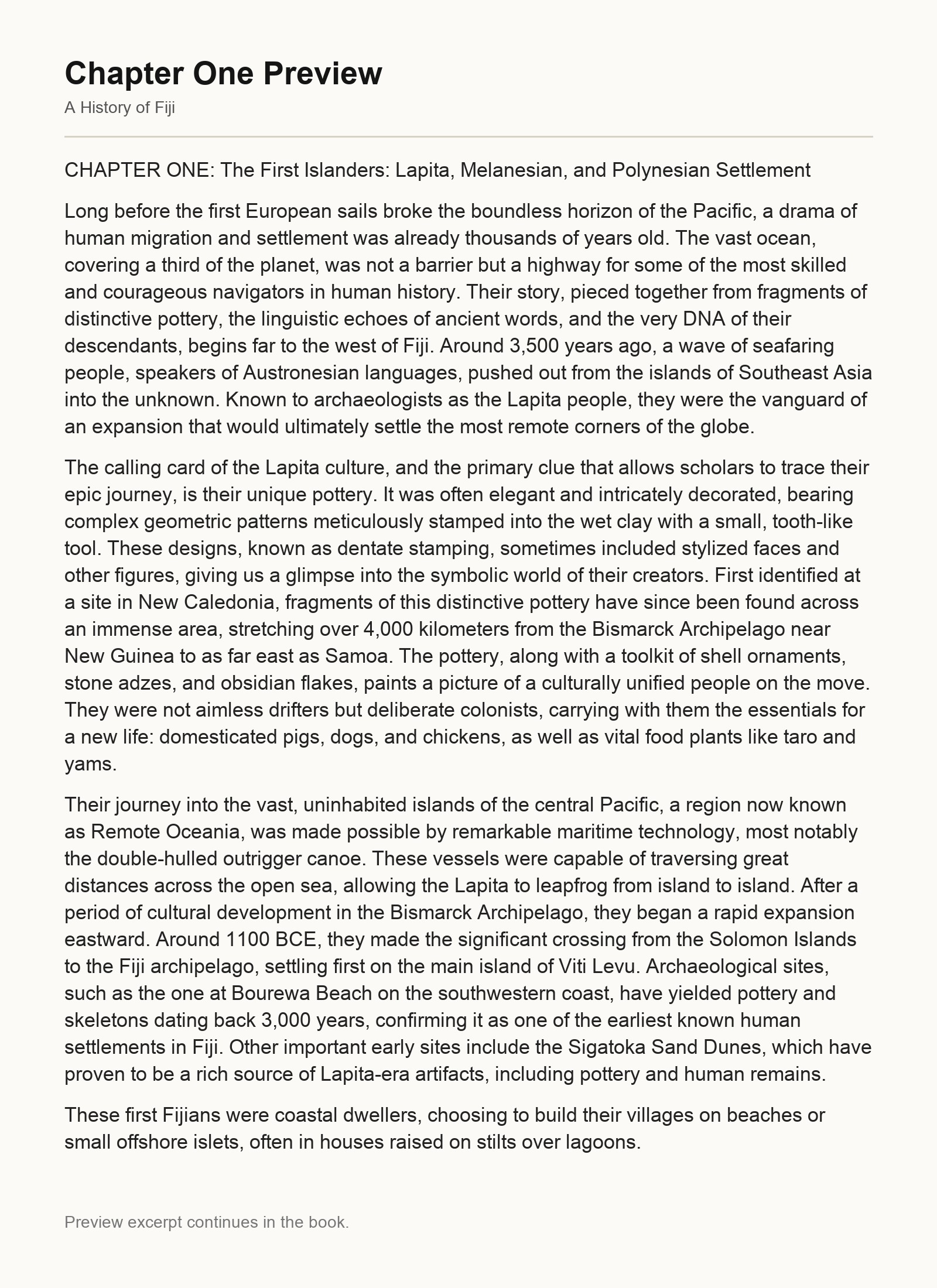
A History of Fiji offers readers a sweeping narrative that begins with the daring voyages of the Lapita seafarers who first set foot on the islands over three millennia ago and carries the story forward through centuries of migration, conflict, and cultural fusion. From the early Melanesian and Polynesian influences that shaped a uniquely Fijian society to the rise of powerful chiefdoms and the fierce warriors who once earned the archipelago the notorious label of the “Cannibal Isles,” the book vividly reconstructs the island’s pre‑contact world, illuminating the deep ties between land, kinship, and tradition that still resonate today.
The narrative then follows the turbulent arrival of Europeans—starting with the fleeting sightings of Tasman, Cook, and Bligh, through the exploitative sandalwood and bêche‑de‑mer trades, and onto the transformative impact of missionaries who sought to replace ancient beliefs with Christianity. Readers will witness how firearms, introduced by traders, reshaped warfare and paved the way for the ascent of figures like Ratu Seru Cakobau, whose eventual decision to cede Fiji to Great Britain in 1874 set the islands on a new colonial trajectory under governors such as Sir Arthur Gordon, whose land and labor policies left a lasting imprint on Fijian society.
Central to the book is the profound demographic shift brought about by the indentured labor system that transported over sixty thousand Indians to work on sugar plantations, creating the Indo‑Fijian community and sowing the seeds of the multi‑ethnic tensions that would dominate Fiji’s political landscape for generations. The text details the growth of the colonial economy, the dominance of the Colonial Sugar Refining Company, the move of the capital to Suva, and the islands’ experiences in both World Wars, where Fijian soldiers distinguished themselves on distant battlefields while internal divisions deepened at home.
Post‑war chapters guide the reader through the fraught path to independence, the coups of 1987, 2000, and 2006, and the successive constitutional experiments that sought to balance indigenous rights with multicultural governance. The book examines the rise and fall of political parties, the role of the Great Council of Chiefs, the impact of economic challenges such as the decline of sugar and the rise of tourism, and the social crises posed by non‑communicable diseases, climate change, and emigration. It concludes with an assessment of Fiji’s contemporary role as a Pacific leader, its contributions to peacekeeping and climate advocacy, and the ongoing quest to forge a unified national identity amid enduring traditions and modern pressures.
By weaving together archaeological evidence, personal accounts, political analysis, and cultural observation, A History of Fiji provides not just a chronological record but an immersive experience of a nation’s resilience, adaptation, and continual struggle to reconcile its diverse heritage with the promise of a shared future. Readers will finish with a nuanced understanding of how geography, migration, colonialism, and internal dynamics have shaped Fiji’s past—and how those forces continue to influence its present and future prospects.
What You'll Find Inside:
- The book traces Fiji's 3,500-year history from Lapita settlers through Melanesian and Polynesian influences to create a unique cultural blend at the Pacific crossroads.
- It details how European contact, particularly the sandalwood and bêche-de-mer trade, introduced firearms that transformed Fijian warfare and paved the way for Cakobau's rise to power.
- It explains the British colonial period, including Gordon's land protection policies and the indentured labor system that brought over 60,000 Indians to Fiji, fundamentally altering its demographics.
- It chronicles Fiji's turbulent post-independence history marked by ethnic tensions, four coups (1987, 2000, 2006), and ongoing struggles to balance indigenous Fijian and Indo-Fijian interests.
- It examines contemporary Fiji's challenges including climate change vulnerability, economic reliance on tourism, non-communicable disease epidemic, and efforts to build a unified national identity.
Who's It For:
This book is ideal for students, researchers, and general readers interested in Pacific Island history, post-colonial studies, and ethnic conflict resolution. It provides valuable insights for those seeking to understand Fiji's complex journey from traditional society through colonialism to modern multicultural nation-building. The work will particularly benefit readers interested in how indigenous communities navigate demographic changes, political instability, and globalization while maintaining cultural identity.
Table of Contents:
- Introduction
- Chapter 1 The First Islanders: Lapita, Melanesian, and Polynesian Settlement
- Chapter 2 Early European Contact: Tasman, Cook, and Bligh
- Chapter 3 The Sandalwood and Bêche-de-mer Trade
- Chapter 4 The Arrival of Missionaries and the Spread of Christianity
- Chapter 5 Tribal Warfare and the Rise of Cakobau
- Chapter 6 The Kingdom of Fiji: A Short-Lived Monarchy
- Chapter 7 Cession to Great Britain: The Deed of Cession of 1874
- Chapter 8 Governor Sir Arthur Gordon and the Establishment of Colonial Rule
- Chapter 9 The Indentured Labor System: The Arrival of Indo-Fijians
- Chapter 10 The Growth of the Sugar Industry and Colonial Economy
- Chapter 11 Fiji in the World Wars
- Chapter 12 The Path to Independence: Constitutional Development in the 1960s
- Chapter 13 Independence and the Dominion of Fiji: 1970
- Chapter 14 The 1977 Constitutional Crisis
- Chapter 15 The 1987 Coups: Rabuka and the Declaration of a Republic
- Chapter 16 The 1990 Constitution: Entrenching Ethnic Fijian Dominance
- Chapter 17 The 1997 Constitution: A Move Towards Multiracialism
- Chapter 18 The 2000 Coup: Speight and the Overthrow of the Chaudhry Government
- Chapter 19 The 2006 Coup: Bainimarama's Seizure of Power
- Chapter 20 The People's Charter for Change, Peace and Progress
- Chapter 21 The 2013 Constitution and the Return to Democracy
- Chapter 22 The 2014 General Election: A New Political Landscape
- Chapter 23 Contemporary Fiji: Social and Economic Challenges
- Chapter 24 Fiji's Role in the Pacific and the World
- Chapter 25 The Future of Fiji: Navigating a Multicultural Society
Author:
Published By:
Date Published:
May 22, 2026
Type:
Nonfiction
Language:
English
Also Available In:
Word Count:
40,640 words
Reading Time:
2 hours 51 minutes
Sample:
Order:
Order A History of Fiji (Hardcover) on MixCache.com:
Buy NowPrint copy is made to order and ships worldwide. Includes the ebook free, ready to read instantly.
$5 account credit for all new MixCache.com accounts, usable toward any ebook purchase!*