
Browse by Category
Fiction
- Action & Adventure
- African American
- Anthologies
- Children's Fiction
- Classics
- Comics & Graphic Novels
- Coming of Age
- Contemporary
- Cultural & Regional
- Drama
- Erotica
- Fantasy
- General
- Historical Fiction
- Horror
- Humor & Satire
- Literary Fiction
- Mystery, Thriller & Suspense
- Poetry
- Religious & Inspirational
- Romance
- Science Fiction
- Short Stories
- War & Military
- Westerns
- Women's Fiction
- Young Adult
Non-Fiction
- Antiques & Collectibles
- Arts & Photography
- Biographies & Memoirs
- Business & Money
- Children's Non-Fiction
-
Computers & Technology
- Artificial Intelligence
- Computer Science
- Cybersecurity & Cryptography
- Data Science & Analytics
- Databases & Big Data
- Game Development & Design
- General
- Hardware & DIY
- Mobile App Development
- Networking & Cloud Computing
- Operating Systems
- Programming
- Robotics
- Software
- Software Engineering
- User Experience (UX) & Design
- Web Development & Design
- Cooking, Food & Wine
- Crafts, Hobbies & Home
- Education & Teaching
- Engineering
- General
- Health, Fitness & Dieting
-
History
- African History
- African History - North Africa
- African History - Sub-Saharan Africa
- American History
- American History - 20th Century
- American History - Civil War
- American History - Colonial Period
- Ancient History
- Asian History
- Asian History - China
- Asian History - India
- Asian History - Japan
- Asian History - Southeast Asia
- European History
- European History - Ancient Greece
- European History - Ancient Rome
- European History - Medieval
- European History - Modern
- European History - Renaissance
- General
- Middle Eastern History
- Military History
- Military History - Aviation
- Military History - Naval
- Social & Cultural History
- World History
- Humor & Entertainment
- Industrial Technology
- Language Learning
- Law
- LGBTQ+ Non-Fiction
- Literary Criticism
- Medical Books
- Parenting & Relationships
- Philosophy
- Politics & Social Sciences
- Reference
- Religion & Spirituality
-
Science & Math
- Agricultural Sciences
- Astronomy & Space Science
- Behavioral Sciences
- Biological Sciences
- Botany & Plant Science
- Chemistry
- Earth Sciences
- Engineering - Chemical
- Engineering - Civil
- Engineering - Electrical
- Engineering - Mechanical
- Environment
- General
- Geology
- Mathematics
- Nature & Ecology
- Oceanography
- Paleontology
- Physics
- Statistics
- Self-Help
- Sports & Outdoors
- Study Aids
- Sustainability & Green Living
- Textbooks
- Transportation
- Travel
- True Crime
- Urban Planning & Development
- Veterinary Medicine
- Writing & Publishing
Jump to Section

Want unlimited access to all books published by MixCache.com (plus their audiobooks)? Try MixCache.com Total Access. Look for the MTA badge on book covers to identify included titles.
Access to infinite ebooks: Don't see the book you want? Suggest it and we'll create it (free!) for you from scratch with our powerful AI book writer. Then read it with MTA - besides profiting from any sales it makes!
Islamic Political Thought: From Early Caliphate Debate to Contemporary Theory
MTA
Intellectual history of governance, authority, and public ethics in Islamic thought
About this book:
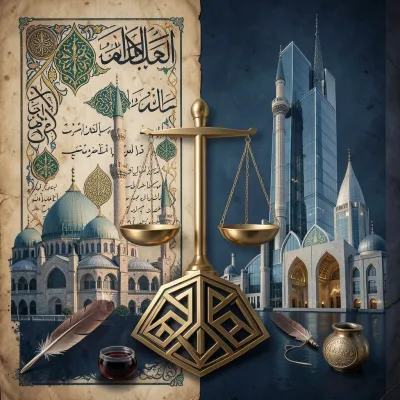
This book traces the evolution of Islamic political thought from the disputed succession after the Prophet’s death through the formation of Sunni and Shi’i theories of authority, the classical juridical articulation of governance, and the imperial adaptations of the Ottomans, Safavids, and Mughals. It examines how scholars such as al‑Māwardī, al‑Ghazālī, Ibn Taymiyya, and Ibn Khaldun balanced ideal caliphal models with the realities of dynastic power, discretionary rule (siyāsa sharʿiyya), and the developing concepts of public interest (maṣlaḥa) and the higher objectives of the law (maqāṣid al‑sharīʿa). The narrative then follows the encounter with European colonialism, the abolition of the caliphate, and the reformist projects of figures like ʿAbduh, Riḍā, and Iqbāl, who sought to reconcile Islamic principles with constitutionalism, nationalism, and modern notions of citizenship.
In the twentieth century, the work explores the rise of Islamist movements that asserted God’s sovereignty (ḥākimiyya) as the basis for an Islamic state, contrasting the gradualist visions of Mawdūdī with the revolutionary doctrines of Quṭb, Faraj, and Khomeini’s wilāyat al‑faqīh. It details the politicization of Sufism, the role of mass movements such as the Muslim Brotherhood and Jamāʿat‑i Islāmī, and the ongoing debates over shūra, democracy, and the compatibility of divine and popular sovereignty. Subsequent chapters consider contemporary re‑engagements with maqāṣid in legal‑political thought, struggles over pluralism, religious freedom, gender justice, and human rights, and the emergence of post‑Islamist and liberal reform currents that advocate for civil states informed by Islamic ethics rather than a strict sharīʿa code. The book concludes with reflections on the Arab uprisings, the re‑imagining of legitimacy, and future trajectories concerning governance, technology, global ethics, and the continued tension between ideal and practice in Islamic political thought.
What You'll Find Inside:
- A comprehensive historical survey of Islamic political thought from the Rashidun caliphate through colonial encounters to 21st‑century debates.
- In‑depth analysis of core concepts such as caliphate/imamate, shūrā (consultation), siyāsa sharʿiyya (discretionary governance), maqāṣid al‑sharīʿa (higher objectives of law), and ḥākimiyya (divine sovereignty).
- Comparative examination of Sunni and Shiʿi theories of authority, including the doctrines of occultation and wilāyat al‑faqīh (guardianship of the jurist).
- Engagement with modern reformers (ʿAbduh, Riḍā, Iqbāl), Islamist thinkers (Mawdūdī, Quṭb, Khomeini), and contemporary issues like constitutionalism, human rights, pluralism, gender justice, and post‑Islamist reform.
- Shows how classical ideas are reinterpreted in response to nation‑state formation, globalization, and the evolving global public sphere, offering tools to assess claims about Islamic governance today.
Who's It For:
The book is written for students and scholars of political theory, Islamic studies, law, and history who seek a nuanced, historically grounded account of Muslim debates about governance. It also serves activists, policymakers, and general readers interested in understanding the intellectual foundations of contemporary Islamic political movements and the prospects for Islamic democracy, rights‑based reform, and pluralism in Muslim‑majority societies.
Author:
Published By:
Date Published:
May 22, 2026
Type:
Nonfiction
Language:
English
Word Count:
45,935 words
Reading Time:
3 hours 13 minutes
Sample:
MixCache.com Total Access
Get unlimited access to this book + all books published by MixCache.com for $11.99/month
Subscribe to MTAOr purchase this book individually below
Order:
Buy the Islamic Political Thought: From Early Caliphate Debate to Contemporary Theory ebook on MixCache.com:
Buy Now
Full ebook will be available immediately
- read online or download as a PDF file.
$5 account credit for all new MixCache.com accounts, usable toward any ebook purchase!*





Ratings & Reviews
Ask Questions About This Book
Have a question about the content? Ask our AI assistant!
Start by asking a question about "Islamic Political Thought: From Early Caliphate Debate to Contemporary Theory"
Example: "Does this book mention William Shakespeare?"
Thinking...