
Browse by Category
Fiction
- Action & Adventure
- African American
- Anthologies
- Children's Fiction
- Classics
- Comics & Graphic Novels
- Coming of Age
- Contemporary
- Cultural & Regional
- Drama
- Erotica
- Family Life
- Fantasy
- General
- Historical Fiction
- Horror
- Humor & Satire
- Literary Fiction
- Mystery, Thriller & Suspense
- Poetry
- Religious & Inspirational
- Romance
- Science Fiction
- Short Stories
- War & Military
- Westerns
- Women's Fiction
- Young Adult
Non-Fiction
- Antiques & Collectibles
- Arts & Photography
- Biographies & Memoirs
- Business & Money
- Children's Non-Fiction
-
Computers & Technology
- Artificial Intelligence
- Computer Science
- Cybersecurity & Cryptography
- Data Science & Analytics
- Databases & Big Data
- Game Development & Design
- General
- Hardware & DIY
- Mobile App Development
- Networking & Cloud Computing
- Operating Systems
- Programming
- Robotics
- Software
- Software Engineering
- User Experience (UX) & Design
- Web Development & Design
- Cooking, Food & Wine
- Crafts, Hobbies & Home
- Education & Teaching
- Engineering
- General
- Health, Fitness & Dieting
-
History
- African History
- African History - North Africa
- African History - Sub-Saharan Africa
- American History
- American History - 20th Century
- American History - Civil War
- American History - Colonial Period
- Ancient History
- Asian History
- Asian History - China
- Asian History - India
- Asian History - Japan
- Asian History - Southeast Asia
- European History
- European History - Ancient Greece
- European History - Ancient Rome
- European History - Medieval
- European History - Modern
- European History - Renaissance
- General
- Middle Eastern History
- Military History
- Military History - Aviation
- Military History - Naval
- Social & Cultural History
- World History
- Humor & Entertainment
- Industrial Technology
- Language Learning
- Law
- LGBTQ+ Non-Fiction
- Literary Criticism
- Medical Books
- Parenting & Relationships
- Philosophy
- Politics & Social Sciences
- Reference
- Religion & Spirituality
-
Science & Math
- Agricultural Sciences
- Astronomy & Space Science
- Behavioral Sciences
- Biological Sciences
- Botany & Plant Science
- Chemistry
- Earth Sciences
- Engineering - Chemical
- Engineering - Civil
- Engineering - Electrical
- Engineering - Mechanical
- Environment
- General
- Geology
- Mathematics
- Nature & Ecology
- Oceanography
- Paleontology
- Physics
- Statistics
- Self-Help
- Sports & Outdoors
- Study Aids
- Sustainability & Green Living
- Textbooks
- Transportation
- Travel
- True Crime
- Urban Planning & Development
- Veterinary Medicine
- Writing & Publishing
Jump to Section
MixCache.com Total Access
Unlimited reading and audiobooks for every book published by MixCache.com.
Included titles carry the MTA badge.
Learn more →
Mystics and Monastics
MTA
A Historical and Practical Guide to Christian Contemplative Traditions
About this book:
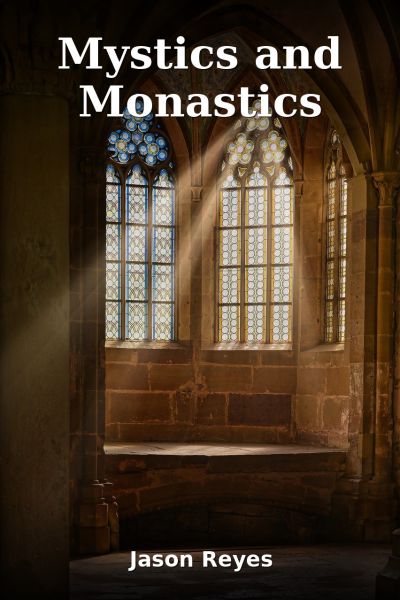
The book surveys Christian contemplative practice from its desert origins to modern adaptations, tracing how the quest for a wordless, loving encounter with God has been shaped by history, theology, and lived experience. Beginning with the Desert Fathers and Mothers, it shows how solitude, silence, and the battle against intrusive thoughts laid the groundwork for later monastic rules—especially Benedict’s balanced ora et labora—and for diverse streams such as Celtic nature mysticism, Eastern hesychasm and the Jesus Prayer, and the apophatic tradition exemplified by The Cloud of Unknowing. Medieval mystics like Julian of Norwich, Catherine of Siena, Meister Eckhart, and Teresa of Ávila illuminate the soul’s journey through stages of purgation, illumination, and union, while John of the Cross details the necessary dark nights of sense and spirit that prepare the soul for transforming union with God. The guide also highlights practical methods that have endured: Lectio Divina’s four‑step movement from reading to contemplation, Ignatius of Loyola’s Daily Examen for finding God in all things, and the Carthusian and Cistercian models of silence, simplicity, and work‑prayer balance.
In the modern era, the book shows how ancient insights have been reframed for contemporary life. Thomas Merton’s monastic renewal emphasized the true self and interfaith dialogue; Centering Prayer, rooted in the apophatic tradition, offers a simple sacred‑word method for busy laypeople; ecumenical communities like Taizé and Iona fuse repetitive song, silence, and shared labor to foster unity and justice; and figures such as Henri Nouwen and Dorothy Day model contemplation embodied in service to the marginalized. Chapters on body, breath, and posture remind us that prayer is an embodied act, while sections on attention, distraction, and technology offer strategies for cultivating focus in a fragmented age. The work concludes with a trauma‑informed, inclusive approach that insists safety, choice, and systemic awareness are essential for contemplative growth, and it underscores the indispensability of community, a personal rule of life, and spiritual direction as sustaining frameworks. Finally, a 30‑day path provides a gentle, step‑by‑step invitation to integrate presence, breath, a sacred word, Lectio Divina, and the Examen into daily life, showing that contemplation is less about mastering techniques than about nurturing a lifelong relationship of love and attentive openness to God.
What You'll Find Inside:
- Traces Christian contemplation from Desert Fathers to modern practitioners like Thomas Merton, showing historical development and enduring wisdom
- Defines Christian contemplation distinctly from meditation and vocal prayer, explaining its essence as resting in God's presence beyond words
- Provides accessible practices from diverse traditions including Lectio Divina, Jesus Prayer, Centering Prayer, and the Daily Examen
- Offers guidance for cultivating contemplative attention in our distracted world of technology and modern demands
- Presents trauma-informed and inclusive approaches to ensure contemplative practice is safe and accessible for all
Who's It For:
This book serves spiritually curious readers—whether committed church members, spiritual explorers on faith's edges, or those drawn by longing, exhaustion, or grief—who seek to integrate historical Christian contemplative wisdom into their daily lives. It offers both depth and accessibility for anyone wanting a practical, adaptable path to deeper prayer that honors tradition while welcoming honest questions and gentle experimentation.
Introduction
This book began with a simple observation: across centuries and cultures, Christians have sought a quiet center where love is known directly, beyond argument and anxiety. The settings change—caves on the edge of the Egyptian desert, stone cloisters tucked into green valleys, apartments overlooking city streets—but the hunger is the same. Mystics and monastics have left us maps of this interior country. Their words are sometimes austere, sometimes aflame, always concerned with the practice of drawing near to God. Our aim is to read those maps with care and then redraw them for contemporary travelers.
We start in the desert because that is where the tradition first clarified its lines. The mothers and fathers who fled noise for silence were not escaping the world so much as seeking the truth about themselves in God’s light. Their sayings, often sharpened to a single sentence, reveal a disciplined attention that remains bracingly relevant. From there we trace the growth of monastic life—its rules, rhythms, and hard‑won wisdom—before turning to the luminous voices of medieval mysticism. In each era, we ask the same questions: What did these Christians actually do when they prayed? What did they notice? And how might their discoveries guide us today?
Because this is a historical and practical guide, every chapter pairs context with invitation.
Enjoying it? The full book includes every chapter.
Table of Contents:
- Introduction Free
- Chapter 1 What Is Christian Contemplation? Free
- Chapter 2 The Desert Fathers and Mothers
- Chapter 3 The Rise of Monasticism: Benedict and the Rule
- Chapter 4 Celtic and Eastern Streams
- Chapter 5 Hesychasm and the Jesus Prayer
- Chapter 6 Lectio Divina: Praying the Scriptures
- Chapter 7 The Cloud of Unknowing and Apophatic Prayer
- Chapter 8 Julian of Norwich: Revelations of Divine Love
- Chapter 9 Catherine of Siena and Bridal Mysticism
- Chapter 10 Meister Eckhart and the Birth in the Soul
- Chapter 11 Devotio Moderna and The Imitation of Christ
- Chapter 12 Teresa of Ávila: The Interior Castle
- Chapter 13 John of the Cross: Dark Night and Union
- Chapter 14 Ignatius of Loyola and the Daily Examen
- Chapter 15 Carthusians and Cistercians: Silence and Simplicity
- Chapter 16 Russian Startsy and The Way of a Pilgrim
- Chapter 17 Thomas Merton and Modern Monastic Renewal
- Chapter 18 Centering Prayer: Keating, Pennington, and Main
- Chapter 19 Taizé, Iona, and Ecumenical Song
- Chapter 20 Contemplation in the World: Nouwen and Day
- Chapter 21 Body, Breath, and Posture in Prayer
- Chapter 22 Attention, Distraction, and Technology
- Chapter 23 Trauma‑Informed and Inclusive Practice
- Chapter 24 Community, Rule of Life, and Spiritual Direction
- Chapter 25 Integrating a Daily Practice: A 30‑Day Path
Included when you buy the full book.
Author:
Published By:
Date Published:
May 19, 2026
Type:
Nonfiction
Language:
English
Word Count:
45,993 words
Reading Time:
3 hours 13 minutes
Sample:
Order:
Buy the Mystics and Monastics ebook on MixCache.com:
Buy NowIncludes every chapter. Not sure yet? Read the opening free.
Full ebook will be available immediately
- read online or download as a PDF file.
$5 account credit for all new MixCache.com accounts, usable toward any ebook purchase!*
MixCache.com Total Access
Get unlimited access to this book + all books published by MixCache.com for $11.99/month
Subscribe to MTA





Ratings & Reviews
Ask Questions About This Book
Have a question about the content? Ask our AI assistant!
Start by asking a question about "Mystics and Monastics"
Example: "Does this book mention William Shakespeare?"
Thinking...