Browse by Category
Fiction
- Action & Adventure
- African American
- Anthologies
- Children's Fiction
- Classics
- Comics & Graphic Novels
- Coming of Age
- Contemporary
- Cultural & Regional
- Drama
- Erotica
- Fantasy
- General
- Historical Fiction
- Horror
- Humor & Satire
- Literary Fiction
- Mystery, Thriller & Suspense
- Poetry
- Religious & Inspirational
- Romance
- Science Fiction
- Short Stories
- War & Military
- Westerns
- Women's Fiction
- Young Adult
Non-Fiction
- Antiques & Collectibles
- Arts & Photography
- Biographies & Memoirs
- Business & Money
- Children's Non-Fiction
-
Computers & Technology
- Artificial Intelligence
- Computer Science
- Cybersecurity & Cryptography
- Data Science & Analytics
- Databases & Big Data
- Game Development & Design
- General
- Hardware & DIY
- Mobile App Development
- Networking & Cloud Computing
- Operating Systems
- Programming
- Robotics
- Software
- Software Engineering
- User Experience (UX) & Design
- Web Development & Design
- Cooking, Food & Wine
- Crafts, Hobbies & Home
- Education & Teaching
- Engineering
- General
- Health, Fitness & Dieting
-
History
- African History
- African History - North Africa
- African History - Sub-Saharan Africa
- American History
- American History - 20th Century
- American History - Civil War
- American History - Colonial Period
- Ancient History
- Asian History
- Asian History - China
- Asian History - India
- Asian History - Japan
- Asian History - Southeast Asia
- European History
- European History - Ancient Greece
- European History - Ancient Rome
- European History - Medieval
- European History - Modern
- European History - Renaissance
- General
- Middle Eastern History
- Military History
- Military History - Aviation
- Military History - Naval
- Social & Cultural History
- World History
- Humor & Entertainment
- Industrial Technology
- Language Learning
- Law
- LGBTQ+ Non-Fiction
- Literary Criticism
- Medical Books
- Parenting & Relationships
- Philosophy
- Politics & Social Sciences
- Reference
- Religion & Spirituality
-
Science & Math
- Agricultural Sciences
- Astronomy & Space Science
- Behavioral Sciences
- Biological Sciences
- Botany & Plant Science
- Chemistry
- Earth Sciences
- Engineering - Chemical
- Engineering - Civil
- Engineering - Electrical
- Engineering - Mechanical
- Environment
- General
- Geology
- Mathematics
- Nature & Ecology
- Oceanography
- Paleontology
- Physics
- Statistics
- Self-Help
- Sports & Outdoors
- Study Aids
- Sustainability & Green Living
- Textbooks
- Transportation
- Travel
- True Crime
- Urban Planning & Development
- Veterinary Medicine
- Writing & Publishing
Jump to Section
MixCache.com Total Access
Unlimited reading and audiobooks for every book published by MixCache.com.
Included titles carry the MTA badge.
Learn more →
Caribbean
History of a Sea
About this book:
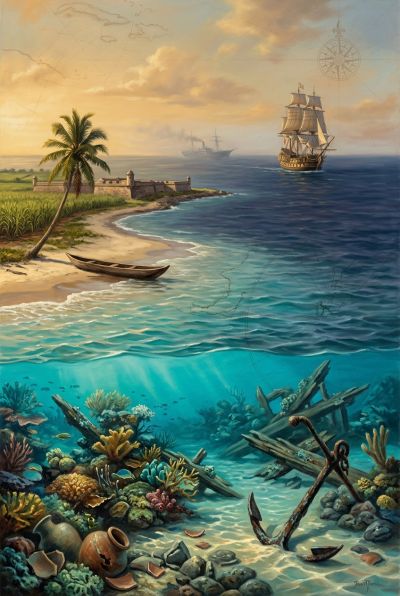

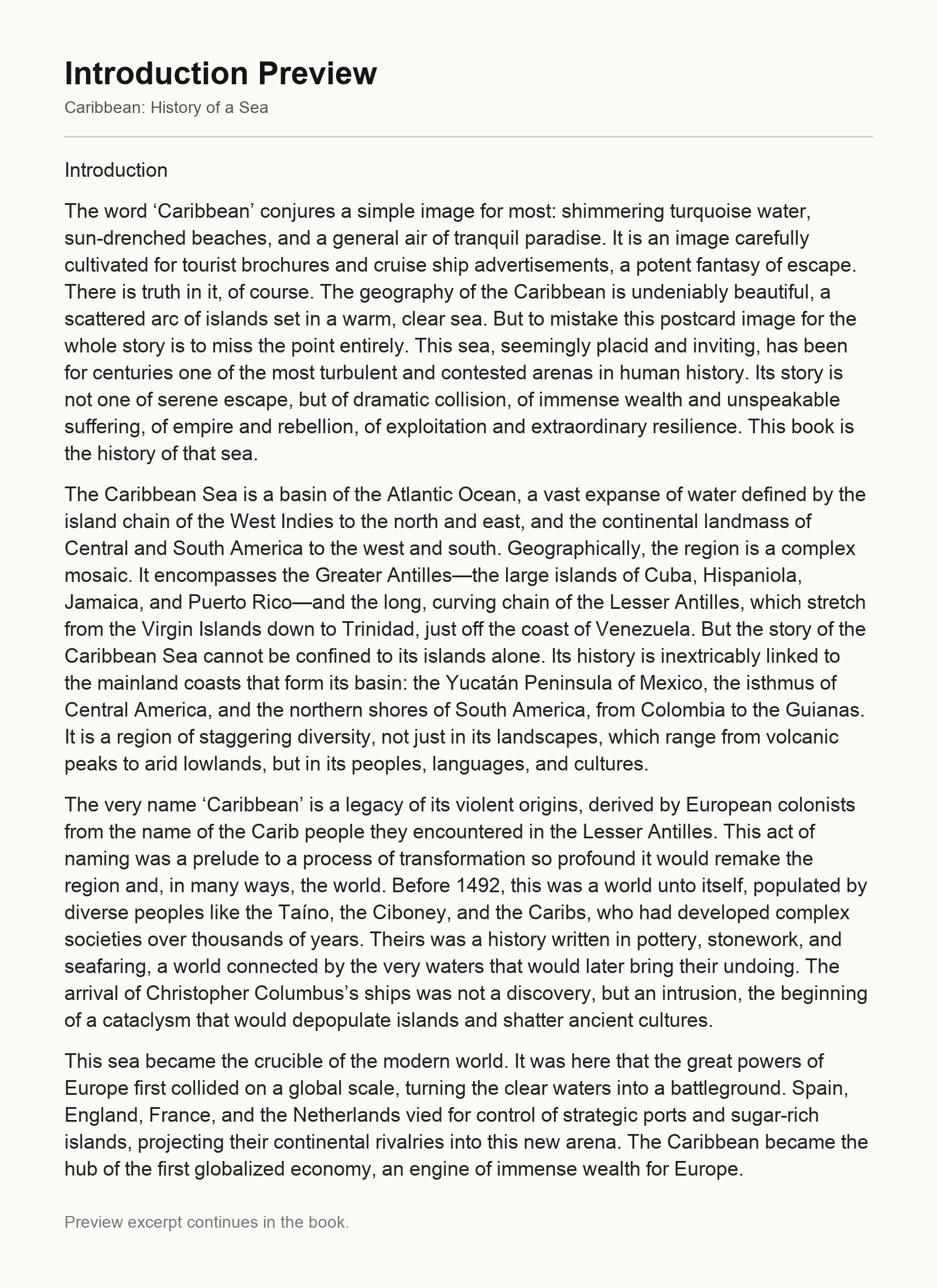
This sweeping narrative takes readers on a journey through five centuries of Caribbean history, beginning with the first peoples who arrived by canoe long before European contact and ending with the region’s urgent confrontations with climate change, digital transformation, and shifting global powers. Each chapter builds a detailed picture of how the sea has acted as a crossroads for conquest, commerce, culture, and conflict, revealing a past that is far richer and more turbulent than the postcard image of sun‑soaked beaches suggests.
Readers will walk through the rise and fall of indigenous societies, the devastating impact of the Columbian Exchange, and the brutal economics of sugar and slavery that turned the islands into the engine of European wealth. They will follow the daring exploits of buccaneers and privateers, the imperial struggles of Spain, Britain, France, and the Netherlands, and the world‑shaking Haitian Revolution that created the first Black republic. The story continues with the independence wars across Spanish America, the long fight against slavery, and the emergence of the United States as a dominant force after the Spanish‑American War and the construction of the Panama Canal.
Beyond politics and economics, the book immerses the reader in the vibrant cultural creolization that defines the Caribbean: the birth of creole languages, syncretic religions like Vodou and Santería, the evolution of music from calypso to reggae and dancehall, and the rich culinary fusions that tell a story of migration and adaptation in every dish. Festivals such as Carnival are examined as living expressions of identity, resistance, and communal joy that have endured despite oppression and hardship.
The modern era is explored with equal depth, covering the rise of tourism and its paradoxes, the corrosive influence of the international drug trade, the complexities of neocolonialism and economic dependence, and the profound challenges posed by the climate crisis—sea‑level rise, intensifying hurricanes, and coral bleaching that threaten the very existence of low‑lying nations. Readers will also see how the Caribbean diaspora, regional institutions, and innovative ideas like the blue economy and digital transformation are shaping strategies for resilience and sustainable futures.
By the end of this volume, readers will have gained a nuanced understanding of how a relatively small sea has played an outsized role in shaping global history—from the first encounters that sparked worldwide biological exchange to the Cold War flashpoints that brought the world to the brink of nuclear conflict. They will appreciate the enduring spirit of adaptation and creativity that has allowed Caribbean peoples to forge new languages, faiths, music, and identities amid centuries of upheaval, and they will come away with a clear sense of why the Caribbean’s past and present matter for anyone seeking to comprehend our interconnected world.
What You'll Find Inside:
- The book examines the indigenous civilizations of the Caribbean before European contact, including the Taíno and Carib peoples, their societies, and the devastating impact of the Columbian Exchange.
- It traces the development of the plantation economy and the transatlantic slave trade, showing how sugar production built European wealth on the backs of enslaved Africans.
- The Haitian Revolution is highlighted as the world's only successful slave revolt that established the first Black republic, reshaping Atlantic history.
- The Caribbean's role as a Cold War battleground is explored, from the Cuban Revolution and Missile Crisis to U.S. interventions throughout the region.
- Contemporary challenges are analyzed, including the climate crisis threatening island nations, economic dependency, and the ongoing struggle for cultural identity in a globalized world.
Who's It For:
This book would be valuable for students and scholars of Caribbean history, Latin American studies, and post-colonial studies. It also serves general readers interested in understanding how this region shaped global history through slavery, revolution, and cultural fusion. Anyone seeking to comprehend the historical roots of contemporary issues in the Caribbean—from tourism economics to climate vulnerability—will find this comprehensive survey essential.
Table of Contents:
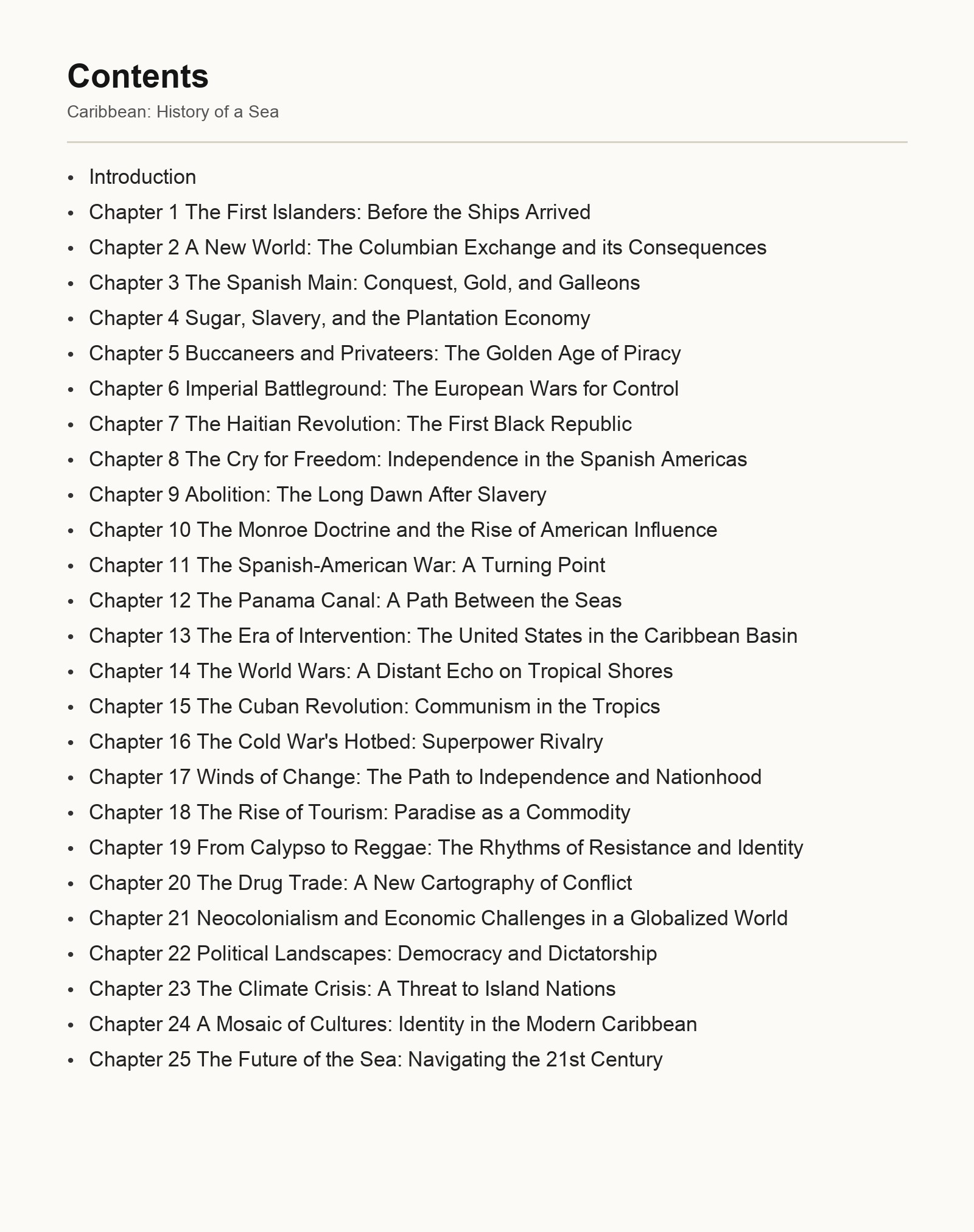
- Introduction
- Chapter 1 The First Islanders: Before the Ships Arrived
- Chapter 2 A New World: The Columbian Exchange and its Consequences
- Chapter 3 The Spanish Main: Conquest, Gold, and Galleons
- Chapter 4 Sugar, Slavery, and the Plantation Economy
- Chapter 5 Buccaneers and Privateers: The Golden Age of Piracy
- Chapter 6 Imperial Battleground: The European Wars for Control
- Chapter 7 The Haitian Revolution: The First Black Republic
- Chapter 8 The Cry for Freedom: Independence in the Spanish Americas
- Chapter 9 Abolition: The Long Dawn After Slavery
- Chapter 10 The Monroe Doctrine and the Rise of American Influence
- Chapter 11 The Spanish-American War: A Turning Point
- Chapter 12 The Panama Canal: A Path Between the Seas
- Chapter 13 The Era of Intervention: The United States in the Caribbean Basin
- Chapter 14 The World Wars: A Distant Echo on Tropical Shores
- Chapter 15 The Cuban Revolution: Communism in the Tropics
- Chapter 16 The Cold War's Hotbed: Superpower Rivalry
- Chapter 17 Winds of Change: The Path to Independence and Nationhood
- Chapter 18 The Rise of Tourism: Paradise as a Commodity
- Chapter 19 From Calypso to Reggae: The Rhythms of Resistance and Identity
- Chapter 20 The Drug Trade: A New Cartography of Conflict
- Chapter 21 Neocolonialism and Economic Challenges in a Globalized World
- Chapter 22 Political Landscapes: Democracy and Dictatorship
- Chapter 23 The Climate Crisis: A Threat to Island Nations
- Chapter 24 A Mosaic of Cultures: Identity in the Modern Caribbean
- Chapter 25 The Future of the Sea: Navigating the 21st Century
Author:
Published By:
Date Published:
May 18, 2026
Type:
Nonfiction
Language:
English
Also Available In:
Word Count:
47,851 words
Reading Time:
3 hours 21 minutes
Sample:
Order:
Order Caribbean (Hardcover) on MixCache.com:
Buy NowPrint copy is made to order and ships worldwide. Includes the ebook free, ready to read instantly.
$5 account credit for all new MixCache.com accounts, usable toward any ebook purchase!*