Browse by Category
Fiction
- Action & Adventure
- African American
- Anthologies
- Children's Fiction
- Classics
- Comics & Graphic Novels
- Coming of Age
- Contemporary
- Cultural & Regional
- Drama
- Erotica
- Fantasy
- General
- Historical Fiction
- Horror
- Humor & Satire
- Literary Fiction
- Mystery, Thriller & Suspense
- Poetry
- Religious & Inspirational
- Romance
- Science Fiction
- Short Stories
- War & Military
- Westerns
- Women's Fiction
- Young Adult
Non-Fiction
- Antiques & Collectibles
- Arts & Photography
- Biographies & Memoirs
- Business & Money
- Children's Non-Fiction
-
Computers & Technology
- Artificial Intelligence
- Computer Science
- Cybersecurity & Cryptography
- Data Science & Analytics
- Databases & Big Data
- Game Development & Design
- General
- Hardware & DIY
- Mobile App Development
- Networking & Cloud Computing
- Operating Systems
- Programming
- Robotics
- Software
- Software Engineering
- User Experience (UX) & Design
- Web Development & Design
- Cooking, Food & Wine
- Crafts, Hobbies & Home
- Education & Teaching
- Engineering
- General
- Health, Fitness & Dieting
-
History
- African History
- African History - North Africa
- African History - Sub-Saharan Africa
- American History
- American History - 20th Century
- American History - Civil War
- American History - Colonial Period
- Ancient History
- Asian History
- Asian History - China
- Asian History - India
- Asian History - Japan
- Asian History - Southeast Asia
- European History
- European History - Ancient Greece
- European History - Ancient Rome
- European History - Medieval
- European History - Modern
- European History - Renaissance
- General
- Middle Eastern History
- Military History
- Military History - Aviation
- Military History - Naval
- Social & Cultural History
- World History
- Humor & Entertainment
- Industrial Technology
- Language Learning
- Law
- LGBTQ+ Non-Fiction
- Literary Criticism
- Medical Books
- Parenting & Relationships
- Philosophy
- Politics & Social Sciences
- Reference
- Religion & Spirituality
-
Science & Math
- Agricultural Sciences
- Astronomy & Space Science
- Behavioral Sciences
- Biological Sciences
- Botany & Plant Science
- Chemistry
- Earth Sciences
- Engineering - Chemical
- Engineering - Civil
- Engineering - Electrical
- Engineering - Mechanical
- Environment
- General
- Geology
- Mathematics
- Nature & Ecology
- Oceanography
- Paleontology
- Physics
- Statistics
- Self-Help
- Sports & Outdoors
- Study Aids
- Sustainability & Green Living
- Textbooks
- Transportation
- Travel
- True Crime
- Urban Planning & Development
- Veterinary Medicine
- Writing & Publishing
Jump to Section
MixCache.com Total Access
Unlimited reading and audiobooks for every book published by MixCache.com.
Included titles carry the MTA badge.
Learn more →
Money, PACs, and the Buying of Washington
MTA
Campaign Finance After Citizens United: Small Donors, Dark Money, and Policy Influence
About this book:

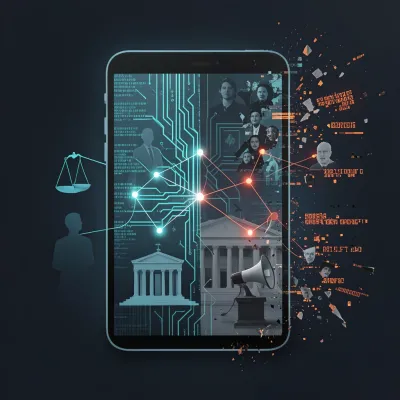
*Money, PACs, and the Buying of Washington* examines the fundamental transformation of the American campaign finance system following the landmark *Citizens United* ruling. The book details the rise of a new political architecture characterized by Super PACs, which can raise unlimited sums from wealthy individuals and corporations, and "dark money" groups (501(c)(4)s and 501(c)(6)s) that allow donors to remain anonymous. This shift has decentralized power away from traditional political parties and into the hands of concentrated interests, creating a "permanent campaign" where financial resources buy privileged access to lawmakers and shape legislative agendas long before ballots are cast.
Parallel to the rise of big-money interests, the text explores a digital revolution that has birthed a "small-donor surge." Platforms like ActBlue and WinRed, combined with sophisticated A/B testing and SMS fundraising, have empowered millions of ordinary citizens to participate financially. However, this digital arms race also relies on data brokers and microtargeting to exploit voter psychology, often prioritizing emotional outrage to drive donations. This technological shift has moved political persuasion from broad-based television appeals to surgical, data-driven interventions that can exacerbate political polarization.
The book moves beyond national elections to highlight how these dynamics play out in specific contexts, such as the high-stakes Georgia runoffs and the post-*Dobbs* fundraising landscape. These case studies reveal that while money is the "oxygen" of politics, its impact is most potent when combined with a robust ground game and resonant social issues. The text also critiques the fragmented and often paralyzed enforcement mechanisms of the FEC and IRS, which struggle to police coordination loopholes and the opaque movement of funds through donor-advised funds and shell corporations.
Ultimately, the book offers a "reform toolbox" focused on transparency, public financing, and modernized enforcement. It advocates for real-time disclosure, standardized digital ad archives, and small-donor matching programs—modeled after successful "state laboratories" like New York City and Seattle—to amplify the voices of the public. While acknowledging the legal constraints imposed by the Supreme Court’s First Amendment jurisprudence, the author argues that a combination of structural reforms and platform accountability is essential to ensuring that American democracy remains responsive to its citizens rather than its biggest spenders.
What You'll Find Inside:
- How Citizens United enabled unlimited independent spending through Super PACs and dark money groups, fundamentally altering the flow of money in American politics
- The mechanics of dark money networks using 501(c)(4)s, 501(c)(6)s, and donor-advised funds to conceal funding sources while influencing elections and policy
- How digital platforms, data brokers, and microtargeting have transformed fundraising and voter persuasion through algorithmic A/B testing and personalized messaging
- The documented pathways from campaign contributions to policy influence, including access, agenda-setting, lobbying, and judicial appointments
- Practical reform strategies including transparency measures, small-donor matching programs, public financing systems, and platform regulations to increase accountability
Who's It For:
This book is designed for reform-minded activists, policymakers, campaign professionals, journalists, and engaged citizens who seek to understand the post-Citizens United campaign finance landscape. It provides practical insights for those designing legislation, building political campaigns, investigating money trails, or navigating an information environment shaped by targeted persuasion and dark money influence.
Table of Contents:
- Introduction
- Chapter 1 After Citizens United: The New Rules of Money
- Chapter 2 Super PACs and the Architecture of Independent Expenditures
- Chapter 3 Dark Money: 501(c)(4)s, 501(c)(6)s, and the Shadow Network
- Chapter 4 Donor-Advised Funds and Pass-Through Giving
- Chapter 5 The Small-Donor Surge: Platforms, Psychology, and the $10 Gift
- Chapter 6 Digital Fundraising Machines: Email, SMS, and Algorithmic A/B Testing
- Chapter 7 Data Brokers, Microtargeting, and the Price of Attention
- Chapter 8 The Platform Era: Rules, Loopholes, and Online Ad Markets
- Chapter 9 Television Still Reigns: How Broadcast Buys Shape Strategy
- Chapter 10 Outside Groups and Parties: Coordination Lines and Firewalls
- Chapter 11 Umpires on the Field: The FEC, the IRS, and Fragmented Enforcement
- Chapter 12 State Laboratories: Public Financing, Disclosure, and Innovation
- Chapter 13 Case Study: The First Super PAC Cycle
- Chapter 14 Case Study: The Wave Midterms and the Digital Arms Race
- Chapter 15 Case Study: Campaigning Through a Pandemic
- Chapter 16 Case Study: Runoffs, Ground Games, and Grassroots Power
- Chapter 17 Case Study: Post-Dobbs Fundraising and Messaging Shifts
- Chapter 18 After the Ballots: Lobbying, Access, and Agenda-Setting
- Chapter 19 From Money to Policy: Pathways of Influence
- Chapter 20 Corporate Political Spending, ESG Pressures, and Shareholder Voice
- Chapter 21 Philanthropy, Nonprofits, and the Civic Tech Ecosystem
- Chapter 22 Disinformation, Influence Operations, and Financial Flows
- Chapter 23 Reform Toolbox I: Transparency, Ad Archives, and Real-Time Disclosure
- Chapter 24 Reform Toolbox II: Small-Donor Matching and Public Financing
- Chapter 25 Reform Toolbox III: Enforcement, Platform Rules, and Constitutional Horizons
Author:
Published By:
Date Published:
April 28, 2026
Type:
Nonfiction
Language:
English
Word Count:
44,337 words
Reading Time:
3 hours 6 minutes
Sample:
Order:
Order Money, PACs, and the Buying of Washington (Paperback) on MixCache.com:
Buy NowPrint copy is made to order and ships worldwide. Includes the ebook free, ready to read instantly.
$5 account credit for all new MixCache.com accounts, usable toward any ebook purchase!*