
Browse by Category
Fiction
- Action & Adventure
- African American
- Anthologies
- Children's Fiction
- Classics
- Comics & Graphic Novels
- Coming of Age
- Contemporary
- Cultural & Regional
- Drama
- Erotica
- Fantasy
- General
- Historical Fiction
- Horror
- Humor & Satire
- Literary Fiction
- Mystery, Thriller & Suspense
- Poetry
- Religious & Inspirational
- Romance
- Science Fiction
- Short Stories
- War & Military
- Westerns
- Women's Fiction
- Young Adult
Non-Fiction
- Antiques & Collectibles
- Arts & Photography
- Biographies & Memoirs
- Business & Money
- Children's Non-Fiction
-
Computers & Technology
- Artificial Intelligence
- Computer Science
- Cybersecurity & Cryptography
- Data Science & Analytics
- Databases & Big Data
- Game Development & Design
- General
- Hardware & DIY
- Mobile App Development
- Networking & Cloud Computing
- Operating Systems
- Programming
- Robotics
- Software
- Software Engineering
- User Experience (UX) & Design
- Web Development & Design
- Cooking, Food & Wine
- Crafts, Hobbies & Home
- Education & Teaching
- Engineering
- General
- Health, Fitness & Dieting
-
History
- African History
- African History - North Africa
- African History - Sub-Saharan Africa
- American History
- American History - 20th Century
- American History - Civil War
- American History - Colonial Period
- Ancient History
- Asian History
- Asian History - China
- Asian History - India
- Asian History - Japan
- Asian History - Southeast Asia
- European History
- European History - Ancient Greece
- European History - Ancient Rome
- European History - Medieval
- European History - Modern
- European History - Renaissance
- General
- Middle Eastern History
- Military History
- Military History - Aviation
- Military History - Naval
- Social & Cultural History
- World History
- Humor & Entertainment
- Industrial Technology
- Language Learning
- Law
- LGBTQ+ Non-Fiction
- Literary Criticism
- Medical Books
- Parenting & Relationships
- Philosophy
- Politics & Social Sciences
- Reference
- Religion & Spirituality
-
Science & Math
- Agricultural Sciences
- Astronomy & Space Science
- Behavioral Sciences
- Biological Sciences
- Botany & Plant Science
- Chemistry
- Earth Sciences
- Engineering - Chemical
- Engineering - Civil
- Engineering - Electrical
- Engineering - Mechanical
- Environment
- General
- Geology
- Mathematics
- Nature & Ecology
- Oceanography
- Paleontology
- Physics
- Statistics
- Self-Help
- Sports & Outdoors
- Study Aids
- Sustainability & Green Living
- Textbooks
- Transportation
- Travel
- True Crime
- Urban Planning & Development
- Veterinary Medicine
- Writing & Publishing
Jump to Section
MixCache.com Total Access
Unlimited reading and audiobooks for every book published by MixCache.com.
Included titles carry the MTA badge.
Learn more →
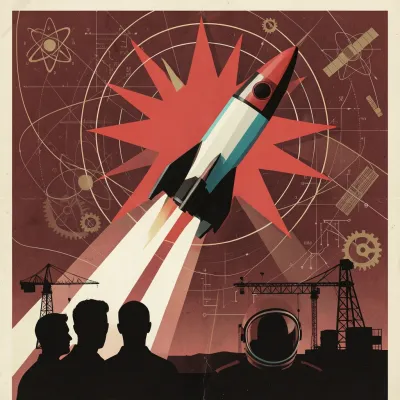
Mission Control: Behind the Scenes of Robotic Exploration
MTA
An insider's look at the teams, procedures, and decision-making that run planetary missions
About this book:

*Mission Control: Behind the Scenes of Robotic Exploration* provides a comprehensive look into the complex human and technical systems required to operate deep-space spacecraft. The book details the lifecycle of a mission, from early conceptual design and the establishing of "Flight Rules" to the high-stakes execution of Entry, Descent, and Landing (EDL). It emphasizes that robotic exploration is a cyclical process of uplink and downlink, where ground teams must meticulously negotiate finite resources like power, thermal stability, and bandwidth to achieve scientific goals while maintaining the safety of the vehicle.
The narrative explores the unique culture and discipline of the control room, highlighting the specialized roles of flight directors and subsystem engineers. It delves into the realities of operating across vast distances, where light-time delays make real-time control impossible, forcing teams to rely on autonomous sequences and robust fault protection. The book also addresses the human element of spaceflight, describing the physical and mental toll of "Mars time" shift work, the necessity of rigorous simulations on ground-based "testbeds," and the collaborative nature of international and commercial partnerships.
A significant portion of the text is dedicated to anomaly response and the lessons learned from past failures. When technical glitches or environmental hazards like radiation and dust storms threaten a mission, "tiger teams" are formed to diagnose root causes and climb back from the edge of failure using safe modes and software patches. These chapters underscore a philosophy of "test as you fly," where every error is treated as a vital data point to harden future missions against the unforgiving environment of the solar system.
Finally, the book looks toward the future of exploration, envisioning a shift from "human-in-the-loop" to "human-on-the-loop" oversight. As artificial intelligence and advanced autonomy become more integrated into spacecraft bus systems, robotic explorers will transition from being passive tools to becoming intelligent partners. This evolution will allow for more sophisticated science on distant worlds like Europa or Titan, where the machine’s ability to make real-time decisions will be essential to navigating the next frontier of discovery.
What You'll Find Inside:
- The critical rhythm of Uplink and Downlink cycles that turn scientific goals into binary commands and raw telemetry into discovery.
- How 'Mars Time' and high-pressure shift work impact human decision-making, fatigue management, and team resilience in the control room.
- The architecture of spacecraft survival, including fault protection, safe modes, and the use of ground-based 'testbeds' to rehearse for anomalies.
- Navigating the constraints of deep space operations, such as light-time delays, power budgets, and limited Deep Space Network bandwidth.
- The future of exploration through the integration of AI and advanced autonomy, moving from 'human-in-the-loop' to 'human-on-the-loop' supervision.
Who's It For:
This book is designed for space enthusiasts, engineering students, and professionals interested in the operational realities of planetary exploration. It is specifically beneficial for those who want to understand the human-machine partnership required to run complex robotic missions behind the scenes. Readers seeking a deep dive into risk management, mission planning, and the technical procedures of mission control will find this an invaluable resource.
Table of Contents:
- Introduction
- Chapter 1 From Concept to Command: How Missions Begin
- Chapter 2 Inside the Control Room: Consoles, Roles, and Culture
- Chapter 3 The Uplink: Sequencing Commands That Fly
- Chapter 4 The Downlink: Telemetry, Health, and Data Integrity
- Chapter 5 The Communications Backbone: Deep Space Network in Practice
- Chapter 6 Time in Deep Space: Light-Time, Windows, and Clocks
- Chapter 7 Navigation and Guidance: Hitting a Moving Target
- Chapter 8 Power, Thermal, and Survival: Keeping the Robot Alive
- Chapter 9 Autonomy and Fault Protection: When the Spacecraft Decides
- Chapter 10 Simulation and Testbeds: Rehearsing the Future
- Chapter 11 Reviews and Readiness: Go/No-Go and Risk Management
- Chapter 12 Shift Work and Handoffs: Living on Mars Time
- Chapter 13 Tactical vs. Strategic: Planning the Sol and the Mission
- Chapter 14 Science Operations: Targets, Trades, and Priorities
- Chapter 15 Anomaly Response: Building and Leading Tiger Teams
- Chapter 16 Safe Modes and Recoveries: Climbing Back from the Edge
- Chapter 17 Software in the Loop: Patches, Updates, and Contingencies
- Chapter 18 Environmental Hazards: Dust, Radiation, and the Unknown
- Chapter 19 Planetary Protection and Ethics: Responsibilities Beyond Earth
- Chapter 20 Public and Stakeholder Communications: Transparency Under Pressure
- Chapter 21 International and Commercial Partnerships: Working Across Cultures
- Chapter 22 Human Factors: Fatigue, Decision-Making, and Team Resilience
- Chapter 23 Lessons from Failures: What We Learn When Things Break
- Chapter 24 Milestones and Moments: Landings, First Lights, and Surprises
- Chapter 25 The Next Frontier: AI, Autonomy, and the Future of Mission Control
Author:
Published By:
Date Published:
January 12, 2026
Type:
Nonfiction
Language:
English
Word Count:
76,505 words
Reading Time:
5 hours 21 minutes
Sample:
MixCache.com Total Access
Get unlimited access to this book + all books published by MixCache.com for $11.99/month
Subscribe to MTAOr purchase this book individually below
Order:
Buy the Mission Control: Behind the Scenes of Robotic Exploration ebook on MixCache.com:
Buy Now
Full ebook will be available immediately
- read online or download as a PDF file.
$5 account credit for all new MixCache.com accounts, usable toward any ebook purchase!*


Ratings & Reviews
Ask Questions About This Book
Have a question about the content? Ask our AI assistant!
Start by asking a question about "Mission Control: Behind the Scenes of Robotic Exploration"
Example: "Does this book mention William Shakespeare?"
Thinking...