Browse by Category
Fiction
- Action & Adventure
- African American
- Anthologies
- Children's Fiction
- Classics
- Comics & Graphic Novels
- Coming of Age
- Contemporary
- Cultural & Regional
- Drama
- Erotica
- Fantasy
- General
- Historical Fiction
- Horror
- Humor & Satire
- Literary Fiction
- Mystery, Thriller & Suspense
- Poetry
- Religious & Inspirational
- Romance
- Science Fiction
- Short Stories
- War & Military
- Westerns
- Women's Fiction
- Young Adult
Non-Fiction
- Antiques & Collectibles
- Arts & Photography
- Biographies & Memoirs
- Business & Money
- Children's Non-Fiction
-
Computers & Technology
- Artificial Intelligence
- Computer Science
- Cybersecurity & Cryptography
- Data Science & Analytics
- Databases & Big Data
- Game Development & Design
- General
- Hardware & DIY
- Mobile App Development
- Networking & Cloud Computing
- Operating Systems
- Programming
- Robotics
- Software
- Software Engineering
- User Experience (UX) & Design
- Web Development & Design
- Cooking, Food & Wine
- Crafts, Hobbies & Home
- Education & Teaching
- Engineering
- General
- Health, Fitness & Dieting
-
History
- African History
- African History - North Africa
- African History - Sub-Saharan Africa
- American History
- American History - 20th Century
- American History - Civil War
- American History - Colonial Period
- Ancient History
- Asian History
- Asian History - China
- Asian History - India
- Asian History - Japan
- Asian History - Southeast Asia
- European History
- European History - Ancient Greece
- European History - Ancient Rome
- European History - Medieval
- European History - Modern
- European History - Renaissance
- General
- Middle Eastern History
- Military History
- Military History - Aviation
- Military History - Naval
- Social & Cultural History
- World History
- Humor & Entertainment
- Industrial Technology
- Language Learning
- Law
- LGBTQ+ Non-Fiction
- Literary Criticism
- Medical Books
- Parenting & Relationships
- Philosophy
- Politics & Social Sciences
- Reference
- Religion & Spirituality
-
Science & Math
- Agricultural Sciences
- Astronomy & Space Science
- Behavioral Sciences
- Biological Sciences
- Botany & Plant Science
- Chemistry
- Earth Sciences
- Engineering - Chemical
- Engineering - Civil
- Engineering - Electrical
- Engineering - Mechanical
- Environment
- General
- Geology
- Mathematics
- Nature & Ecology
- Oceanography
- Paleontology
- Physics
- Statistics
- Self-Help
- Sports & Outdoors
- Study Aids
- Sustainability & Green Living
- Textbooks
- Transportation
- Travel
- True Crime
- Urban Planning & Development
- Veterinary Medicine
- Writing & Publishing
Jump to Section
MixCache.com Total Access
Unlimited reading and audiobooks for every book published by MixCache.com.
Included titles carry the MTA badge.
Learn more →
The History of Equatorial Guinea
MTA
Equatorial Guinea from its earliest beginnings to the present day
About this book:

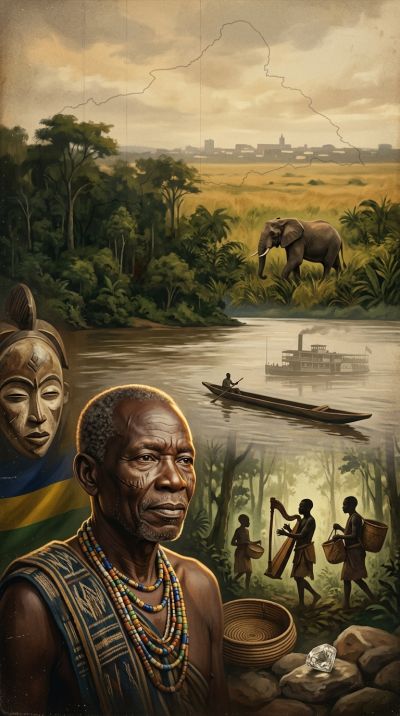
"The History of Equatorial Guinea" offers a comprehensive journey through the complex and often turbulent past of this small, yet strategically significant, Central African nation. From the ancient migrations of the Pygmy and Bantu peoples, including the influential Fang and the resilient Bubi of Bioko Island, to the distinct coastal communities and their intricate pre-colonial economies, the book paints a vivid picture of the diverse societies that thrived before European contact. It meticulously chronicles the arrival of Portuguese explorers, the subsequent Spanish takeover via the Treaty of El Pardo, and the unique interlude of British anti-slavery efforts, detailing how these foreign influences gradually transformed indigenous ways of life and laid the foundation for colonial rule.
The narrative delves into the harsh realities of Spanish colonial administration, characterized by the rise of a coercive plantation economy, particularly on Fernando Po, and the brutal system of indentured labor that brought thousands of West Africans to the island. It explores the rigid social hierarchies under Spanish rule, the pervasive influence of Catholic missionaries in shaping cultural and spiritual landscapes, and the persistent, often violent, resistance from indigenous populations. The book then guides readers through the tumultuous mid-20th century, examining how World War II indirectly spurred nascent African nationalism and tracing the slow, contentious road to autonomy and eventual independence under Francisco Macías Nguema in 1968.
The subsequent chapters expose the tragic descent of the First Republic into one of Africa's most brutal dictatorships under Macías Nguema, a period marked by mass murder, economic collapse, and international isolation, culminating in the 1979 coup led by his nephew, Teodoro Obiang Nguema Mbasogo. The book then analyzes Equatorial Guinea's dramatic transformation from an impoverished, isolated state to an oil-rich nation in the late 20th and early 21st centuries. It critically examines the paradoxes of this oil wealth—the rapid infrastructural development alongside persistent widespread poverty, extreme wealth concentration within the ruling elite, and the continuous struggle for human rights and democratic governance under Obiang's protracted rule, concluding with a reflection on the enduring legacies that shape the nation's identity and future trajectories.
What You'll Find Inside:
- Explore Equatorial Guinea's rich pre-colonial history, detailing the distinct societies of the Fang, Bubi, Benga, Ndowe, and Annobonese peoples, their economies, and social structures.
- Understand the profound impact of European colonization, from the initial Portuguese claims and the Spanish takeover via the Treaty of El Pardo, to the British anti-slavery efforts and the definitive 'Scramble for Africa' that delineated the country's borders.
- Examine the coercive colonial economy, focusing on the rise of cocoa and timber plantations, the brutal system of indentured labor, and the social hierarchies and cultural assimilation driven by Spanish rule and Catholic missionaries.
- Trace the tumultuous path to independence, including the rise of African nationalism in the post-WWII era, the political movements of the 1950s and 60s, and the swift descent into dictatorship under Francisco Macías Nguema following the 1968 independence.
- Analyze the dramatic economic transformation brought by offshore oil discoveries in the late 20th century, its impact on the nation's wealth and infrastructure, and the persistent challenges of wealth disparity, corruption, and human rights under Teodoro Obiang Nguema Mbasogo's long-standing rule.
Who's It For:
This book is for readers interested in the comprehensive history of African nations, particularly those seeking to understand the unique trajectory of Equatorial Guinea. It will appeal to students of African studies, history, political science, and economics, as well as anyone curious about the complex interplay of indigenous cultures, colonialism, post-colonial dictatorships, and the challenges and paradoxes of resource-rich nations in the 21st century.
Table of Contents:
- Introduction
- Chapter 1 Early Inhabitants: The First Peoples of Equatorial Guinea
- Chapter 2 Bantu Migrations and the Rise of the Fang
- Chapter 3 The Bubi and the Societies of Bioko Island
- Chapter 4 Coastal Communities: The Benga, Ndowe, and Annobonese
- Chapter 5 Pre-Colonial Economies and Social Organization
- Chapter 6 First European Encounters: Portuguese Explorers and Traders
- Chapter 7 From Formosa to Fernando Po: The Naming and Claiming of Bioko
- Chapter 8 The Treaty of El Pardo and the Spanish Takeover
- Chapter 9 British Influence and Anti-Slavery Efforts
- Chapter 10 The Scramble for Africa: Spain Asserts Colonial Control
- Chapter 11 The Delineation of Borders: Treaties with France
- Chapter 12 Plantations and Indentured Labor: The Colonial Economy
- Chapter 13 Social Hierarchies Under Spanish Rule
- Chapter 14 Religion, Missionaries, and the Spread of Catholicism
- Chapter 15 Resistance, Repression, and Infrastructure Developments
- Chapter 16 World War II and the Rise of African Nationalism
- Chapter 17 Road to Autonomy: Political Movements of the 1950s and 60s
- Chapter 18 The Transition to Independence
- Chapter 19 The First Republic and the Macías Nguema Regime
- Chapter 20 The 1979 Coup: Obiang Nguema Mbasogo Comes to Power
- Chapter 21 From Isolation to Oil: Economic Transformation in the late 20th Century
- Chapter 22 Society and Human Rights Under Obiang’s Rule
- Chapter 23 Oil Wealth and Its Discontents: Development and Disparity
- Chapter 24 Equatorial Guinea in the 21st Century: Diplomacy and Identity
- Chapter 25 Legacies and Futures: Reflecting on National Trajectories
Author:
Published By:
Date Published:
November 10, 2025
Type:
Nonfiction
Language:
English
Word Count:
42,080 words
Reading Time:
2 hours 57 minutes
Sample:
Order:
Order The History of Equatorial Guinea (Hardcover) on MixCache.com:
Buy NowPrint copy is made to order and ships worldwide. Includes the ebook free, ready to read instantly.
$5 account credit for all new MixCache.com accounts, usable toward any ebook purchase!*