Browse by Category
Fiction
- Action & Adventure
- African American
- Anthologies
- Children's Fiction
- Classics
- Comics & Graphic Novels
- Coming of Age
- Contemporary
- Cultural & Regional
- Drama
- Erotica
- Fantasy
- General
- Historical Fiction
- Horror
- Humor & Satire
- Literary Fiction
- Mystery, Thriller & Suspense
- Poetry
- Religious & Inspirational
- Romance
- Science Fiction
- Short Stories
- War & Military
- Westerns
- Women's Fiction
- Young Adult
Non-Fiction
- Antiques & Collectibles
- Arts & Photography
- Biographies & Memoirs
- Business & Money
- Children's Non-Fiction
-
Computers & Technology
- Artificial Intelligence
- Computer Science
- Cybersecurity & Cryptography
- Data Science & Analytics
- Databases & Big Data
- Game Development & Design
- General
- Hardware & DIY
- Mobile App Development
- Networking & Cloud Computing
- Operating Systems
- Programming
- Robotics
- Software
- Software Engineering
- User Experience (UX) & Design
- Web Development & Design
- Cooking, Food & Wine
- Crafts, Hobbies & Home
- Education & Teaching
- Engineering
- General
- Health, Fitness & Dieting
-
History
- African History
- African History - North Africa
- African History - Sub-Saharan Africa
- American History
- American History - 20th Century
- American History - Civil War
- American History - Colonial Period
- Ancient History
- Asian History
- Asian History - China
- Asian History - India
- Asian History - Japan
- Asian History - Southeast Asia
- European History
- European History - Ancient Greece
- European History - Ancient Rome
- European History - Medieval
- European History - Modern
- European History - Renaissance
- General
- Middle Eastern History
- Military History
- Military History - Aviation
- Military History - Naval
- Social & Cultural History
- World History
- Humor & Entertainment
- Industrial Technology
- Language Learning
- Law
- LGBTQ+ Non-Fiction
- Literary Criticism
- Medical Books
- Parenting & Relationships
- Philosophy
- Politics & Social Sciences
- Reference
- Religion & Spirituality
-
Science & Math
- Agricultural Sciences
- Astronomy & Space Science
- Behavioral Sciences
- Biological Sciences
- Botany & Plant Science
- Chemistry
- Earth Sciences
- Engineering - Chemical
- Engineering - Civil
- Engineering - Electrical
- Engineering - Mechanical
- Environment
- General
- Geology
- Mathematics
- Nature & Ecology
- Oceanography
- Paleontology
- Physics
- Statistics
- Self-Help
- Sports & Outdoors
- Study Aids
- Sustainability & Green Living
- Textbooks
- Transportation
- Travel
- True Crime
- Urban Planning & Development
- Veterinary Medicine
- Writing & Publishing
Jump to Section

Want unlimited access to all books published by MixCache.com (plus their audiobooks)? Try MixCache.com Total Access. Look for the MTA badge on book covers to identify included titles.
Access to infinite ebooks: Don't see the book you want? Suggest it and we'll create it (free!) for you from scratch with our powerful AI book writer. Then read it with MTA - besides profiting from any sales it makes!
Spain's Imperial Narrative
MTA
Conquest Culture and the Legacy of Overseas Rule
About this book:
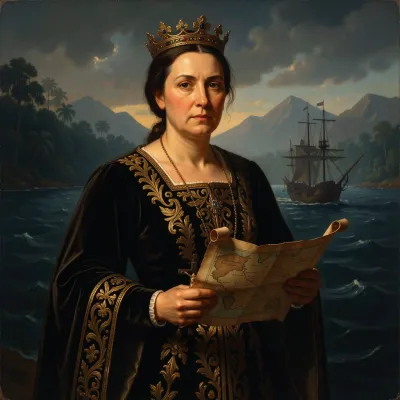
Spain's imperial narrative began with the completion of the Reconquista under the Catholic Monarchs, which forged a militant, expansionist mindset and provided the resources and justification for overseas ventures. Christopher Columbus's 1492 voyage, sanctioned by papal bulls such as Inter Caetera and later refined by the Treaty of Tordesillas, opened the Americas to Spanish conquest. The subsequent campaigns of conquistadors like Hernán Cortés and Francisco Pizarro toppled the Aztec and Inca empires through a combination of superior military technology, horses, disease, exploitation of indigenous rivalries, and ruthless pursuit of wealth, establishing the foundations of a transatlantic empire.
To govern its vast territories, Spain created a hierarchical administrative system centered on viceroyalties and audiencias, while extracting labor through the encomienda and later repartimiento systems, which precipitated catastrophic demographic decline among indigenous peoples. The Catholic Church was inseparable from the imperial project, driving evangelization, operating missions and schools, and wielding the Inquisition to enforce orthodoxy. Economic life revolved around the extraction of American silver, transported via the heavily guarded Silver Fleets that integrated the Americas, Europe, Africa, and Asia into the first global economy, while art, architecture, and urban planning—guided by the Laws of the Indies and the Ordinances of 1573—projected Spanish power and Catholic faith across the colonial landscape.
Colonial society was stratified into a rigid casta system privileging peninsulares, disadvantaging criollos, mestizos, indigenous peoples, and Africans, whose enslavement supplied labor for plantations and mines. Resistance took many forms: indigenous rebellions such as the Pueblo Revolt and Túpac Amaru II uprising, maroon communities of escaped African slaves, and cultural syncretism that preserved elements of pre‑colonial belief. Intellectual currents from the Enlightenment and the examples of the American and French Revolutions fostered criollo grievances over political exclusion and economic restraint. The Napoleonic invasion of Spain shattered monarchical legitimacy, prompting American juntas to claim sovereignty and igniting independence movements that dismantled most of Spain's empire by the mid‑19th century. The empire’s enduring legacy persists in the Spanish language, Catholicism, legal and municipal frameworks, urban layouts, and the complex social and economic inequalities that continue to shape Latin America and the Philippines.
What You'll Find Inside:
- The book shows how the Reconquista's religious zeal and martial culture provided the ideological and military foundation for Spain's overseas expansion.
- It examines the legal and administrative structures of the empire—from papal bulls and the Treaty of Tordesillas to viceroyalties, audiencias, and the Laws of the Indies—that attempted to govern vast territories.
- It details the brutal labor systems—including the encomienda, repartimiento, and transatlantic slave trade—that extracted wealth and caused demographic catastrophe among indigenous and African populations.
- It explores how art, architecture, urban planning, and evangelization functioned as instruments of power and faith, creating syncretic cultural landscapes across the colonies.
- It analyzes the Bourbon Reforms, Enlightenment thought, Creole identity, and the Napoleonic crisis as key forces that sparked resistance, independence movements, and the enduring legacy of Spanish rule.
Who's It For:
This book is suited for undergraduate and graduate students of history, particularly those focusing on Latin American, colonial, or early modern European studies, as well as general readers seeking a comprehensive yet nuanced understanding of Spain's global empire and its lasting impact on the modern world.
Author:
Published By:
Date Published:
August 8, 2026
Type:
Nonfiction
Language:
English
Word Count:
43,981 words
Reading Time:
3 hours 5 minutes
Sample:
Order:
Order Spain's Imperial Narrative (Paperback) on MixCache.com:
Buy NowPrint copy is made to order and ships worldwide. Includes the ebook free, ready to read instantly.
$5 account credit for all new MixCache.com accounts, usable toward any ebook purchase!*