
Browse by Category
Fiction
- Action & Adventure
- African American
- Anthologies
- Children's Fiction
- Classics
- Comics & Graphic Novels
- Coming of Age
- Contemporary
- Cultural & Regional
- Drama
- Erotica
- Fantasy
- General
- Historical Fiction
- Horror
- Humor & Satire
- Literary Fiction
- Mystery, Thriller & Suspense
- Poetry
- Religious & Inspirational
- Romance
- Science Fiction
- Short Stories
- War & Military
- Westerns
- Women's Fiction
- Young Adult
Non-Fiction
- Antiques & Collectibles
- Arts & Photography
- Biographies & Memoirs
- Business & Money
- Children's Non-Fiction
-
Computers & Technology
- Artificial Intelligence
- Computer Science
- Cybersecurity & Cryptography
- Data Science & Analytics
- Databases & Big Data
- Game Development & Design
- General
- Hardware & DIY
- Mobile App Development
- Networking & Cloud Computing
- Operating Systems
- Programming
- Robotics
- Software
- Software Engineering
- User Experience (UX) & Design
- Web Development & Design
- Cooking, Food & Wine
- Crafts, Hobbies & Home
- Education & Teaching
- Engineering
- General
- Health, Fitness & Dieting
-
History
- African History
- African History - North Africa
- African History - Sub-Saharan Africa
- American History
- American History - 20th Century
- American History - Civil War
- American History - Colonial Period
- Ancient History
- Asian History
- Asian History - China
- Asian History - India
- Asian History - Japan
- Asian History - Southeast Asia
- European History
- European History - Ancient Greece
- European History - Ancient Rome
- European History - Medieval
- European History - Modern
- European History - Renaissance
- General
- Middle Eastern History
- Military History
- Military History - Aviation
- Military History - Naval
- Social & Cultural History
- World History
- Humor & Entertainment
- Industrial Technology
- Language Learning
- Law
- LGBTQ+ Non-Fiction
- Literary Criticism
- Medical Books
- Parenting & Relationships
- Philosophy
- Politics & Social Sciences
- Reference
- Religion & Spirituality
-
Science & Math
- Agricultural Sciences
- Astronomy & Space Science
- Behavioral Sciences
- Biological Sciences
- Botany & Plant Science
- Chemistry
- Earth Sciences
- Engineering - Chemical
- Engineering - Civil
- Engineering - Electrical
- Engineering - Mechanical
- Environment
- General
- Geology
- Mathematics
- Nature & Ecology
- Oceanography
- Paleontology
- Physics
- Statistics
- Self-Help
- Sports & Outdoors
- Study Aids
- Sustainability & Green Living
- Textbooks
- Transportation
- Travel
- True Crime
- Urban Planning & Development
- Veterinary Medicine
- Writing & Publishing
Jump to Section

Want unlimited access to all books published by MixCache.com (plus their audiobooks)? Try MixCache.com Total Access. Look for the MTA badge on book covers to identify included titles.
Access to infinite ebooks: Don't see the book you want? Suggest it and we'll create it (free!) for you from scratch with our powerful AI book writer. Then read it with MTA - besides profiting from any sales it makes!
Norway's Maritime Heritage
MTA
Fishing Shipping and Oil from Vikings to Today
About this book:
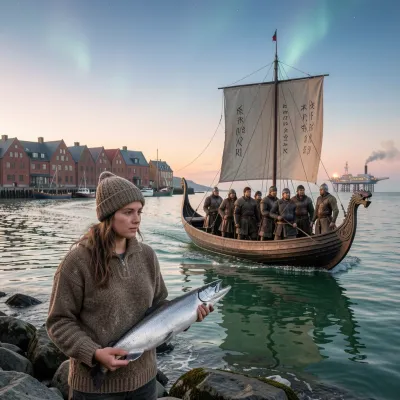
Norway's maritime heritage traces a continuous relationship with the sea from the earliest post‑glacial hunter‑gatherers who relied on marine resources and skin boats, through the Viking Age when innovative longships enabled raiding, trade, and transatlantic exploration, to the medieval period when Bergen became a Hanseatic‑dominated hub for the export of stockfish. The cod fisheries of Lofoten formed the economic backbone of northern Norway for centuries, sustaining coastal communities and shaping a culture of fisher‑farmers, while whaling and sealing provided vital supplements. The Age of Sail saw Norway rise as a global carrying trade power, leveraging its timber exports and skilled mariners, a position reinforced by steamships and a expansive merchant fleet that endured heavy losses during the two World Wars while maintaining neutrality‑based trade.
Post‑war reconstruction modernized the fishing and shipping industries, setting the stage for the North Sea oil boom that began with the Ekofisk discovery in 1969. Norway instituted a unique petroculture through state control via Statoil, the Government Pension Fund Global, and stringent environmental regulations, balancing massive wealth with social equity and sustainability. Concurrently, traditional fisheries industrialized with trawlers and later faced stock‑pressure, prompting a shift toward aquaculture—particularly Atlantic salmon farming—and emerging offshore renewable energy such as floating wind farms. Throughout, technological innovation has continually transformed shipbuilding, offshore operations, navigation, and safety, while coastal communities preserved their maritime identity through folklore, festivals, and local economies.
Environmental stewardship has become a defining challenge, as Norway seeks to mitigate oil spills, reduce emissions, and protect fisheries amid expanding offshore industry. The nation’s maritime legacy is safeguarded by museums, restored vessels, and cultural programs that keep alive the skills and stories of Vikings, Hanseatic traders, fishermen, and wartime merchant seamen. Today, Norway’s relationship with the sea encompasses sustainable fisheries, advanced aquaculture, offshore wind, cutting‑edge digital shipping, and a strong commitment to preserving its heritage for future generations, reflecting an enduring adaptation to the ocean’s bounty and its responsibilities.
What You'll Find Inside:
- The evolution of Norway's maritime industries from Viking longships to modern offshore oil platforms, demonstrating continuous innovation and adaptation
- How the cod fisheries formed the economic backbone of northern Norway for centuries, shaping coastal communities and European trade patterns
- The transformative impact of North Sea oil discovery on Norwegian society, economy, and global energy leadership since the 1960s
- Norway's pioneering role in sustainable marine innovations including aquaculture, offshore wind energy, and advanced maritime technology
- The enduring cultural connection between Norwegians and the sea, reflected in folklore, traditions, and national identity from ancient times to today
Who's It For:
This book is ideal for readers interested in maritime history, Scandinavian culture, and how natural resources shape national development. It will particularly benefit students, educators, and professionals in fields like maritime studies, environmental science, and international trade, as well as travelers seeking a deeper understanding of Norway's coastal heritage. Anyone fascinated by the interplay between geography, economy, and cultural identity will find valuable insights in this comprehensive exploration of Norway's relationship with the sea.
Author:
Published By:
Date Published:
August 9, 2026
Type:
Nonfiction
Language:
English
Word Count:
35,441 words
Reading Time:
2 hours 29 minutes
Sample:
MixCache.com Total Access
Get unlimited access to this book + all books published by MixCache.com for $11.99/month
Subscribe to MTAOr purchase this book individually below
Order:
Buy the Norway's Maritime Heritage ebook on MixCache.com:
Buy Now
Full ebook will be available immediately
- read online or download as a PDF file.
$5 account credit for all new MixCache.com accounts, usable toward any ebook purchase!*




Ratings & Reviews
Ask Questions About This Book
Have a question about the content? Ask our AI assistant!
Start by asking a question about "Norway's Maritime Heritage"
Example: "Does this book mention William Shakespeare?"
Thinking...