Browse by Category
Fiction
- Action & Adventure
- African American
- Anthologies
- Children's Fiction
- Classics
- Comics & Graphic Novels
- Coming of Age
- Contemporary
- Cultural & Regional
- Drama
- Erotica
- Family Life
- Fantasy
- General
- Historical Fiction
- Horror
- Humor & Satire
- Literary Fiction
- Mystery, Thriller & Suspense
- Poetry
- Religious & Inspirational
- Romance
- Science Fiction
- Short Stories
- War & Military
- Westerns
- Women's Fiction
- Young Adult
Non-Fiction
- Antiques & Collectibles
- Arts & Photography
- Biographies & Memoirs
- Business & Money
- Children's Non-Fiction
-
Computers & Technology
- Artificial Intelligence
- Computer Science
- Cybersecurity & Cryptography
- Data Science & Analytics
- Databases & Big Data
- Game Development & Design
- General
- Hardware & DIY
- Mobile App Development
- Networking & Cloud Computing
- Operating Systems
- Programming
- Robotics
- Software
- Software Engineering
- User Experience (UX) & Design
- Web Development & Design
- Cooking, Food & Wine
- Crafts, Hobbies & Home
- Education & Teaching
- Engineering
- General
- Health, Fitness & Dieting
-
History
- African History
- African History - North Africa
- African History - Sub-Saharan Africa
- American History
- American History - 20th Century
- American History - Civil War
- American History - Colonial Period
- Ancient History
- Asian History
- Asian History - China
- Asian History - India
- Asian History - Japan
- Asian History - Southeast Asia
- European History
- European History - Ancient Greece
- European History - Ancient Rome
- European History - Medieval
- European History - Modern
- European History - Renaissance
- General
- Middle Eastern History
- Military History
- Military History - Aviation
- Military History - Naval
- Social & Cultural History
- World History
- Humor & Entertainment
- Industrial Technology
- Language Learning
- Law
- LGBTQ+ Non-Fiction
- Literary Criticism
- Medical Books
- Parenting & Relationships
- Philosophy
- Politics & Social Sciences
- Reference
- Religion & Spirituality
-
Science & Math
- Agricultural Sciences
- Astronomy & Space Science
- Behavioral Sciences
- Biological Sciences
- Botany & Plant Science
- Chemistry
- Earth Sciences
- Engineering - Chemical
- Engineering - Civil
- Engineering - Electrical
- Engineering - Mechanical
- Environment
- General
- Geology
- Mathematics
- Nature & Ecology
- Oceanography
- Paleontology
- Physics
- Statistics
- Self-Help
- Sports & Outdoors
- Study Aids
- Sustainability & Green Living
- Textbooks
- Transportation
- Travel
- True Crime
- Urban Planning & Development
- Veterinary Medicine
- Writing & Publishing
Jump to Section
MixCache.com Total Access
Unlimited reading and audiobooks for every book published by MixCache.com.
Included titles carry the MTA badge.
Learn more →
Populism Unpacked: Causes, Variants, and Democratic Responses
MTA
A comparative guide to left- and right-wing populist movements and institutional strategies to respond
About this book:
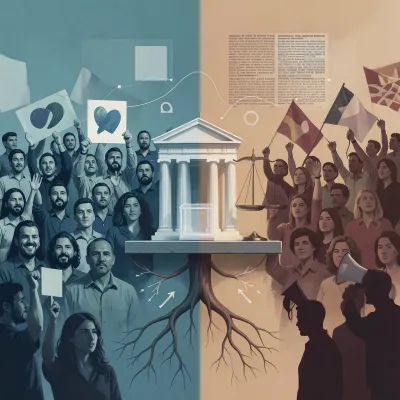
The book defines populism as a thin ideology that frames politics as a moral struggle between “the pure people” and “the corrupt elite,” a structure that can be attached to left‑wing, right‑wing, or other substantive agendas. It explains how this core narrative is deployed through symbols, emotional framing, direct leader‑follower communication, and media ecosystems that amplify outrage and simplify complex issues into us‑vs‑them choices. While populism can arise from legitimate democratic deficits, its tendency to claim a singular popular will makes it susceptible to illiberal turns that undermine pluralism, judicial independence, and minority rights.
Economic drivers such as rising inequality, wage stagnation, labor precarity, globalization shocks, and regional decline create fertile ground for populist appeals; left‑wing populism channels these grievances against corporate and financial elites, whereas right‑wing populism often redirects economic anxiety toward cultural threats like immigration, national identity loss, and perceived moral decay. Cultural drivers—including anxieties over migration, gender and religious norms, moral order, and the politics of belonging—further shape populist mobilization, often intersecting with economic concerns to produce hybrid movements. The work traces these dynamics across regions: Latin America’s left‑wing resource‑boom populism, Europe’s austerity‑ and migration‑fueled nationalism, the United States’ intra‑party populist insurgencies, Central and Eastern Europe’s democratic backsliding, South and Southeast Asia’s majoritarian ethno‑religious populism, the MENA region’s authoritarian populism, and Sub‑Saharan Africa’s anti‑establishment patronage politics.
In response, the book offers a democratic toolkit for diagnosing populist rhetoric and institutional stress, and proposes four categories of remedies: policy actions that alleviate material insecurity (redistribution, social safety nets, regional investment, labor protections); trust‑building measures such as anti‑corruption agencies, transparency reforms, and whistleblower protections; party strategies that re‑engage disaffected voters, build inclusive coalitions, and resist accommodative concessions that sacrifice democratic norms; and media governance, media literacy, and deliberative dialogue initiatives to counter disinformation and polarization. Ultimately, it argues that democracy can renew itself by addressing root grievances, strengthening institutional guardrails, and fostering inclusive participation, thereby turning populist pressures into opportunities for pluralistic renewal rather than democratic erosion.
What You'll Find Inside:
- Populism is a thin 'people vs. elite' ideology that can attach to left‑wing economic grievances or right‑wing cultural anxieties, making it adaptable across contexts.
- Economic drivers such as rising inequality, wage stagnation, labor precarity, globalization shocks, and regional decline create fertile ground for populist mobilization.
- Cultural drivers—including identity politics, migration fears, gender and religion debates, and struggles over moral order—fuel populist appeals when citizens feel their way of life is threatened.
- Populist leaders employ a playbook of narratives (betrayal, decline), symbols, emotional frames, and direct communication via social media to bypass traditional gatekeepers and forge a personal bond with followers.
- The book provides a diagnostic toolkit for spotting populist rhetoric and institutional stress, alongside democratic responses ranging from material policy remedies and anti‑corruption reforms to media governance, civic education, and cross‑group dialogue.
Who's It For:
This book is intended for scholars and students of political science, comparative politics, and democratic theory; policymakers and public officials seeking evidence‑based strategies to counter populist threats; journalists and media professionals covering populist movements; and civil society activists and practitioners working to strengthen democratic resilience and pluralism.
Introduction
Populism has moved from the margins of political commentary to its center, invoked to make sense of electoral earthquakes, constitutional crises, and sweeping cultural debates. Yet the term is often used so loosely that it obscures more than it reveals. This book unpacks populism by tracing its diverse expressions across regions and by disaggregating its economic and cultural drivers. We argue that understanding populism requires both a comparative map—showing where and how it rises—and a diagnostic lens—clarifying what it is, what it is not, and which features make it compatible or corrosive to democratic life.
At its core, populism frames politics as a moral struggle between “the people” and “the elite,” promising to realign institutions with a supposedly authentic popular will. That thin but potent logic can be attached to left‑wing or right‑wing programs, to inclusive or exclusionary visions of the people, and to democratic renewal or authoritarian shortcuts. Left variants often channel anger at concentrated economic power, inequality, and unaccountable technocracy; right variants more frequently mobilize around national identity, cultural change, and perceived status loss. Both can speak to real grievances—over stagnant wages, crumbling services, or unresponsive governance—even as their proposed remedies diverge sharply. Distinguishing these variants is essential for crafting responses that address root causes without compromising pluralism.
Enjoying it? The full book includes every chapter.
Table of Contents:
- Introduction Free
- Chapter 1 Mapping the Concept: What Do We Mean by Populism? Free
- Chapter 2 Varieties of Populist Claims: Left, Right, and Beyond
- Chapter 3 The Populist Playbook: Narratives, Symbols, and Frames
- Chapter 4 Economic Drivers I: Inequality, Stagnation, and Precarity
- Chapter 5 Economic Drivers II: Globalization Shocks and Regional Decline
- Chapter 6 Cultural Drivers I: Identity, Migration, and the Politics of Belonging
- Chapter 7 Cultural Drivers II: Gender, Religion, and Moral Order
- Chapter 8 Media Ecosystems: From Talk Radio to TikTok
- Chapter 9 Organization and Leadership: Charisma, Parties, and Movements
- Chapter 10 Institutions that Enable or Constrain: Electoral and Party Systems
- Chapter 11 Courts, Constitutions, and the Rule of Law
- Chapter 12 Business Models of Outrage: Platforms, Disinformation, and Incentives
- Chapter 13 Europe: From Austerity to Nationalism
- Chapter 14 Latin America: Left Populism, Resource Booms, and Anti‑elite Crusades
- Chapter 15 United States: Populism Across and Within the Parties
- Chapter 16 Central and Eastern Europe: Democratic Backsliding and Resilience
- Chapter 17 South and Southeast Asia: Majoritarianism and Movement Politics
- Chapter 18 Middle East and North Africa: Populism amid Authoritarian Constraint
- Chapter 19 Sub‑Saharan Africa: Anti‑establishment Politics and Patronage
- Chapter 20 Diagnostic Toolkit: Indicators, Early Warnings, and Field Guides
- Chapter 21 Democratic Responses I: Policy Remedies for Material Grievances
- Chapter 22 Democratic Responses II: Trust, Transparency, and Anti‑corruption
- Chapter 23 Democratic Responses III: Party Strategies, Coalitions, and Engagement
- Chapter 24 Democratic Responses IV: Media Governance, Civic Education, and Dialogue
- Chapter 25 Conclusion: Guardrails, Renewal, and the Future of Pluralism
Included when you buy the full book.
Author:
Published By:
Date Published:
May 31, 2026
Type:
Nonfiction
Language:
English
Word Count:
46,761 words
Reading Time:
3 hours 16 minutes
Sample:
Order:
Order Populism Unpacked: Causes, Variants, and Democratic Responses (Paperback) on MixCache.com:
Buy NowIncludes every chapter. Not sure yet? Read the opening free.
Print copy is made to order and ships worldwide. Includes the ebook free, ready to read instantly.
$5 account credit for all new MixCache.com accounts, usable toward any ebook purchase!*