Browse by Category
Fiction
- Action & Adventure
- African American
- Anthologies
- Children's Fiction
- Classics
- Comics & Graphic Novels
- Coming of Age
- Contemporary
- Cultural & Regional
- Drama
- Erotica
- Fantasy
- General
- Historical Fiction
- Horror
- Humor & Satire
- Literary Fiction
- Mystery, Thriller & Suspense
- Poetry
- Religious & Inspirational
- Romance
- Science Fiction
- Short Stories
- War & Military
- Westerns
- Women's Fiction
- Young Adult
Non-Fiction
- Antiques & Collectibles
- Arts & Photography
- Biographies & Memoirs
- Business & Money
- Children's Non-Fiction
-
Computers & Technology
- Artificial Intelligence
- Computer Science
- Cybersecurity & Cryptography
- Data Science & Analytics
- Databases & Big Data
- Game Development & Design
- General
- Hardware & DIY
- Mobile App Development
- Networking & Cloud Computing
- Operating Systems
- Programming
- Robotics
- Software
- Software Engineering
- User Experience (UX) & Design
- Web Development & Design
- Cooking, Food & Wine
- Crafts, Hobbies & Home
- Education & Teaching
- Engineering
- General
- Health, Fitness & Dieting
-
History
- African History
- African History - North Africa
- African History - Sub-Saharan Africa
- American History
- American History - 20th Century
- American History - Civil War
- American History - Colonial Period
- Ancient History
- Asian History
- Asian History - China
- Asian History - India
- Asian History - Japan
- Asian History - Southeast Asia
- European History
- European History - Ancient Greece
- European History - Ancient Rome
- European History - Medieval
- European History - Modern
- European History - Renaissance
- General
- Middle Eastern History
- Military History
- Military History - Aviation
- Military History - Naval
- Social & Cultural History
- World History
- Humor & Entertainment
- Industrial Technology
- Language Learning
- Law
- LGBTQ+ Non-Fiction
- Literary Criticism
- Medical Books
- Parenting & Relationships
- Philosophy
- Politics & Social Sciences
- Reference
- Religion & Spirituality
-
Science & Math
- Agricultural Sciences
- Astronomy & Space Science
- Behavioral Sciences
- Biological Sciences
- Botany & Plant Science
- Chemistry
- Earth Sciences
- Engineering - Chemical
- Engineering - Civil
- Engineering - Electrical
- Engineering - Mechanical
- Environment
- General
- Geology
- Mathematics
- Nature & Ecology
- Oceanography
- Paleontology
- Physics
- Statistics
- Self-Help
- Sports & Outdoors
- Study Aids
- Sustainability & Green Living
- Textbooks
- Transportation
- Travel
- True Crime
- Urban Planning & Development
- Veterinary Medicine
- Writing & Publishing
Jump to Section
MixCache.com Total Access
Unlimited reading and audiobooks for every book published by MixCache.com.
Included titles carry the MTA badge.
Learn more →
Sacred Landscapes
MTA
Religion, Pilgrimage, and Sacred Geographies in India and Neighboring Lands
About this book:

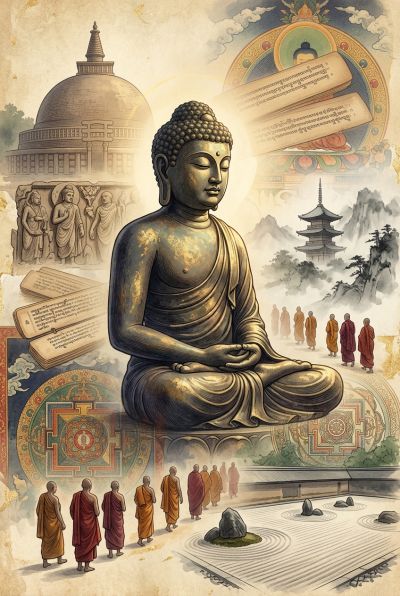
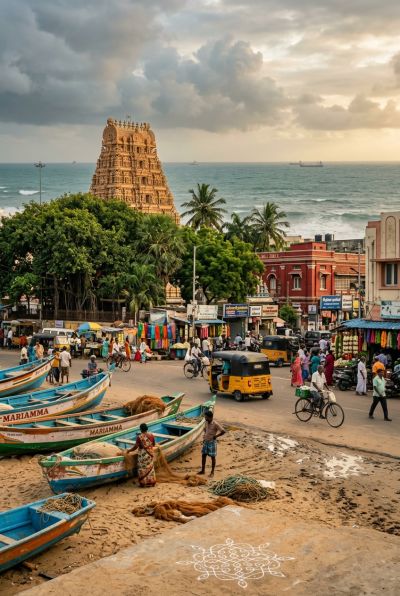
*Sacred Landscapes* explore the complex interplay between religion, geography, and power across the Indian subcontinent and its neighboring regions. The book posits that pilgrimage is not merely a spiritual act but a "political technology" used by rulers and religious institutions to inscribe authority onto the physical environment. By analyzing a diverse array of sources—including ancient Puranas, Buddhist and Jain itineraries, Sufi hagiographies, and colonial travelogues—the text reconstructs how rivers, mountains, and cities were transformed into "mnemonic landscapes" that facilitate communal identity, economic exchange, and political legitimacy.
The narrative traces specific sacred circuits, from the "Mother" rivers of the Ganga and Yamuna to the "Mountains of Merit" like Kailash and Amarnath. It examines the "temple polities" of Hindu dynasties, the foundational "Buddhist Circuits" of North India and Nepal, the mercantile-driven Jain *tirthas*, and the itinerant devotion surrounding Sufi *dargahs*. The book emphasizes that these geographies have never been static; they are living webs shaped by the "work of water," the development of imperial infrastructures like caravanserais and *kos minars*, and the resilience of transborder shrines in the face of modern geopolitical ruptures like the Partition.
A significant portion of the work is dedicated to the impact of modernity and the physical realities of the landscape. It details how the introduction of railways and roads democratized pilgrimage while simultaneously forcing new administrative and reformist agendas. Furthermore, the book addresses the "ecology of the sacred," highlighting the growing tension between traditional ritual practices and the modern crises of pollution and climate change. As sacred sites face environmental degradation, the text argues that the spiritual value of these lands is increasingly becoming a catalyst for environmental stewardship and "eco-dharma."
The final chapters look toward the future, examining how digital cartographies—GIS, satellite imagery, and virtual reality—are creating new modes of "presence-at-a-distance." While technology offers unprecedented access and preservation tools, it also raises questions about the "authenticity" of the spiritual experience and the potential de-sacralization of space. Ultimately, *Sacred Landscapes* portrays the subcontinent as a vibrant, shifting tapestry where ancient traditions and modern innovations converge, ensuring that the act of movement remains central to the region’s spiritual and political life.
What You'll Find Inside:
- Pilgrimage operates as a political technology where rulers and religious communities co-produce sacred geography to assert authority, legitimize rule, and negotiate overlapping jurisdictions through temple endowments, royal processions, and transborder shrine management.
- Sacred landscapes are dynamically shaped by interfaith interactions, with Hindu, Buddhist, Jain, Sikh, and Muslim traditions sharing sites, influencing each other's pilgrimage circuits, and creating layered geographies of devotion across the subcontinent and beyond.
- Infrastructure—from ancient stepwells and kos minars to colonial railways and modern digital cartographies—has continuously mediated pilgrimage access, experience, and meaning, transforming how devotees engage with sacred spaces over centuries.
- Pilgrimage economies intertwine devotion with commerce, mobilizing labor (artisans, boatmen, vendors), creating market networks around shrines, and linking local livelihoods to regional and transregional flows of goods, money, and services through donations and festivals.
- Contemporary sacred geographies face critical threats from environmental degradation (polluted rivers, glacial melt), climate change impacts on ritual cycles, and geopolitical tensions over access, requiring new approaches to balance spiritual practice with ecological sustainability.
Who's It For:
This book is essential for scholars and graduate students in South Asian studies, religious studies, anthropology, and geography seeking an interdisciplinary understanding of how pilgrimage shapes and is shaped by political, economic, and ecological forces. It will also benefit professionals in cultural heritage management, tourism development, and interfaith initiatives working across India and neighboring regions, offering historical context for contemporary challenges in sacred site preservation, access negotiation, and sustainable pilgrimage planning amid climate change and geopolitical tensions.
Table of Contents:
- Introduction
- Chapter 1 Mapping the Sacred: Concepts and Methods
- Chapter 2 Rivers as Tirtha: Ganga, Yamuna, and the Work of Water
- Chapter 3 Mountains of Merit: Kailash, Amarnath, and Himalayan Thresholds
- Chapter 4 Pilgrim Cities: Kashi, Prayagraj, and the Making of Urban Sanctity
- Chapter 5 Temple Polities: Kingship, Mandalas, and the Architecture of Rule
- Chapter 6 The Buddhist Circuits: Bodh Gaya, Sarnath, Lumbini, and Beyond
- Chapter 7 Jain Tirthas and Mercantile Worlds: Routes of Renunciation and Trade
- Chapter 8 Sufi Dargahs and Itinerant Devotion: Ajmer to Nizamuddin
- Chapter 9 Sikh Sacred Geographies: The Panj Takht and Transborder Shrines
- Chapter 10 Shakti Circuits: Peethas, Processions, and Goddess Landscapes
- Chapter 11 Maritime Pilgrimage: Oceanic Routes, Ports, and the Hajj
- Chapter 12 Roads of Empire: Caravanserais, Kos Minars, and Wayfaring States
- Chapter 13 Shrines at the Frontier: Sindh, Balochistan, and the Northwest
- Chapter 14 Island Sanctuaries: Sri Pada and the Sacred Shores of Sri Lanka
- Chapter 15 Himalayan Realms: Nepal, Bhutan, and Valleys of the Gods
- Chapter 16 Assam and the Brahmaputra: Kamakhya and River Worlds
- Chapter 17 Desert Devotions: Pushkar, Hinglaj, and the Thar
- Chapter 18 Sacred Waterscapes: Stepwells, Tanks, and the Geometry of Flow
- Chapter 19 Texts on the Move: Puranas, Itineraries, and Hagiographies
- Chapter 20 Travelers’ Tales: Chinese Monks, Muslim Wayfarers, and Colonial Gazes
- Chapter 21 Railways, Roads, and Reform: The Modern Pilgrim’s Infrastructures
- Chapter 22 Partitioned Sanctities: Borders, Corridors, and Contested Access
- Chapter 23 Economies of Pilgrimage: Patronage, Markets, and Labor
- Chapter 24 Ecology of the Sacred: Ritual, Environment, and Climate Change
- Chapter 25 Digital Cartographies and the Future of Sacred Landscapes
Author:
Published By:
Date Published:
March 5, 2026
Type:
Nonfiction
Language:
English
Word Count:
46,775 words
Reading Time:
3 hours 17 minutes
Sample:
Order:
Order Sacred Landscapes (Paperback) on MixCache.com:
Buy NowPrint copy is made to order and ships worldwide. Includes the ebook free, ready to read instantly.
$5 account credit for all new MixCache.com accounts, usable toward any ebook purchase!*