Browse by Category
Fiction
- Action & Adventure
- African American
- Anthologies
- Children's Fiction
- Classics
- Comics & Graphic Novels
- Coming of Age
- Contemporary
- Cultural & Regional
- Drama
- Erotica
- Fantasy
- General
- Historical Fiction
- Horror
- Humor & Satire
- Literary Fiction
- Mystery, Thriller & Suspense
- Poetry
- Religious & Inspirational
- Romance
- Science Fiction
- Short Stories
- War & Military
- Westerns
- Women's Fiction
- Young Adult
Non-Fiction
- Antiques & Collectibles
- Arts & Photography
- Biographies & Memoirs
- Business & Money
- Children's Non-Fiction
-
Computers & Technology
- Artificial Intelligence
- Computer Science
- Cybersecurity & Cryptography
- Data Science & Analytics
- Databases & Big Data
- Game Development & Design
- General
- Hardware & DIY
- Mobile App Development
- Networking & Cloud Computing
- Operating Systems
- Programming
- Robotics
- Software
- Software Engineering
- User Experience (UX) & Design
- Web Development & Design
- Cooking, Food & Wine
- Crafts, Hobbies & Home
- Education & Teaching
- Engineering
- General
- Health, Fitness & Dieting
-
History
- African History
- African History - North Africa
- African History - Sub-Saharan Africa
- American History
- American History - 20th Century
- American History - Civil War
- American History - Colonial Period
- Ancient History
- Asian History
- Asian History - China
- Asian History - India
- Asian History - Japan
- Asian History - Southeast Asia
- European History
- European History - Ancient Greece
- European History - Ancient Rome
- European History - Medieval
- European History - Modern
- European History - Renaissance
- General
- Middle Eastern History
- Military History
- Military History - Aviation
- Military History - Naval
- Social & Cultural History
- World History
- Humor & Entertainment
- Industrial Technology
- Language Learning
- Law
- LGBTQ+ Non-Fiction
- Literary Criticism
- Medical Books
- Parenting & Relationships
- Philosophy
- Politics & Social Sciences
- Reference
- Religion & Spirituality
-
Science & Math
- Agricultural Sciences
- Astronomy & Space Science
- Behavioral Sciences
- Biological Sciences
- Botany & Plant Science
- Chemistry
- Earth Sciences
- Engineering - Chemical
- Engineering - Civil
- Engineering - Electrical
- Engineering - Mechanical
- Environment
- General
- Geology
- Mathematics
- Nature & Ecology
- Oceanography
- Paleontology
- Physics
- Statistics
- Self-Help
- Sports & Outdoors
- Study Aids
- Sustainability & Green Living
- Textbooks
- Transportation
- Travel
- True Crime
- Urban Planning & Development
- Veterinary Medicine
- Writing & Publishing
Jump to Section
MixCache.com Total Access
Unlimited reading and audiobooks for every book published by MixCache.com.
Included titles carry the MTA badge.
Learn more →
The Science of Coffee Fermentation
MTA
How Microbes Shape Flavor and Aroma
About this book:
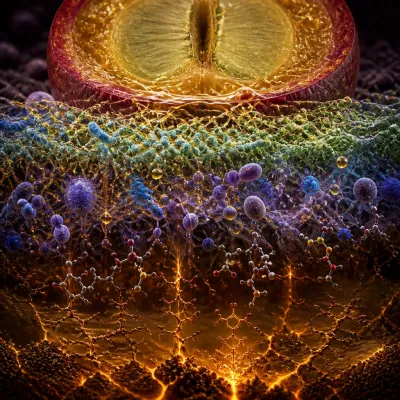
The Science of Coffee Fermentation provides a comprehensive exploration of the microbial processes that transform coffee cherries into the complex beverage enjoyed globally. The book establishes the coffee cherry's anatomy and chemistry—specifically its sugars, acids, and pectins—as the foundational substrate for fermentation. It details how indigenous and introduced microorganisms, primarily yeasts, lactic acid bacteria, and acetic acid bacteria, metabolize these compounds within distinct environmental frameworks defined by oxygen availability, temperature, pH, and water activity. This microbial activity is not merely a method for mucilage removal but the primary architect of flavor, generating volatile esters, organic acids, and other metabolites that define a coffee's acidity, sweetness, body, and aromatic profile, while also creating precursors for the Maillard reactions during roasting.
The text traces the evolution of processing from traditional methods—washed, natural, and honey—each representing a unique ecological niche for microbial succession, to modern controlled techniques that treat fermentation as a precision bioreactor. It contrasts the clean, bright profiles of submerged washed fermentations with the intense fruitiness of natural and honey processes, where prolonged fruit contact drives deeper metabolic infusion. A significant portion is dedicated to the rise of anaerobic fermentation and the use of starter cultures, which allow producers to steer microbial communities toward specific flavor outcomes, such as heightened tropical fruit esters or creamy lactic acidity, while mitigating defects like over-fermentation, mold growth, and mycotoxin production. The critical role of post-fermentation drying and storage in stabilizing these delicate microbial signatures is also rigorously examined.
The book bridges microbiology and sensory science, explaining how enzymatic catalysis (pectinases, glycosidases) unlocks bound aroma precursors and how sugar metabolism pathways dictate the balance between desirable acidity and off-flavors. It introduces the concept of "microbial terroir," arguing that the unique indigenous microbial populations of a farm are as critical to a coffee's identity as soil or altitude. Through detailed case studies from Panama, Colombia, Costa Rica, and Ethiopia, the text illustrates how meticulous control of variables—ripeness selection, hygiene, temperature, and time—translates empirical tradition into reproducible, high-quality results. Sensory evaluation (cupping) is framed as the essential feedback loop, correlating specific microbial metabolic outputs with perceptible flavor attributes like winey, floral, or lactic notes.
Looking forward, the final chapters address the intersection of fermentation with decaffeination and the transformative potential of biotechnology. The future of coffee processing lies in microbial engineering: designer starter cultures developed through directed evolution or CRISPR, AI-driven predictive fermentation management, and consortium cultures tailored for specific flavor signatures. These innovations promise unprecedented consistency and novelty but require navigating challenges of cost, accessibility for smallholders, regulatory hurdles for GMOs, and the preservation of authentic terroir expression. Ultimately, the book posits that coffee fermentation is transitioning from an observational craft to a data-driven science, empowering producers to harness the "invisible workforce" of microbes with surgical precision to unlock the bean's full genetic and metabolic potential.
What You'll Find Inside:
- Comprehensive exploration of how yeasts, bacteria, and fungi transform coffee cherries through fermentation, detailing their specific metabolic pathways and flavor contributions.
- In-depth analysis of traditional (washed, natural, honey) and modern controlled fermentation methods (anaerobic, aerobic, starter cultures) and their distinct impacts on cup profiles.
- Scientific breakdown of environmental factors—temperature, oxygen, pH, water activity—that govern microbial activity and how producers can manipulate them for desired outcomes.
- Connection of fermentation chemistry to roasting science, explaining how microbial byproducts become precursors for Maillard reactions and caramelization that define final flavor.
- Practical guidance on quality control, defect prevention, sensory evaluation (cupping), and emerging biotechnologies like designer starter cultures and AI-driven fermentation management.
Who's It For:
This book is ideal for coffee producers and processors seeking scientific control over fermentation to improve consistency and quality, specialty coffee roasters and baristas wanting to understand the microbial origins of flavor notes they taste and describe, and coffee researchers or enthusiasts interested in the intersection of microbiology, chemistry, and sensory science in coffee. It bridges academic rigor with practical application for anyone aiming to master the unseen biology that shapes every cup.
Table of Contents:
- Introduction
- Chapter 1: The Journey of Coffee: From Bean to Beverage
- Chapter 2: Understanding Coffee Anatomy and Chemistry
- Chapter 3: Introduction to Microbial Fermentation
- Chapter 4: The History of Fermentation in Coffee Processing
- Chapter 5: Key Microbial Players: Yeasts and Their Role
- Chapter 6: Bacterial Communities and Their Impact on Flavor
- Chapter 7: Fungi and Molds: Friends or Foes in Fermentation?
- Chapter 8: Environmental Factors Influencing Microbial Growth
- Chapter 9: Traditional Fermentation Methods: Washed, Natural, and Honey
- Chapter 10: Controlled Fermentation: Modern Techniques and Innovations
- Chapter 11: Anaerobic Fermentation: Exploring Oxygen's Absence
- Chapter 12: Aerobic Fermentation: The Role of Oxygen in Flavor Development
- Chapter 13: Enzymes: Catalysts of Flavor Transformation
- Chapter 14: Volatile Compounds: The Aromatic Symphony of Coffee
- Chapter 15: Acidity and pH: Shaping the Coffee's Profile
- Chapter 16: Sugar Metabolism: Sweetness and Beyond
- Chapter 17: The Maillard Reaction: Browning and Flavor Complexity
- Chapter 18: Impact of Terroir on Microbial Populations
- Chapter 19: Post-Fermentation Processing: Drying and Storage
- Chapter 20: Quality Control and Defect Prevention in Fermentation
- Chapter 21: Sensory Evaluation: Cupping for Fermentation Characteristics
- Chapter 22: Case Studies: Successful Fermentation Practices
- Chapter 23: Challenges and Future Directions in Coffee Fermentation
- Chapter 24: The Science of Decaffeination and Fermentation
- Chapter 25: The Future of Coffee: Biotechnology and Microbial Engineering
Author:
Published By:
Date Published:
August 16, 2026
Type:
Nonfiction
Language:
English
Word Count:
44,980 words
Reading Time:
3 hours 9 minutes
Sample:
Order:
Order The Science of Coffee Fermentation (Hardcover) on MixCache.com:
Buy NowPrint copy is made to order and ships worldwide. Includes the ebook free, ready to read instantly.
$5 account credit for all new MixCache.com accounts, usable toward any ebook purchase!*