
Browse by Category
Fiction
- Action & Adventure
- African American
- Anthologies
- Children's Fiction
- Classics
- Comics & Graphic Novels
- Coming of Age
- Contemporary
- Cultural & Regional
- Drama
- Erotica
- Fantasy
- General
- Historical Fiction
- Horror
- Humor & Satire
- Literary Fiction
- Mystery, Thriller & Suspense
- Poetry
- Religious & Inspirational
- Romance
- Science Fiction
- Short Stories
- War & Military
- Westerns
- Women's Fiction
- Young Adult
Non-Fiction
- Antiques & Collectibles
- Arts & Photography
- Biographies & Memoirs
- Business & Money
- Children's Non-Fiction
-
Computers & Technology
- Artificial Intelligence
- Computer Science
- Cybersecurity & Cryptography
- Data Science & Analytics
- Databases & Big Data
- Game Development & Design
- General
- Hardware & DIY
- Mobile App Development
- Networking & Cloud Computing
- Operating Systems
- Programming
- Robotics
- Software
- Software Engineering
- User Experience (UX) & Design
- Web Development & Design
- Cooking, Food & Wine
- Crafts, Hobbies & Home
- Education & Teaching
- Engineering
- General
- Health, Fitness & Dieting
-
History
- African History
- African History - North Africa
- African History - Sub-Saharan Africa
- American History
- American History - 20th Century
- American History - Civil War
- American History - Colonial Period
- Ancient History
- Asian History
- Asian History - China
- Asian History - India
- Asian History - Japan
- Asian History - Southeast Asia
- European History
- European History - Ancient Greece
- European History - Ancient Rome
- European History - Medieval
- European History - Modern
- European History - Renaissance
- General
- Middle Eastern History
- Military History
- Military History - Aviation
- Military History - Naval
- Social & Cultural History
- World History
- Humor & Entertainment
- Industrial Technology
- Language Learning
- Law
- LGBTQ+ Non-Fiction
- Literary Criticism
- Medical Books
- Parenting & Relationships
- Philosophy
- Politics & Social Sciences
- Reference
- Religion & Spirituality
-
Science & Math
- Agricultural Sciences
- Astronomy & Space Science
- Behavioral Sciences
- Biological Sciences
- Botany & Plant Science
- Chemistry
- Earth Sciences
- Engineering - Chemical
- Engineering - Civil
- Engineering - Electrical
- Engineering - Mechanical
- Environment
- General
- Geology
- Mathematics
- Nature & Ecology
- Oceanography
- Paleontology
- Physics
- Statistics
- Self-Help
- Sports & Outdoors
- Study Aids
- Sustainability & Green Living
- Textbooks
- Transportation
- Travel
- True Crime
- Urban Planning & Development
- Veterinary Medicine
- Writing & Publishing
Jump to Section

Want unlimited access to all books published by MixCache.com (plus their audiobooks)? Try MixCache.com Total Access. Look for the MTA badge on book covers to identify included titles.
Access to infinite ebooks: Don't see the book you want? Suggest it and we'll create it (free!) for you from scratch with our powerful AI book writer. Then read it with MTA - besides profiting from any sales it makes!
The Hidden World of Coral Reefs
MTA
Discovering the Vital Role of Reefs in Marine Life
About this book:
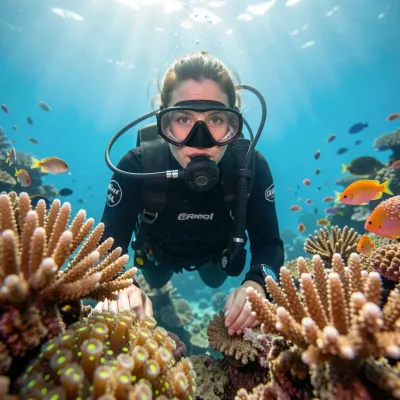
Coral reefs are living architectures built by tiny coral polyps that, through a symbiotic partnership with photosynthetic zooxanthellae, secrete calcium carbonate skeletons to form vast, complex structures. These reefs, though covering less than one percent of the ocean floor, support at least a quarter of all marine species, creating biodiverse hotspots rivaling rainforests. They provide essential ecological services: acting as nurseries for countless fish and invertebrates, protecting shorelines from wave energy and storms, sustaining fisheries that feed millions, offering biomedical compounds with pharmaceutical potential, and driving tourism economies. Their formation spans millennia, shaped by coral growth, coralline algae, and geological processes such as subsiding volcanic islands that produce fringing, barrier, and atoll reefs.
Despite their resilience, reefs face unprecedented threats from global and local stressors. Climate‑driven ocean warming triggers mass coral bleaching, while ocean acidification weakens skeletal growth; together they undermine both living tissue and reef framework. Pollution from nutrient runoff, sediments, plastics, and chemicals smothers corals and fuels algal overgrowth. Overfishing, destructive practices like blast and cyanide fishing, and habitat destruction disrupt food webs and remove key herbivores and predators, often causing phase shifts to algal‑dominated systems. These pressures are amplified by coastal development and increasing storm intensity, pushing many reefs toward ecological collapse.
Hope lies in concerted conservation and restoration efforts. Marine protected areas, especially well‑enforced no‑take zones, allow fish populations to rebound and spill over into adjacent fisheries, while protecting coral structure and enhancing coastal defense. Restoration techniques such as coral gardening, micro‑fragmentation, and larval propagation rebuild structural complexity and genetic diversity, often focusing on heat‑tolerant “super corals.” Scientific monitoring—using satellites, eDNA, photogrammetry, and acoustic sensors—tracks health and guides management. Global policies like the Paris Agreement, the Convention on Biological Diversity, and regional seas programmes aim to cut greenhouse‑gas emissions, reduce pollution, and enforce sustainable fisheries. Integrating traditional ecological knowledge with modern science, empowering local communities, and scaling up innovative financing and technology provide pathways to preserve these vital ecosystems for future generations.
What You'll Find Inside:
- Corals are living animals that build reefs through symbiosis with algae, forming the foundation of highly productive marine ecosystems.
- Coral reefs host extraordinary biodiversity, supporting about a quarter of all marine species despite covering less than 1% of the ocean floor.
- Reefs provide critical ecosystem services: acting as nurseries for fish, protecting coastlines from storms, supporting fisheries, tourism, and potential biomedical discoveries.
- Global threats—climate‑driven bleaching, ocean acidification, pollution, and overfishing—are degrading reef health at unprecedented rates.
- Conservation strategies such as marine protected areas, restoration projects, and international policy efforts aim to enhance reef resilience and secure their future.
Who's It For:
This book is ideal for undergraduate and graduate students in marine biology, environmental science, or ecology who need a comprehensive overview of coral reef ecosystems. It also serves conservation professionals, policymakers, and educators seeking science‑based insights for management and outreach. Additionally, environmentally conscious readers interested in ocean health and sustainability will find the narrative both informative and inspiring.
Author:
Published By:
Date Published:
August 2, 2026
Type:
Nonfiction
Language:
English
Word Count:
41,821 words
Reading Time:
2 hours 56 minutes
Sample:
MixCache.com Total Access
Get unlimited access to this book + all books published by MixCache.com for $11.99/month
Subscribe to MTAOr purchase this book individually below
Order:
Buy the The Hidden World of Coral Reefs ebook on MixCache.com:
Buy Now
Full ebook will be available immediately
- read online or download as a PDF file.
$5 account credit for all new MixCache.com accounts, usable toward any ebook purchase!*


Ratings & Reviews
Ask Questions About This Book
Have a question about the content? Ask our AI assistant!
Start by asking a question about "The Hidden World of Coral Reefs"
Example: "Does this book mention William Shakespeare?"
Thinking...