Browse by Category
Fiction
- Action & Adventure
- African American
- Anthologies
- Children's Fiction
- Classics
- Comics & Graphic Novels
- Coming of Age
- Contemporary
- Cultural & Regional
- Drama
- Erotica
- Fantasy
- General
- Historical Fiction
- Horror
- Humor & Satire
- Literary Fiction
- Mystery, Thriller & Suspense
- Poetry
- Religious & Inspirational
- Romance
- Science Fiction
- Short Stories
- War & Military
- Westerns
- Women's Fiction
- Young Adult
Non-Fiction
- Antiques & Collectibles
- Arts & Photography
- Biographies & Memoirs
- Business & Money
- Children's Non-Fiction
-
Computers & Technology
- Artificial Intelligence
- Computer Science
- Cybersecurity & Cryptography
- Data Science & Analytics
- Databases & Big Data
- Game Development & Design
- General
- Hardware & DIY
- Mobile App Development
- Networking & Cloud Computing
- Operating Systems
- Programming
- Robotics
- Software
- Software Engineering
- User Experience (UX) & Design
- Web Development & Design
- Cooking, Food & Wine
- Crafts, Hobbies & Home
- Education & Teaching
- Engineering
- General
- Health, Fitness & Dieting
-
History
- African History
- African History - North Africa
- African History - Sub-Saharan Africa
- American History
- American History - 20th Century
- American History - Civil War
- American History - Colonial Period
- Ancient History
- Asian History
- Asian History - China
- Asian History - India
- Asian History - Japan
- Asian History - Southeast Asia
- European History
- European History - Ancient Greece
- European History - Ancient Rome
- European History - Medieval
- European History - Modern
- European History - Renaissance
- General
- Middle Eastern History
- Military History
- Military History - Aviation
- Military History - Naval
- Social & Cultural History
- World History
- Humor & Entertainment
- Industrial Technology
- Language Learning
- Law
- LGBTQ+ Non-Fiction
- Literary Criticism
- Medical Books
- Parenting & Relationships
- Philosophy
- Politics & Social Sciences
- Reference
- Religion & Spirituality
-
Science & Math
- Agricultural Sciences
- Astronomy & Space Science
- Behavioral Sciences
- Biological Sciences
- Botany & Plant Science
- Chemistry
- Earth Sciences
- Engineering - Chemical
- Engineering - Civil
- Engineering - Electrical
- Engineering - Mechanical
- Environment
- General
- Geology
- Mathematics
- Nature & Ecology
- Oceanography
- Paleontology
- Physics
- Statistics
- Self-Help
- Sports & Outdoors
- Study Aids
- Sustainability & Green Living
- Textbooks
- Transportation
- Travel
- True Crime
- Urban Planning & Development
- Veterinary Medicine
- Writing & Publishing
Jump to Section

Want unlimited access to all books published by MixCache.com (plus their audiobooks)? Try MixCache.com Total Access. Look for the MTA badge on book covers to identify included titles.
Access to infinite ebooks: Don't see the book you want? Suggest it and we'll create it (free!) for you from scratch with our powerful AI book writer. Then read it with MTA - besides profiting from any sales it makes!
The Rise and Fall of the British Empire
MTA
A Naval Perspective on Power and Decline
About this book:
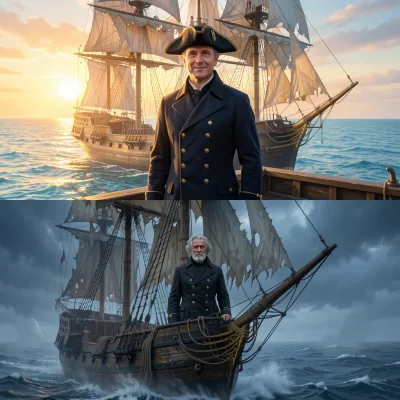
The book traces the British Empire’s ascent and decline through the lens of naval power, arguing that maritime strength was the fundamental driver of imperial destiny. It begins with Tudor efforts to build a royal navy, highlighting Henry VIII’s investment in warships and dockyards, and shows how Elizabeth I’s encouragement of privateering and the defeat of the Spanish Armada forged a national maritime identity and spurred early colonial ventures. Subsequent chapters detail how naval supremacy was contested and consolidated: the Anglo‑Dutch Wars forced England to professionalize its fleet; the Glorious Revolution aligned Britain with the Dutch against France, securing parliamentary control of naval finance; and victories in the War of the Spanish Succession and the Seven Years’ War—especially the capture of Quebec and the Battle of Quiberon Bay—established Britain as the dominant global naval power. The Napoleonic era culminated in Nelson’s triumph at Trafalgar, which secured a century of British maritime hegemony.
During the Pax Britannica, the Royal Navy acted as a global policeman, protecting trade, suppressing piracy and the slave trade, and projecting power from bases such as Gibraltar, Malta, Singapore, and Hong Kong. The transition from sail to steam and iron, epitomized by HMS Warrior and later the dreadnought HMS Dreadnought, preserved British superiority amid an arms race with Germany. The navy’s role expanded into Asia through the Opium Wars, into Africa during the Scramble for Africa, and worldwide via technological innovation and logistical mastery. However, the immense cost of maintaining this fleet, combined with the financial strains of World War I, the interwar naval treaties, and the economic devastation of World War II, eroded Britain’s ability to sustain global naval dominance. Post‑war decolonization, the rise of the United States and Soviet Union, and the shift to nuclear deterrence forced the Royal Navy to retreat from “East of Suez” and focus on anti‑submarine warfare and NATO commitments, punctuated only briefly by the Falklands War.
The work also examines the socioeconomic and cultural dimensions of seapower: the symbiotic relationship between the Royal Navy and the Merchant Navy, the financial mechanisms—from the Bank of England to war bonds—that funded naval expansion, and the enduring cultural legacy embedded in language, literature, art, and national identity. In the twenty‑first century, the Royal Navy operates as a technologically advanced but smaller force centered on two Queen Elizabeth‑class carriers, Astute‑class submarines, and a continuous‑at‑sea nuclear deterrent, adapting to budgetary constraints and new domains such as cyber and space while retaining the core principle that Britain’s security and prosperity remain inextricably linked to the sea.
What You'll Find Inside:
- Naval supremacy was the core driver of Britain's rise to global empire, enabling exploration, conquest, and protection of trade routes.
- Major conflicts from the Spanish Armada to the Falklands War illustrate how naval victories and defeats directly shaped imperial expansion and retreat.
- Technological revolutions—sail to steam, ironclads, dreadnoughts, aircraft carriers, and nuclear submarines—continually redefined British maritime power.
- The Royal Navy's dual role as protector of commerce and projector of power underpinned economic policies, from mercantilism to free trade and the costs of maintaining a global fleet.
- Post‑war economic strain, decolonization, and Cold War realignment eroded Britain's naval hegemony, forcing a shift from global power projection to regional and alliance‑focused capabilities.
Who's It For:
This book is ideal for students and scholars of British imperial history, naval warfare, and international relations, as well as military enthusiasts seeking to understand how sea power shaped global politics. It will also appeal to policymakers and defense analysts interested in the economic and strategic lessons of maintaining a maritime superpower. General readers with a curiosity about the legacy of the British Empire and its modern implications will find the narrative both accessible and profoundly insightful.
Author:
Published By:
Date Published:
August 8, 2026
Type:
Nonfiction
Language:
English
Word Count:
41,425 words
Reading Time:
2 hours 54 minutes
Sample:
Order:
Order The Rise and Fall of the British Empire (Hardcover) on MixCache.com:
Buy NowPrint copy is made to order and ships worldwide. Includes the ebook free, ready to read instantly.
$5 account credit for all new MixCache.com accounts, usable toward any ebook purchase!*