Browse by Category
Fiction
- Action & Adventure
- African American
- Anthologies
- Children's Fiction
- Classics
- Comics & Graphic Novels
- Coming of Age
- Contemporary
- Cultural & Regional
- Drama
- Erotica
- Fantasy
- General
- Historical Fiction
- Horror
- Humor & Satire
- Literary Fiction
- Mystery, Thriller & Suspense
- Poetry
- Religious & Inspirational
- Romance
- Science Fiction
- Short Stories
- War & Military
- Westerns
- Women's Fiction
- Young Adult
Non-Fiction
- Antiques & Collectibles
- Arts & Photography
- Biographies & Memoirs
- Business & Money
- Children's Non-Fiction
-
Computers & Technology
- Artificial Intelligence
- Computer Science
- Cybersecurity & Cryptography
- Data Science & Analytics
- Databases & Big Data
- Game Development & Design
- General
- Hardware & DIY
- Mobile App Development
- Networking & Cloud Computing
- Operating Systems
- Programming
- Robotics
- Software
- Software Engineering
- User Experience (UX) & Design
- Web Development & Design
- Cooking, Food & Wine
- Crafts, Hobbies & Home
- Education & Teaching
- Engineering
- General
- Health, Fitness & Dieting
-
History
- African History
- African History - North Africa
- African History - Sub-Saharan Africa
- American History
- American History - 20th Century
- American History - Civil War
- American History - Colonial Period
- Ancient History
- Asian History
- Asian History - China
- Asian History - India
- Asian History - Japan
- Asian History - Southeast Asia
- European History
- European History - Ancient Greece
- European History - Ancient Rome
- European History - Medieval
- European History - Modern
- European History - Renaissance
- General
- Middle Eastern History
- Military History
- Military History - Aviation
- Military History - Naval
- Social & Cultural History
- World History
- Humor & Entertainment
- Industrial Technology
- Language Learning
- Law
- LGBTQ+ Non-Fiction
- Literary Criticism
- Medical Books
- Parenting & Relationships
- Philosophy
- Politics & Social Sciences
- Reference
- Religion & Spirituality
-
Science & Math
- Agricultural Sciences
- Astronomy & Space Science
- Behavioral Sciences
- Biological Sciences
- Botany & Plant Science
- Chemistry
- Earth Sciences
- Engineering - Chemical
- Engineering - Civil
- Engineering - Electrical
- Engineering - Mechanical
- Environment
- General
- Geology
- Mathematics
- Nature & Ecology
- Oceanography
- Paleontology
- Physics
- Statistics
- Self-Help
- Sports & Outdoors
- Study Aids
- Sustainability & Green Living
- Textbooks
- Transportation
- Travel
- True Crime
- Urban Planning & Development
- Veterinary Medicine
- Writing & Publishing
Jump to Section

Want unlimited access to all books published by MixCache.com (plus their audiobooks)? Try MixCache.com Total Access. Look for the MTA badge on book covers to identify included titles.
Access to infinite ebooks: Don't see the book you want? Suggest it and we'll create it (free!) for you from scratch with our powerful AI book writer. Then read it with MTA - besides profiting from any sales it makes!
Bulgaria's Crossroads Position
MTA
Thracian Roots Ottoman Influence and European Aspirations
About this book:
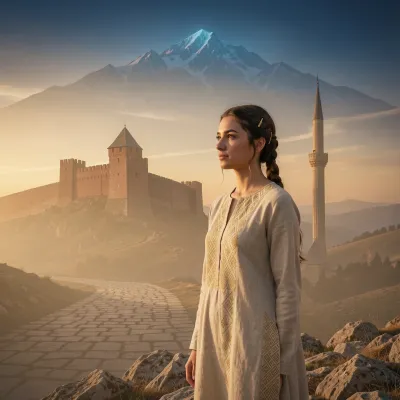
Bulgaria’s story begins with the enigmatic Thracian tribes whose gold‑smithing and warrior culture left a lasting imprint on the land before Roman conquest transformed the region into the province of Moesia, introducing urban centers, roads, and a blend of Roman‑Thracian life. From this mosaic emerged the First Bulgarian Empire in 681 AD, a Slav‑Bulgar polity that expanded under leaders like Krum and reached its cultural and territorial apex under Simeon the Great (893‑927 AD), whose patronage of the Preslav Literary School and the Cyrillic script made Bulgaria a beacon of Slavic letters and Orthodox Christianity. After Simeon’s death, Byzantine pressure and internal weakness reduced Bulgaria to a provincial status, a period broken only by the western resistance of Samuel and his successors before Basil II’s campaigns extinguished the empire in 1018 AD. A century and a half later, the Asen brothers sparked the Second Bulgarian Empire, which revived Bulgarian statehood under figures such as Kaloyan and Ivan Asen II, restoring a powerful realm centered on Tarnovo before internal fragmentation and the rise of the Ottomans eroded its foundations.
Ottoman conquest after the fall of Tarnovo in 1393 ushered in nearly five centuries of rule marked by the millet system, the devşirme tax, and gradual cultural exchange, yet also by persistent Bulgarian resistance through haiduk bands and the preservation of Orthodox identity. The seeds of national revival were planted in the 18th century by Paisius of Hilendar’s “Slavo‑Bulgarian History” and grew through church‑independence struggles, vernacular schooling, and the rise of a merchant class, culminating in the 1870 establishment of the Bulgarian Exarchate. Frustration with limited reforms led to the April Uprising of 1876; its brutal suppression provoked international outrage and triggered the Russo‑Turkish War, which resulted in the Treaty of San Stefano creating a large Bulgarian principality. The subsequent Congress of Berlin drastically reduced its territory, leaving Bulgaria with a modest principality north of the Balkan Mountains and the autonomous province of Eastern Rumelia. Unification with Eastern Rumelia in 1885, affirmed after victory in the Serbo‑Bulgarian War, restored a larger Bulgarian state, but nationalist aspirations for Macedonia and Thrace remained unfulfilled, fueling the ambitious yet disastrous Balkan Wars and Bulgaria’s ill‑fated alliance with the Central Powers in World I, which ended in territorial losses and economic ruin. Interwar Bulgaria swung between agrarian radicalism, authoritarian coups, and ethnic strife, while World II saw Boris III’s initial neutrality give way to Axis alignment for territorial gains, a sudden shift to the Soviet side in 1944, and the establishment of a communist regime.
The communist era (1944‑1989) brought Soviet‑modeled industrialization, collectivization, and repression, punctuated by Todor Zhivkov’s long rule, the forced assimilation campaign against ethnic Turks, and growing dissent that remained largely underground. The fall of communism arrived peacefully in November 1989 when the Party Politburo forced Zhivkov’s resignation; a interim government rescinded the Revival Process, allowed pluralism, and set the stage for free elections in 1990. The ensuing transition was rocky: shock‑therapy reforms sparked inflation and unemployment, privatization bred oligarchs, and the judiciary and media struggled to shake off communist legacies, yet Bulgaria firmly redirected its foreign policy toward Euro‑Atlantic integration, joining NATO in 2004 and the European Union in 2007. Today, Bulgaria balances its rich Thracian, medieval, and Ottoman heritage with EU‑driven modernization, contending with demographic decline, corruption, and a brain‑drain while contributing to Black Sea security, supporting Western‑Balkan neighbors, and maintaining a nuanced stance toward historical ties with Russia. As a crossroads nation, Bulgaria continues to navigate the tension between preserving its distinctive cultural identity and embracing the opportunities and challenges of a united Europe.
What You'll Find Inside:
- Bulgaria's enduring role as a geographical and cultural crossroads between East and West shaping its historical trajectory from ancient times to present
- The rich legacy of ancient Thracian civilization including their gold treasures, mythology, and warrior traditions that laid foundations for Bulgarian identity
- The profound impact of five centuries of Ottoman rule on Bulgarian society, administration, religion, and cultural exchange
- Bulgaria's epic struggle for independence and national unification from the April Uprising through the Balkan Wars to modern territorial consolidation
- Bulgaria's 20th-century transformation from communist state to democratic nation pursuing full integration into European and Euro-Atlantic structures
Who's It For:
This book is ideal for students, academics, and general readers interested in Balkan history, Eastern European studies, and the complex interplay of geography and historical development. It will particularly benefit those seeking to understand Bulgaria's unique position as a historical crossroads between East and West, its struggle for national identity amid Ottoman rule, and its journey toward modern European integration. Readers looking for a comprehensive yet accessible account of Bulgaria's millennia-spanning history will find this work invaluable.
Author:
Published By:
Date Published:
August 8, 2026
Type:
Nonfiction
Language:
English
Word Count:
41,571 words
Reading Time:
2 hours 55 minutes
Sample:
Order:
Order Bulgaria's Crossroads Position (Hardcover) on MixCache.com:
Buy NowPrint copy is made to order and ships worldwide. Includes the ebook free, ready to read instantly.
$5 account credit for all new MixCache.com accounts, usable toward any ebook purchase!*