
Browse by Category
Fiction
- Action & Adventure
- African American
- Anthologies
- Children's Fiction
- Classics
- Comics & Graphic Novels
- Coming of Age
- Contemporary
- Cultural & Regional
- Drama
- Erotica
- Fantasy
- General
- Historical Fiction
- Horror
- Humor & Satire
- Literary Fiction
- Mystery, Thriller & Suspense
- Poetry
- Religious & Inspirational
- Romance
- Science Fiction
- Short Stories
- War & Military
- Westerns
- Women's Fiction
- Young Adult
Non-Fiction
- Antiques & Collectibles
- Arts & Photography
- Biographies & Memoirs
- Business & Money
- Children's Non-Fiction
-
Computers & Technology
- Artificial Intelligence
- Computer Science
- Cybersecurity & Cryptography
- Data Science & Analytics
- Databases & Big Data
- Game Development & Design
- General
- Hardware & DIY
- Mobile App Development
- Networking & Cloud Computing
- Operating Systems
- Programming
- Robotics
- Software
- Software Engineering
- User Experience (UX) & Design
- Web Development & Design
- Cooking, Food & Wine
- Crafts, Hobbies & Home
- Education & Teaching
- Engineering
- General
- Health, Fitness & Dieting
-
History
- African History
- African History - North Africa
- African History - Sub-Saharan Africa
- American History
- American History - 20th Century
- American History - Civil War
- American History - Colonial Period
- Ancient History
- Asian History
- Asian History - China
- Asian History - India
- Asian History - Japan
- Asian History - Southeast Asia
- European History
- European History - Ancient Greece
- European History - Ancient Rome
- European History - Medieval
- European History - Modern
- European History - Renaissance
- General
- Middle Eastern History
- Military History
- Military History - Aviation
- Military History - Naval
- Social & Cultural History
- World History
- Humor & Entertainment
- Industrial Technology
- Language Learning
- Law
- LGBTQ+ Non-Fiction
- Literary Criticism
- Medical Books
- Parenting & Relationships
- Philosophy
- Politics & Social Sciences
- Reference
- Religion & Spirituality
-
Science & Math
- Agricultural Sciences
- Astronomy & Space Science
- Behavioral Sciences
- Biological Sciences
- Botany & Plant Science
- Chemistry
- Earth Sciences
- Engineering - Chemical
- Engineering - Civil
- Engineering - Electrical
- Engineering - Mechanical
- Environment
- General
- Geology
- Mathematics
- Nature & Ecology
- Oceanography
- Paleontology
- Physics
- Statistics
- Self-Help
- Sports & Outdoors
- Study Aids
- Sustainability & Green Living
- Textbooks
- Transportation
- Travel
- True Crime
- Urban Planning & Development
- Veterinary Medicine
- Writing & Publishing
Jump to Section

Want unlimited access to all books published by MixCache.com (plus their audiobooks)? Try MixCache.com Total Access. Look for the MTA badge on book covers to identify included titles.
Access to infinite ebooks: Don't see the book you want? Suggest it and we'll create it (free!) for you from scratch with our powerful AI book writer. Then read it with MTA - besides profiting from any sales it makes!
A History of Enel
MTA
The Story of a Global Company
About this book:
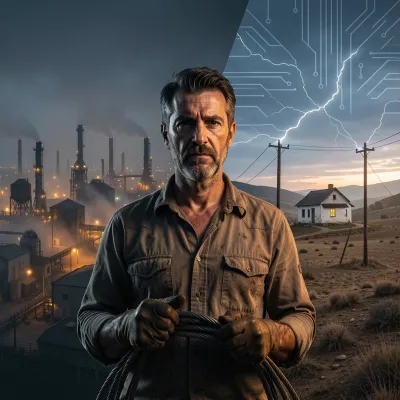
Enel's history begins in 1962 when it was created as a state-owned monopoly to unify Italy's fragmented power grid, a monumental task involving the integration of over a thousand local companies. This nationalization was driven by the need to electrify a post-war nation, bridge the stark economic divide between the industrial North and the underdeveloped South, and fuel Italy's economic boom. The early decades were defined by massive infrastructure expansion, rural electrification, and the construction of a unified national grid, achieving a 99% electrification rate by the early 1970s. The 1970s oil crises forced a strategic shift towards energy diversification, including nuclear power and natural gas, planting the seeds for a more resilient and forward-looking energy strategy.
The late 20th century brought a paradigm shift as European energy markets moved from state monopolies to liberalization. Enel underwent corporatization and a landmark privatization in 1999, transforming from a public service provider into a competitive, publicly traded company. This new era opened the door for international expansion, beginning with strategic acquisitions in Europe, most notably the landmark purchase of Endesa in 2007, which instantly gave Enel a massive footprint in Spain and Latin America. This period also saw the formal embrace of renewable energy with the creation of Enel Green Power in 2002, a dedicated division that would spearhead the company's early investments in wind and solar power.
The 2010s and 2020s marked Enel's acceleration into a global energy leader, driven by a dual focus on decarbonization and digitalization. The company pioneered smart grid technology, beginning with a massive smart meter rollout in Italy in 2001, and underwent a comprehensive digital transformation using cloud computing, AI, and data analytics. Its renewable energy capacity grew exponentially, making it one of the world's largest private operators in wind and solar. The launch of Enel X in 2017 expanded the company into advanced energy services, including e-mobility, smart public lighting, and demand response, positioning it for the decentralized energy future. Throughout global crises like the pandemic and the European energy crisis, Enel demonstrated resilience and maintained its strategic focus on net-zero emissions by 2040.
Today, Enel is a truly global power company operating across five continents, defined by its leadership in the energy transition. Its enduring legacy is built on a continuous cycle of transformation: from a national unifier to a global competitor, from a fossil fuel user to a renewable energy champion, and from a traditional utility to a digital, customer-centric energy services provider. The company's strategic direction is firmly anchored in electrification, decarbonization, and digitalization, with ambitious commitments to phase out coal, expand green hydrogen, and deepen its smart grid capabilities. Enel's story is a testament to how a company can not only adapt to profound industry shifts but actively shape the future of sustainable energy.
What You'll Find Inside:
- Enel's transformation from a state-owned monopoly born from post-war Italian nationalization into a globally competitive, privatized energy leader.
- The pioneering rollout of smart meters in Italy beginning in 2001, establishing Enel as a global innovator in grid modernization and digital transformation.
- The strategic creation of Enel Green Power and aggressive expansion into wind, solar, and energy storage, making Enel one of the world's largest private renewable energy operators.
- The development of Enel X as a pioneering division offering advanced energy services, e-mobility infrastructure, and smart city solutions to drive electrification and decarbonization.
- The integration of ESG principles, Sustainable Development Goals, and a 'Creating Shared Value' model into core business strategy, underpinning Enel's commitment to a net-zero future.
Who's It For:
This book is ideal for business strategists, energy industry professionals, and investors seeking a deep understanding of how a national utility evolved into a global renewable energy powerhouse. It also offers valuable insights for students and researchers in corporate history, sustainability, and energy policy, as well as anyone interested in the real-world dynamics of the energy transition and digitalization.
Author:
Published By:
Date Published:
July 28, 2026
Type:
Nonfiction
Language:
English
Word Count:
36,217 words
Reading Time:
2 hours 32 minutes
Sample:
MixCache.com Total Access
Get unlimited access to this book + all books published by MixCache.com for $11.99/month
Subscribe to MTAOr purchase this book individually below
Order:
Buy the A History of Enel ebook on MixCache.com:
Buy Now
Full ebook will be available immediately
- read online or download as a PDF file.
$5 account credit for all new MixCache.com accounts, usable toward any ebook purchase!*





Ratings & Reviews
Ask Questions About This Book
Have a question about the content? Ask our AI assistant!
Start by asking a question about "A History of Enel"
Example: "Does this book mention William Shakespeare?"
Thinking...