
Browse by Category
Fiction
- Action & Adventure
- African American
- Anthologies
- Children's Fiction
- Classics
- Comics & Graphic Novels
- Coming of Age
- Contemporary
- Cultural & Regional
- Drama
- Erotica
- Family Life
- Fantasy
- General
- Historical Fiction
- Horror
- Humor & Satire
- Literary Fiction
- Mystery, Thriller & Suspense
- Poetry
- Religious & Inspirational
- Romance
- Science Fiction
- Short Stories
- War & Military
- Westerns
- Women's Fiction
- Young Adult
Non-Fiction
- Antiques & Collectibles
- Arts & Photography
- Biographies & Memoirs
- Business & Money
- Children's Non-Fiction
-
Computers & Technology
- Artificial Intelligence
- Computer Science
- Cybersecurity & Cryptography
- Data Science & Analytics
- Databases & Big Data
- Game Development & Design
- General
- Hardware & DIY
- Mobile App Development
- Networking & Cloud Computing
- Operating Systems
- Programming
- Robotics
- Software
- Software Engineering
- User Experience (UX) & Design
- Web Development & Design
- Cooking, Food & Wine
- Crafts, Hobbies & Home
- Education & Teaching
- Engineering
- General
- Health, Fitness & Dieting
-
History
- African History
- African History - North Africa
- African History - Sub-Saharan Africa
- American History
- American History - 20th Century
- American History - Civil War
- American History - Colonial Period
- Ancient History
- Asian History
- Asian History - China
- Asian History - India
- Asian History - Japan
- Asian History - Southeast Asia
- European History
- European History - Ancient Greece
- European History - Ancient Rome
- European History - Medieval
- European History - Modern
- European History - Renaissance
- General
- Middle Eastern History
- Military History
- Military History - Aviation
- Military History - Naval
- Social & Cultural History
- World History
- Humor & Entertainment
- Industrial Technology
- Language Learning
- Law
- LGBTQ+ Non-Fiction
- Literary Criticism
- Medical Books
- Parenting & Relationships
- Philosophy
- Politics & Social Sciences
- Reference
- Religion & Spirituality
-
Science & Math
- Agricultural Sciences
- Astronomy & Space Science
- Behavioral Sciences
- Biological Sciences
- Botany & Plant Science
- Chemistry
- Earth Sciences
- Engineering - Chemical
- Engineering - Civil
- Engineering - Electrical
- Engineering - Mechanical
- Environment
- General
- Geology
- Mathematics
- Nature & Ecology
- Oceanography
- Paleontology
- Physics
- Statistics
- Self-Help
- Sports & Outdoors
- Study Aids
- Sustainability & Green Living
- Textbooks
- Transportation
- Travel
- True Crime
- Urban Planning & Development
- Veterinary Medicine
- Writing & Publishing
Jump to Section
MixCache.com Total Access
Unlimited reading and audiobooks for every book published by MixCache.com.
Included titles carry the MTA badge.
Learn more →
Building Migration History: The Archive Workers Who Created the Field
Clerks, Transcribers, and the Scholars Who Did the Grunt Work
About this book:
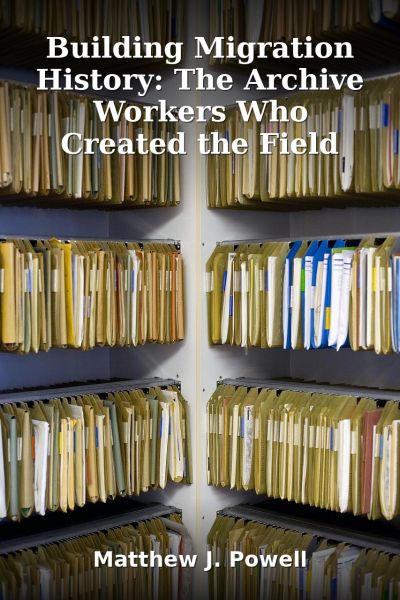 Every grand theory of migration rests on a mountain of fragile paper: smudged passenger manifests, crumbling census pages, and fading letters that once traveled oceans in immigrants' pockets. *Building Migration History* pulls back the curtain on the invisible workforce—clerks, transcribers, and indexers, often low-paid women—who transformed this chaotic flood of raw data into the structured archives that made the discipline possible. It reveals how their "grunt work" was actually profound intellectual labor: deciphering illegible script, inventing classification systems on the fly, and making silent judgment calls that determined which voices history would hear and which would remain buried.
This is not merely a history of record-keeping; it is a reclamation of the field’s true parentage. Through vivid case studies and deep archival excavation, the book traces the symbiotic, yet often erased, partnership between celebrated scholars and the basement-dwelling staff who knew the collections better than anyone. You will witness the birth of methodologies we now take for granted, the ethical tightropes walked when categorizing human lives, and the quiet heroism of workers who preserved marginalized narratives despite institutional indifference. It reframes the archive not as a static repository, but as a living ecosystem built by human hands, where every searchable keyword and clean dataset bears the fingerprint of an unsung architect.
By the final chapter, the "footnotes" of academic history become the main text. *Building Migration History* issues a necessary challenge to how we credit knowledge production, proving that the foundations of migration studies were laid not in ivory towers, but in dusty basements and cramped typing pools. For historians, archivists, data scientists, and anyone who has ever relied on an index to find a story, this book offers a transformative perspective: the most rigorous scholarship is, at its core, a collective endeavor. Read it to honor the labor behind the data, and to never look at a footnote the same way again.
Table of Contents:
- Introduction
- Chapter 1 The Unsung Architects of Knowledge
- Chapter 2 From Raw Records to Research: The Birth of a Discipline
- Chapter 3 The Clerks: Custodians of the Past
- Chapter 4 Transcribers: Giving Voice to Silent Documents
- Chapter 5 The Labor Behind the Scholarship: An Invisible Workforce
- Chapter 6 Early Efforts: Cataloging the Human Journey
- Chapter 7 Building the Archives: Foundations of Migration Studies
- Chapter 8 The Human Factor: Dedication in the Details
- Chapter 9 Challenges and Triumphs: Overcoming Archival Obstacles
- Chapter 10 The Information Revolutionaries: Shaping Data for Study
- Chapter 11 Beyond the Ivory Tower: Practical Applications of Archival Work
- Chapter 12 The Digital Turn: New Tools, Enduring Labor
- Chapter 13 Preserving Legacies: The Ethical Dimensions of Archiving
- Chapter 14 The Scholar's Debt: Acknowledging Invisible Contributions
- Chapter 15 Case Study: Pioneering Projects in Migration History
- Chapter 16 From Local to Global: Expanding the Scope of Archival Research
- Chapter 17 The Politics of Memory: Who Gets Remembered and How
- Chapter 18 Training the Next Generation: Passing on Archival Skills
- Chapter 19 When Records Speak: Uncovering Hidden Narratives
- Chapter 20 The Future of Archival Work: Innovation and Preservation
- Chapter 21 The Personal Toll: Dedication and Overwork
- Chapter 22 The Collaborative Spirit: Archivists, Scholars, and Communities
- Chapter 23 The Enduring Legacy: How Archival Work Shapes Our Understanding
- Chapter 24 Acknowledging the "Grunt Work": A Call for Recognition
- Chapter 25 Building Migration History: A Collective Endeavor
Author:
Published By:
Type:
Nonfiction
Date Published:
November 21, 2026
Sample:
Order:
Click to order this paperback:
Buy Now