
Browse by Category
Fiction
- Action & Adventure
- African American
- Anthologies
- Children's Fiction
- Classics
- Comics & Graphic Novels
- Coming of Age
- Contemporary
- Cultural & Regional
- Drama
- Erotica
- Fantasy
- General
- Historical Fiction
- Horror
- Humor & Satire
- Literary Fiction
- Mystery, Thriller & Suspense
- Poetry
- Religious & Inspirational
- Romance
- Science Fiction
- Short Stories
- War & Military
- Westerns
- Women's Fiction
- Young Adult
Non-Fiction
- Antiques & Collectibles
- Arts & Photography
- Biographies & Memoirs
- Business & Money
- Children's Non-Fiction
-
Computers & Technology
- Artificial Intelligence
- Computer Science
- Cybersecurity & Cryptography
- Data Science & Analytics
- Databases & Big Data
- Game Development & Design
- General
- Hardware & DIY
- Mobile App Development
- Networking & Cloud Computing
- Operating Systems
- Programming
- Robotics
- Software
- Software Engineering
- User Experience (UX) & Design
- Web Development & Design
- Cooking, Food & Wine
- Crafts, Hobbies & Home
- Education & Teaching
- Engineering
- General
- Health, Fitness & Dieting
-
History
- African History
- African History - North Africa
- African History - Sub-Saharan Africa
- American History
- American History - 20th Century
- American History - Civil War
- American History - Colonial Period
- Ancient History
- Asian History
- Asian History - China
- Asian History - India
- Asian History - Japan
- Asian History - Southeast Asia
- European History
- European History - Ancient Greece
- European History - Ancient Rome
- European History - Medieval
- European History - Modern
- European History - Renaissance
- General
- Middle Eastern History
- Military History
- Military History - Aviation
- Military History - Naval
- Social & Cultural History
- World History
- Humor & Entertainment
- Industrial Technology
- Language Learning
- Law
- LGBTQ+ Non-Fiction
- Literary Criticism
- Medical Books
- Parenting & Relationships
- Philosophy
- Politics & Social Sciences
- Reference
- Religion & Spirituality
-
Science & Math
- Agricultural Sciences
- Astronomy & Space Science
- Behavioral Sciences
- Biological Sciences
- Botany & Plant Science
- Chemistry
- Earth Sciences
- Engineering - Chemical
- Engineering - Civil
- Engineering - Electrical
- Engineering - Mechanical
- Environment
- General
- Geology
- Mathematics
- Nature & Ecology
- Oceanography
- Paleontology
- Physics
- Statistics
- Self-Help
- Sports & Outdoors
- Study Aids
- Sustainability & Green Living
- Textbooks
- Transportation
- Travel
- True Crime
- Urban Planning & Development
- Veterinary Medicine
- Writing & Publishing
Jump to Section
MixCache.com Total Access
Unlimited reading and audiobooks for every book published by MixCache.com.
Included titles carry the MTA badge.
Learn more →
The End of Cheap Yen
How Japan Finally Broke With Zero Rates
About this book:
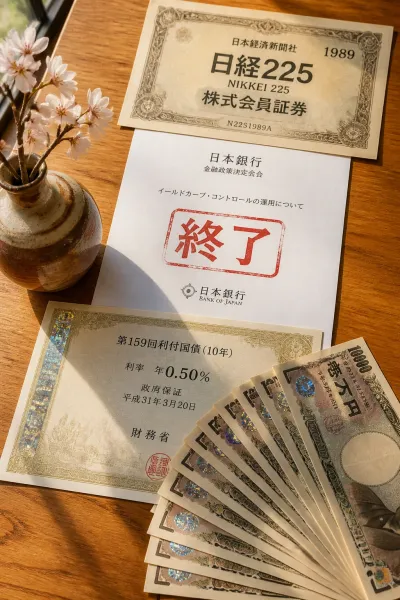 For three decades, Japan was the world's monetary laboratory—pioneering zero rates, inventing quantitative easing, buying equities, and capping bond yields. The yen became the engine of global finance, an endless river of ultra-cheap capital that inflated assets from New York real estate to emerging-market debt. Then, in the spring of 2024, the experiment ended. Under Governor Kazuo Ueda, the Bank of Japan shattered the zero-rate orthodoxy it had built, triggering a violent repricing of risk that is now unwinding the largest carry trade in history and forcing a global financial system addicted to free Japanese money to relearn the price of capital.
*The End of Cheap Yen* takes you inside the most radical monetary saga of our time: the 1989 bubble whose collapse destroyed three times Japan's GDP in wealth; the "zombie economy" where corporations hoarded cash instead of investing; the desperate improvisations of Abenomics, Kuroda's "bazooka," and the descent into negative rates; and the dramatic 2024 pivot—spurred by imported inflation, a collapsing currency, and the surprising resurrection of *shunto* wage negotiations. Drawing on deep reporting from the BOJ's Nihonbashi boardroom, the Ministry of Finance, and the trading floors where trillions rode on the yen, this book reveals how a nation trapped in deflationary psychology became the template for the West's post-2008 playbook—and why its exit is the most consequential financial event since the financial crisis.
This is not just a Japanese story. As Japanese insurers and pension giants repatriate trillions from overseas bonds, as regional banks confront duration risk for the first time in a generation, and as global markets digest the loss of their primary funding currency, the repercussions are only beginning. *The End of Cheap Yen* is the definitive account of how we got here, why the exit is infinitely more dangerous than the entrance, and what the new paradigm means for every portfolio, policy decision, and paycheck in the interconnected world.
Table of Contents:
- Introduction
- Chapter 1 The Bubble Bursts: The Roots of the Lost Decades
- Chapter 2 The Deflationary Trap: Why Prices Refused to Rise
- Chapter 3 Zero Bound: The Bank of Japan’s First Historic Cut
- Chapter 4 Inventing Quantitative Easing: Entering Uncharted Waters
- Chapter 5 The Zombie Economy: Corporate Survival on Cheap Credit
- Chapter 6 The Carry Trade: How the Cheap Yen Fueled Global Markets
- Chapter 7 A Nation of Savers: The Psychology of Stagnant Wages
- Chapter 8 Demographics as Destiny: An Aging Society in a Zero-Rate World
- Chapter 9 The Currency War Debate: Beggar-Thy-Neighbor Accusations
- Chapter 10 Enter Abenomics: The Three Arrows and a New Mandate
- Chapter 11 Kuroda’s Bazooka: Quantitative and Qualitative Monetary Easing
- Chapter 12 Below Ground: The Experiment with Negative Interest Rates
- Chapter 13 Yield Curve Control: Taming the Entire Bond Market
- Chapter 14 The Central Bank That Bought Everything: Real Estate, Stocks, and ETFs
- Chapter 15 The Collateral Damage: Broken Banks and Paralyzed Bond Markets
- Chapter 16 The Post-Pandemic Shock: Global Inflation Finally Hits Japan
- Chapter 17 The Yen in Freefall: Historic Weakness and Imported Misery
- Chapter 18 Cracks in the Consensus: Government Intervention in the FX Market
- Chapter 19 The Changing of the Guard: Kazuo Ueda Takes the Helm
- Chapter 20 Shunto Awakening: The Return of Real Wage Negotiations
- Chapter 21 The Turning Point: Dismantling Yield Curve Control
- Chapter 22 The Historic Hike: Exiting Negative Interest Rates
- Chapter 23 The Reversal: Unwinding the Trillion-Dollar Yen Carry Trade
- Chapter 24 The Domestic Reckoning: Government Debt and the Cost of Capital
- Chapter 25 The New Paradigm: Japan and the Global Economy After Cheap Money
Author:
Published By:
Type:
Nonfiction
Date Published:
October 18, 2026
Sample:
Order:
Click to order this paperback:
Buy Now