
Browse by Category
Fiction
- Action & Adventure
- African American
- Anthologies
- Children's Fiction
- Classics
- Comics & Graphic Novels
- Coming of Age
- Contemporary
- Cultural & Regional
- Drama
- Erotica
- Fantasy
- General
- Historical Fiction
- Horror
- Humor & Satire
- Literary Fiction
- Mystery, Thriller & Suspense
- Poetry
- Religious & Inspirational
- Romance
- Science Fiction
- Short Stories
- War & Military
- Westerns
- Women's Fiction
- Young Adult
Non-Fiction
- Antiques & Collectibles
- Arts & Photography
- Biographies & Memoirs
- Business & Money
- Children's Non-Fiction
-
Computers & Technology
- Artificial Intelligence
- Computer Science
- Cybersecurity & Cryptography
- Data Science & Analytics
- Databases & Big Data
- Game Development & Design
- General
- Hardware & DIY
- Mobile App Development
- Networking & Cloud Computing
- Operating Systems
- Programming
- Robotics
- Software
- Software Engineering
- User Experience (UX) & Design
- Web Development & Design
- Cooking, Food & Wine
- Crafts, Hobbies & Home
- Education & Teaching
- Engineering
- General
- Health, Fitness & Dieting
-
History
- African History
- African History - North Africa
- African History - Sub-Saharan Africa
- American History
- American History - 20th Century
- American History - Civil War
- American History - Colonial Period
- Ancient History
- Asian History
- Asian History - China
- Asian History - India
- Asian History - Japan
- Asian History - Southeast Asia
- European History
- European History - Ancient Greece
- European History - Ancient Rome
- European History - Medieval
- European History - Modern
- European History - Renaissance
- General
- Middle Eastern History
- Military History
- Military History - Aviation
- Military History - Naval
- Social & Cultural History
- World History
- Humor & Entertainment
- Industrial Technology
- Language Learning
- Law
- LGBTQ+ Non-Fiction
- Literary Criticism
- Medical Books
- Parenting & Relationships
- Philosophy
- Politics & Social Sciences
- Reference
- Religion & Spirituality
-
Science & Math
- Agricultural Sciences
- Astronomy & Space Science
- Behavioral Sciences
- Biological Sciences
- Botany & Plant Science
- Chemistry
- Earth Sciences
- Engineering - Chemical
- Engineering - Civil
- Engineering - Electrical
- Engineering - Mechanical
- Environment
- General
- Geology
- Mathematics
- Nature & Ecology
- Oceanography
- Paleontology
- Physics
- Statistics
- Self-Help
- Sports & Outdoors
- Study Aids
- Sustainability & Green Living
- Textbooks
- Transportation
- Travel
- True Crime
- Urban Planning & Development
- Veterinary Medicine
- Writing & Publishing
Jump to Section
MixCache.com Total Access
Unlimited reading and audiobooks for every book published by MixCache.com.
Included titles carry the MTA badge.
Learn more →
Chips for the Kremlin: How Russia Evades Sanctions to Arm Its War Machine
The Hidden Networks Moving Western Microelectronics to the Russian Military
About this book:
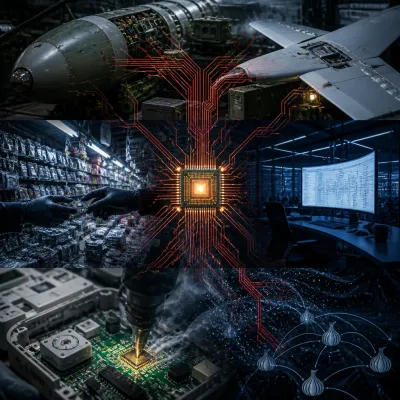 When Russia invaded Ukraine, the West bet everything on a single strategy: cut off the microchips, and the war machine stops. It didn’t. *Chips for the Kremlin* reveals why. This explosive investigation pulls back the curtain on the shadow war being fought not with artillery, but with silicon—exposing the vast, sophisticated, and terrifyingly effective global networks that funnel Western technology straight into Russian missiles, drones, and tanks. From the back alleys of Shenzhen’s electronics markets to the opaque ledgers of European shell companies and the encrypted channels of the dark web, this book maps the arteries keeping the Kremlin’s arsenal alive.
Drawing on deep research into dual-use loopholes, financial secrecy havens, and the human networks of brokers and engineers who make evasion possible, the authors detail how Moscow turned sanctions into a game of whack-a-mole—one they are currently winning. You will see exactly how a chip designed for a washing machine ends up guiding a cruise missile, why export controls fail at the first handshake, and how Russia’s 2014 dress rehearsal built the playbook for today’s full-scale circumvention. It is a masterclass in the geopolitics of technology, showing how authoritarian regimes weaponize globalization’s interconnectedness against the very democracies that built it.
This is not just a story about the war in Ukraine; it is a warning siren for the future of global security. As the technological race accelerates toward AI, quantum computing, and autonomous weapons, the battle for control over the "nervous system" of modern warfare has only just begun. *Chips for the Kremlin* offers the definitive blueprint for understanding this invisible front—essential reading for policymakers, industry leaders, and anyone who realizes that the next conflict will be decided long before the first shot is fired, in the silent flow of electrons across borders we thought we had sealed.
Table of Contents:
- Introduction
- Chapter 1 The Blueprint of Evasion: Russia's Sanctions Strategy
- Chapter 2 Silicon Dreams, Deadly Reality: The Dual-Use Dilemma
- Chapter 3 The Gray Zone: Unpacking Export Controls and Their Loopholes
- Chapter 4 From Shenzhen to Siberia: Mapping the Global Supply Chains of Evasion
- Chapter 5 Shell Games: The Art of Disguising Ownership and Intent
- Chapter 6 The Middlemen: Brokers and Facilitators in the Shadows
- Chapter 7 Banking on Secrecy: Financial Networks Funding the War Machine
- Chapter 8 The Dark Web's Bazaar: Digital Marketplaces for Restricted Tech
- Chapter 9 Red Flags and False Fronts: Identifying Deceptive Practices
- Chapter 10 From Consumer to Conflict: Repurposing Commercial Electronics for Military Use
- Chapter 11 The Smuggler's Toolkit: Logistics and Transportation of Contraband
- Chapter 12 Intelligence Games: Western Efforts to Disrupt Illicit Flows
- Chapter 13 Moscow's Arsenal: How Sanctioned Chips Power Russian Weaponry
- Chapter 14 The Human Element: Recruiters, Engineers, and the Brain Drain Dilemma
- Chapter 15 Beyond the Battlefield: The Broader Impact of Tech Transfer on Russia's Military Industrial Complex
- Chapter 16 The Long Arm of the Law: International Cooperation in Combating Evasion
- Chapter 17 Case Study: The Microchip that Misfired – A Sanctions Success Story
- Chapter 18 The Shifting Sands: Adapting to Evolving Sanctions Regimes
- Chapter 19 From Labs to Lags: The Technological Race Against Evasion
- Chapter 20 Whistleblowers and Watchdogs: Unmasking the Networks
- Chapter 21 The Cost of War: Economic Repercussions of Sanctions Evasion
- Chapter 22 Future Frontiers: Emerging Technologies and the Next Wave of Evasion
- Chapter 23 Policy Prescriptions: Strengthening Export Controls and Enforcement
- Chapter 24 A Global Challenge: The Geopolitics of Technology and Conflict
- Chapter 25 The Unseen War: Confronting Russia's Digital and Technological Aggression
Author:
Published By:
Type:
Nonfiction
Sample:
Order:
Click to buy this ebook:
Buy Now