
Browse by Category
Fiction
- Action & Adventure
- African American
- Anthologies
- Children's Fiction
- Classics
- Comics & Graphic Novels
- Coming of Age
- Contemporary
- Cultural & Regional
- Drama
- Erotica
- Family Life
- Fantasy
- General
- Historical Fiction
- Horror
- Humor & Satire
- Literary Fiction
- Mystery, Thriller & Suspense
- Poetry
- Religious & Inspirational
- Romance
- Science Fiction
- Short Stories
- War & Military
- Westerns
- Women's Fiction
- Young Adult
Non-Fiction
- Antiques & Collectibles
- Arts & Photography
- Biographies & Memoirs
- Business & Money
- Children's Non-Fiction
-
Computers & Technology
- Artificial Intelligence
- Computer Science
- Cybersecurity & Cryptography
- Data Science & Analytics
- Databases & Big Data
- Game Development & Design
- General
- Hardware & DIY
- Mobile App Development
- Networking & Cloud Computing
- Operating Systems
- Programming
- Robotics
- Software
- Software Engineering
- User Experience (UX) & Design
- Web Development & Design
- Cooking, Food & Wine
- Crafts, Hobbies & Home
- Education & Teaching
- Engineering
- General
- Health, Fitness & Dieting
-
History
- African History
- African History - North Africa
- African History - Sub-Saharan Africa
- American History
- American History - 20th Century
- American History - Civil War
- American History - Colonial Period
- Ancient History
- Asian History
- Asian History - China
- Asian History - India
- Asian History - Japan
- Asian History - Southeast Asia
- European History
- European History - Ancient Greece
- European History - Ancient Rome
- European History - Medieval
- European History - Modern
- European History - Renaissance
- General
- Middle Eastern History
- Military History
- Military History - Aviation
- Military History - Naval
- Social & Cultural History
- World History
- Humor & Entertainment
- Industrial Technology
- Language Learning
- Law
- LGBTQ+ Non-Fiction
- Literary Criticism
- Medical Books
- Parenting & Relationships
- Philosophy
- Politics & Social Sciences
- Reference
- Religion & Spirituality
-
Science & Math
- Agricultural Sciences
- Astronomy & Space Science
- Behavioral Sciences
- Biological Sciences
- Botany & Plant Science
- Chemistry
- Earth Sciences
- Engineering - Chemical
- Engineering - Civil
- Engineering - Electrical
- Engineering - Mechanical
- Environment
- General
- Geology
- Mathematics
- Nature & Ecology
- Oceanography
- Paleontology
- Physics
- Statistics
- Self-Help
- Sports & Outdoors
- Study Aids
- Sustainability & Green Living
- Textbooks
- Transportation
- Travel
- True Crime
- Urban Planning & Development
- Veterinary Medicine
- Writing & Publishing
Jump to Section
MixCache.com Total Access
Unlimited reading and audiobooks for every book published by MixCache.com.
Included titles carry the MTA badge.
Learn more →
A History of Pasta
MTA
From Ancient Noodles to Global Staple
About this book:
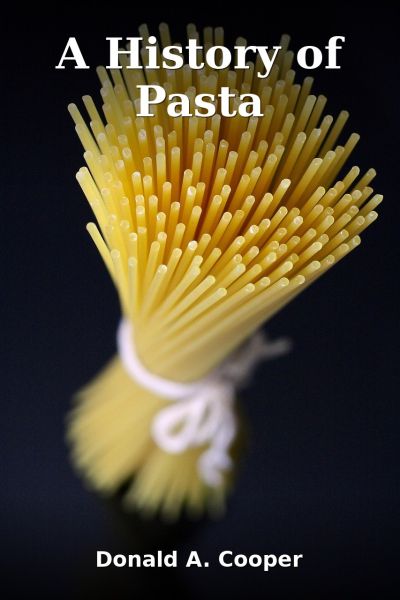
The history of pasta is a tale of parallel invention and cultural exchange rather than a single point of origin. Archaeological evidence, such as the 4,000-year-old millet noodles found at the Lajia site in China, confirms ancient Eastern traditions, while the Mediterranean developed its own lineage through Greek *laganon* and Roman *laganum*. The critical turning point arrived with the cultivation of durum wheat in the Mediterranean basin, whose high gluten content and vitreous kernels produced semolina—a coarse flour capable of creating durable, shelf-stable shapes. Arab rule in Sicily (9th–11th centuries) introduced advanced drying techniques and the *itriyah* tradition, establishing the first large-scale pasta industry in Trabia and bridging the gap between ancient flatbreads and the extruded, dried noodles that would define Italian cuisine.
As medieval guilds standardized production in cities like Naples and Genoa, pasta diversified into distinct regional identities shaped by geography: the egg-rich fresh pastas of the North contrasted with the durum-based dried shapes of the Sun-drenched South. The Industrial Revolution mechanized kneading, extrusion through bronze dies, and artificial drying, transforming pasta from an artisanal craft into a global commodity. This industrial capacity coincided with the mass Italian emigration to the Americas (1880–1920), where immigrants adapted their culinary heritage to new ingredients—most notably the abundant tomato, which completed pasta's iconic flavor profile after centuries of European suspicion. In the New World, dishes like spaghetti and meatballs emerged as hybrid creations that fueled pasta's crossover into mainstream Western culture.
The 20th century cemented pasta's status as a universal language through popular culture, the rise of instant ramen in Asia, and its dual dominance in both fast food and fine dining. Simultaneously, Asian noodle traditions—ramen, udon, pho, and rice vermicelli—gained global recognition, revealing a vast, independent culinary universe built on rice, buckwheat, and starches. In the modern era, pasta has become a canvas for scientific innovation and ethical adaptation: the gluten-free frontier has yielded high-quality alternatives using legumes and ancient grains; sustainability movements promote regenerative agriculture and eco-friendly packaging; and an artisan revival reclaims heritage wheats and slow drying methods. From its contested ancient roots to 3D-printed shapes and space-food research, pasta endures as a dynamic, democratic staple that reflects both the diversity of human culture and our shared ingenuity in transforming simple flour and water into sustenance and delight.
What You'll Find Inside:
- The contested origins and parallel evolution of noodle traditions in ancient China and the Mediterranean, debunking the Marco Polo myth with archaeological and historical evidence.
- The pivotal 'Durum Revolution' and Arab innovations in Sicily that transformed pasta into a durable, tradable commodity and established the foundation for Italian pasta culture.
- The dramatic shift from medieval artisan guilds to Industrial Revolution mass production, which standardized shapes, enabled global distribution, and democratized pasta consumption.
- The profound impact of Italian immigration to America, which birthed iconic Italian-American cuisine (like spaghetti and meatballs) and cemented pasta's status in global popular culture.
- Contemporary frontiers including the science of starch and gluten-free innovation, sustainable regenerative agriculture, the artisan revival of heritage grains, and futuristic technologies like 3D-printed pasta.
Who's It For:
This book is ideal for culinary historians, food enthusiasts, and home cooks who want a comprehensive understanding of pasta's journey from ancient grain to global staple. It appeals to readers interested in the intersection of agriculture, technology, migration, and culture, offering both scientific insight into pasta's structure and rich narratives of the people whose labor and ingenuity shaped its enduring legacy.
Introduction
From the unassuming durham wheat grain to the countless shapes adorning plates worldwide, pasta is more than just food; it is a story—an endless thread woven through millennia of human ingenuity, cultural exchange, and culinary passion. Its journey, a sweeping saga from ancient sustenance to a global staple, reflects the very evolution of our societies. This book, "A History of Pasta: From Ancient Noodles to Global Staple," invites you to embark on a captivating expedition, tracing the humble dough of flour and water as it transformed into one of the world's most beloved and versatile comfort foods.
The origins of pasta are as rich and complex as its flavors, sparking lively debates that stretch from the steppes of ancient China to the sun-drenched shores of the Mediterranean. Was it Marco Polo who brought noodles from the East, or did parallel culinary traditions emerge independently, shaped by the universal human need to transform grains into nourishing and palatable forms? We will delve into these contested beginnings, exploring the early forms of milled grains and water that laid the groundwork for the pasta we know today, revealing how climate, agriculture, and innovation each played a pivotal role in its nascent development.
As pasta evolved, so too did its identity, becoming inextricably linked with Italy. Yet, its Italian narrative is far from monolithic; it is a vibrant tapestry woven from regional distinctiveness.
Enjoying it? The full book includes every chapter.
Table of Contents:
- Introduction: The Endless Thread of Pasta Free
- Chapter 1: Contested Origins - Grains, Grinders, and Early Noodles Free
- Chapter 2: East Meets West? Tracing Ancient Noodle Traditions
- Chapter 3: The Durum Revolution - Wheat, Water, and the Mediterranean Cradle
- Chapter 4: Roman Roots and Resurrected Recipes - Puls, Laganum, and More
- Chapter 5: Arab Innovations and Sicilian Semolina - A Bridge to Italian Pasta
- Chapter 6: Medieval Guilds and Guarded Secrets - The Artisan's Touch
- Chapter 7: Regional Riches - Shaping Identity Across Italy
- Chapter 8: The Age of Exploration - Pasta's First Journeys Abroad
- Chapter 9: The Tomato's Triumph - A Perfect Partner Emerges
- Chapter 10: Industrial Revolution - Drying, Extruding, and Mass Appeal
- Chapter 11: From Naples to New York - Italian Immigration and the American Dream
- Chapter 12: Spaghetti Westerns and Culinary Crossings - Pasta in Popular Culture
- Chapter 13: Asian Adaptations - Ramen, Udon, and Beyond
- Chapter 14: Global Grains and Local Flavors - Pasta's International Palette
- Chapter 15: The Science of Starch - Understanding Pasta's Structure
- Chapter 16: The Art of Al Dente - Cooking Techniques and Traditions
- Chapter 17: Pasta in Print - Cookbooks, Critiques, and Culinary Lore
- Chapter 18: Labor and Legacy - The Hands That Shaped Our Meals
- Chapter 19: Health, Hype, and Hearty Meals - Nutritional Narratives
- Chapter 20: Fast Food and Fine Dining - Pasta's Versatile Appeal
- Chapter 21: The Gluten-Free Frontier - Adapting for All
- Chapter 22: Sustainable Supper - Eco-Conscious Pasta Production
- Chapter 23: Artisan Revival - Reclaiming Heritage Grains and Craft
- Chapter 24: The Future of Flour - Innovation in Pasta Making
- Chapter 25: A Global Canvas - Pasta as a Universal Language
Included when you buy the full book.
Author:
Published By:
Date Published:
November 28, 2026
Type:
Nonfiction
Language:
English
Word Count:
39,952 words
Reading Time:
2 hours 48 minutes
Sample:
Order:
Buy the A History of Pasta ebook on MixCache.com:
Buy NowIncludes every chapter. Not sure yet? Read the opening free.
Full ebook will be available immediately
- read online or download as a PDF file.
$5 account credit for all new MixCache.com accounts, usable toward any ebook purchase!*
MixCache.com Total Access
Get unlimited access to this book + all books published by MixCache.com for $11.99/month
Subscribe to MTA




Ratings & Reviews
Ask Questions About This Book
Have a question about the content? Ask our AI assistant!
Start by asking a question about "A History of Pasta"
Example: "Does this book mention William Shakespeare?"
Thinking...