
Browse by Category
Fiction
- Action & Adventure
- African American
- Anthologies
- Children's Fiction
- Classics
- Comics & Graphic Novels
- Coming of Age
- Contemporary
- Cultural & Regional
- Drama
- Erotica
- Family Life
- Fantasy
- General
- Historical Fiction
- Horror
- Humor & Satire
- Literary Fiction
- Mystery, Thriller & Suspense
- Poetry
- Religious & Inspirational
- Romance
- Science Fiction
- Short Stories
- War & Military
- Westerns
- Women's Fiction
- Young Adult
Non-Fiction
- Antiques & Collectibles
- Arts & Photography
- Biographies & Memoirs
- Business & Money
- Children's Non-Fiction
-
Computers & Technology
- Artificial Intelligence
- Computer Science
- Cybersecurity & Cryptography
- Data Science & Analytics
- Databases & Big Data
- Game Development & Design
- General
- Hardware & DIY
- Mobile App Development
- Networking & Cloud Computing
- Operating Systems
- Programming
- Robotics
- Software
- Software Engineering
- User Experience (UX) & Design
- Web Development & Design
- Cooking, Food & Wine
- Crafts, Hobbies & Home
- Education & Teaching
- Engineering
- General
- Health, Fitness & Dieting
-
History
- African History
- African History - North Africa
- African History - Sub-Saharan Africa
- American History
- American History - 20th Century
- American History - Civil War
- American History - Colonial Period
- Ancient History
- Asian History
- Asian History - China
- Asian History - India
- Asian History - Japan
- Asian History - Southeast Asia
- European History
- European History - Ancient Greece
- European History - Ancient Rome
- European History - Medieval
- European History - Modern
- European History - Renaissance
- General
- Middle Eastern History
- Military History
- Military History - Aviation
- Military History - Naval
- Social & Cultural History
- World History
- Humor & Entertainment
- Industrial Technology
- Language Learning
- Law
- LGBTQ+ Non-Fiction
- Literary Criticism
- Medical Books
- Parenting & Relationships
- Philosophy
- Politics & Social Sciences
- Reference
- Religion & Spirituality
-
Science & Math
- Agricultural Sciences
- Astronomy & Space Science
- Behavioral Sciences
- Biological Sciences
- Botany & Plant Science
- Chemistry
- Earth Sciences
- Engineering - Chemical
- Engineering - Civil
- Engineering - Electrical
- Engineering - Mechanical
- Environment
- General
- Geology
- Mathematics
- Nature & Ecology
- Oceanography
- Paleontology
- Physics
- Statistics
- Self-Help
- Sports & Outdoors
- Study Aids
- Sustainability & Green Living
- Textbooks
- Transportation
- Travel
- True Crime
- Urban Planning & Development
- Veterinary Medicine
- Writing & Publishing
Jump to Section
MixCache.com Total Access
Unlimited reading and audiobooks for every book published by MixCache.com.
Included titles carry the MTA badge.
Learn more →
Scotland
MTA
A History
About this book:
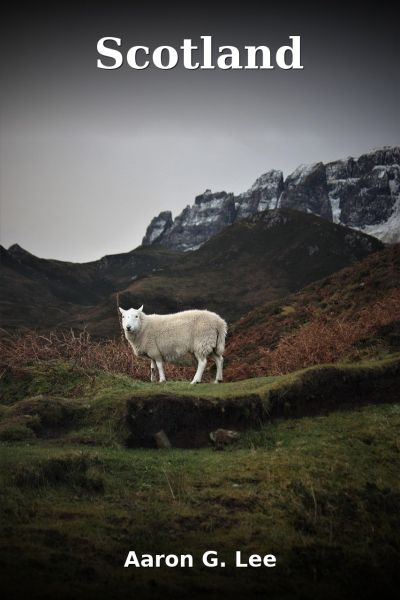
Scotland's history begins in the misty depths of ancient Caledonia, where enigmatic Picts, Gaelic Scots from Ireland, and Roman legions contested a rugged land defined by brochs, crannogs, and monumental stone circles. From this crucible emerged the Kingdom of Alba under Kenneth MacAlpin in the ninth century, a fusion of Pictish and Gaelic cultures that weathered Viking raids and expanded southward. The medieval era saw the "Davidian Revolution" introduce feudalism and burghs, while the Wars of Independence forged a fierce national identity through figures like William Wallace and Robert the Bruce, culminating in the triumph at Bannockburn and the poetic assertion of sovereignty in the Declaration of Arbroath. The subsequent Stewart dynasty navigated treacherous noble feuds and English pressure, reaching a cultural zenith under James IV before the disaster at Flodden and the tragic, captivating reign of Mary, Queen of Scots, whose execution paved the way for her son to inherit the English throne.
The Union of the Crowns in 1603 began a complex shared monarchy that failed to prevent religious upheaval. The Covenanters’ struggle for Presbyterian integrity sparked the Bishops' Wars and entangled Scotland in the British Civil Wars, leading to Cromwell’s occupation and a Restoration that merely delayed further crisis. The disastrous Darien Scheme bankrupted the nation, forcing the controversial Acts of Union in 1707, which dissolved the Scottish Parliament but guaranteed the Kirk, law, and education. The Jacobite risings of 1715 and 1745—romantic but doomed attempts to restore the Stuarts—ended in the slaughter at Culloden and the systematic dismantling of the Highland clan system. Yet from this trauma arose the Scottish Enlightenment, a staggering intellectual flowering where David Hume, Adam Smith, and James Hutton reshaped global philosophy, economics, and science, even as the Industrial Revolution turned the Lowlands into a global workshop of coal, iron, cotton, and shipbuilding, generating immense wealth alongside squalid urban poverty and the forced emigration of the Clearances.
The Victorian era cemented Scotland’s role as the "workshop of the Empire," fostering a distinct civic culture of religious fervor, educational reform, and romanticized Highland imagery beloved by Queen Victoria. The twentieth century brought the trauma of two World Wars, where Scottish manpower and industry were pivotal, followed by a painful industrial decline that birthed "Red Clydeside" socialism and a modern nationalist movement. The discovery of North Sea oil fueled the SNP's rise, while the Thatcher era's "democratic deficit" galvanized cross-party support for devolution. A 1997 referendum delivered a Scottish Parliament with tax-varying powers, reconvening in Edinburgh in 1999. The 2014 independence referendum rejected separation but revealed a deeply divided electorate, a divide sharpened by Brexit, leaving the constitutional question unresolved as Scotland navigates the twenty-first century.
Underpinning this political narrative are the enduring pillars of Scottish distinctiveness: a dramatic natural landscape that shaped settlement and strategy; a social evolution from tribal clans through feudalism to a diverse, post-industrial society; a unique mixed legal system jealously guarded since 1707; an educational tradition of "democratic intellect" stretching from Knox's parish schools to world-leading universities; and a vibrant cultural tapestry woven from Pictish stones and medieval Makars to Burns, Scott, the Glasgow Boys, and contemporary film and music. Sport—golf, football, rugby, shinty, and the Highland Games—acts as a potent expression of collective identity. Today, Scotland faces the future leveraging its renewable energy potential, academic excellence, and cultural capital to address climate change, demographic shifts, and the persistent debate over its place in the Union and the world, striving to write the next chapter of a resilient, adaptive nation.
What You'll Find Inside:
- A sweeping chronological narrative tracing Scotland's evolution from ancient Caledonia and the Picts through Roman occupation, medieval unification, and the Wars of Independence to modern devolution and contemporary constitutional debates.
- In-depth exploration of pivotal figures and events including Kenneth MacAlpin, William Wallace, Robert the Bruce, Mary Queen of Scots, the Scottish Enlightenment thinkers (Hume, Smith), and the Jacobite Risings that shaped national identity.
- Analysis of Scotland's distinct institutional heritage—its separate legal system, educational tradition, and Presbyterian Kirk—preserved through the 1707 Union and reinforced by the 1999 devolved Parliament.
- Examination of the complex interplay between Highland and Lowland societies, the clan system's rise and dismantling, the Highland Clearances, industrialization's transformation of the Central Belt, and the resulting social structures.
- Discussion of Scotland's global reach through empire, emigration, and the diaspora, alongside modern challenges including renewable energy transition, demographic shifts, Brexit's constitutional impact, and the ongoing independence debate.
Who's It For:
This book is ideal for readers seeking a comprehensive single-volume history of Scotland, from general history enthusiasts and students to travelers wanting deeper context for their visit. It particularly suits those interested in how a small nation maintained distinct legal, educational, and religious institutions within a larger union, and anyone exploring the roots of contemporary Scottish identity and the independence debate. The accessible narrative balances political, social, cultural, and economic history, making it valuable for both newcomers to Scottish history and those wishing to connect specialized knowledge into a coherent national story.
Table of Contents:
- Introduction
- Chapter 1 Ancient Caledonia: Picts, Scots, and the Roman Frontier
- Chapter 2 The Unification of Alba: Kenneth MacAlpin and the Birth of a Nation
- Chapter 3 The Age of Kings and Saints: Shaping Early Scottish Identity
- Chapter 4 The Wars of Independence: William Wallace and Robert the Bruce
- Chapter 5 The Stewart Dynasty: Power, Politics, and Royal Houses
- Chapter 6 Mary Queen of Scots: Tragedy and Triumph
- Chapter 7 The Union of the Crowns: A Shared Monarchy
- Chapter 8 The Covenanters: Religious Strife and Political Resistance
- Chapter 9 The Acts of Union: Scotland and Great Britain
- Chapter 10 The Jacobite Risings: Rebellions and Romanticism
- Chapter 11 The Scottish Enlightenment: Ideas that Changed the World
- Chapter 12 The Industrial Revolution: Transformation and Hardship
- Chapter 13 Empire and Emigration: Scotland's Global Reach
- Chapter 14 The Victorian Era: Prosperity and Social Change
- Chapter 15 World Wars and Shifting Loyalties
- Chapter 16 The Rise of Scottish Nationalism
- Chapter 17 Devolution: A New Parliament for Scotland
- Chapter 18 Contemporary Scotland: Identity, Culture, and Modern Challenges
- Chapter 19 Scotland's Natural Landscape: Shaping History and Culture
- Chapter 20 From Clans to Communities: Social Structures Through Time
- Chapter 21 The Scottish Legal System: A Distinctive Heritage
- Chapter 22 Education in Scotland: A Legacy of Learning
- Chapter 23 Arts and Literature: A Rich Cultural Tapestry
- Chapter 24 Sporting Scotland: Passion and Pride
- Chapter 25 Scotland's Future: Challenges and Opportunities in a Globalized World
Author:
Published By:
Date Published:
November 27, 2026
Type:
Nonfiction
Language:
English
Word Count:
43,164 words
Reading Time:
3 hours 1 minutes
Sample:
Order:
Buy the Scotland ebook on MixCache.com:
Buy Now
Full ebook will be available immediately
- read online or download as a PDF file.
$5 account credit for all new MixCache.com accounts, usable toward any ebook purchase!*
MixCache.com Total Access
Get unlimited access to this book + all books published by MixCache.com for $11.99/month
Subscribe to MTA

 Includes Audiobook

Ratings & Reviews
Ask Questions About This Book
Have a question about the content? Ask our AI assistant!
Start by asking a question about "Scotland"
Example: "Does this book mention William Shakespeare?"
Thinking...