Browse by Category
Fiction
- Action & Adventure
- African American
- Anthologies
- Children's Fiction
- Classics
- Comics & Graphic Novels
- Coming of Age
- Contemporary
- Cultural & Regional
- Drama
- Erotica
- Family Life
- Fantasy
- General
- Historical Fiction
- Horror
- Humor & Satire
- Literary Fiction
- Mystery, Thriller & Suspense
- Poetry
- Religious & Inspirational
- Romance
- Science Fiction
- Short Stories
- War & Military
- Westerns
- Women's Fiction
- Young Adult
Non-Fiction
- Antiques & Collectibles
- Arts & Photography
- Biographies & Memoirs
- Business & Money
- Children's Non-Fiction
-
Computers & Technology
- Artificial Intelligence
- Computer Science
- Cybersecurity & Cryptography
- Data Science & Analytics
- Databases & Big Data
- Game Development & Design
- General
- Hardware & DIY
- Mobile App Development
- Networking & Cloud Computing
- Operating Systems
- Programming
- Robotics
- Software
- Software Engineering
- User Experience (UX) & Design
- Web Development & Design
- Cooking, Food & Wine
- Crafts, Hobbies & Home
- Education & Teaching
- Engineering
- General
- Health, Fitness & Dieting
-
History
- African History
- African History - North Africa
- African History - Sub-Saharan Africa
- American History
- American History - 20th Century
- American History - Civil War
- American History - Colonial Period
- Ancient History
- Asian History
- Asian History - China
- Asian History - India
- Asian History - Japan
- Asian History - Southeast Asia
- European History
- European History - Ancient Greece
- European History - Ancient Rome
- European History - Medieval
- European History - Modern
- European History - Renaissance
- General
- Middle Eastern History
- Military History
- Military History - Aviation
- Military History - Naval
- Social & Cultural History
- World History
- Humor & Entertainment
- Industrial Technology
- Language Learning
- Law
- LGBTQ+ Non-Fiction
- Literary Criticism
- Medical Books
- Parenting & Relationships
- Philosophy
- Politics & Social Sciences
- Reference
- Religion & Spirituality
-
Science & Math
- Agricultural Sciences
- Astronomy & Space Science
- Behavioral Sciences
- Biological Sciences
- Botany & Plant Science
- Chemistry
- Earth Sciences
- Engineering - Chemical
- Engineering - Civil
- Engineering - Electrical
- Engineering - Mechanical
- Environment
- General
- Geology
- Mathematics
- Nature & Ecology
- Oceanography
- Paleontology
- Physics
- Statistics
- Self-Help
- Sports & Outdoors
- Study Aids
- Sustainability & Green Living
- Textbooks
- Transportation
- Travel
- True Crime
- Urban Planning & Development
- Veterinary Medicine
- Writing & Publishing
Jump to Section
MixCache.com Total Access
Unlimited reading and audiobooks for every book published by MixCache.com.
Included titles carry the MTA badge.
Learn more →
The Great Fire of London
MTA
A History
About this book:
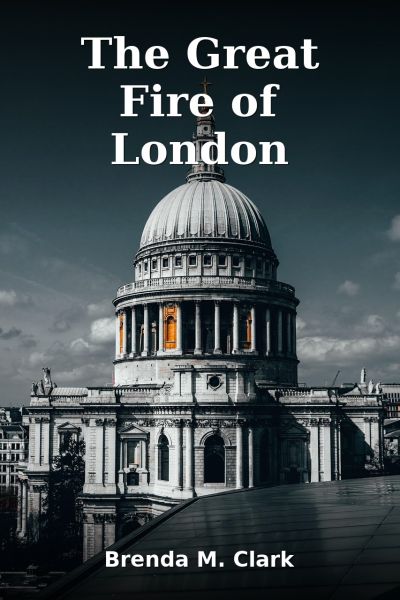
The Great Fire of London ignited on September 2, 1666, in a baker’s oven on Pudding Lane, rapidly consuming a medieval city primed for disaster by a prolonged drought and centuries of haphazard, timber-framed construction. The initial response was paralyzed by the Lord Mayor’s indecision and the legal complexities of demolition, allowing the flames—driven by a fierce easterly wind—to sweep westward through the dense, winding streets. Over four harrowing days, the inferno destroyed over 13,000 houses, eighty-seven churches, and iconic landmarks like St. Paul’s Cathedral and the Guildhall, displacing tens of thousands of refugees to open fields like Moorfields. The tide turned only when the wind shifted and James, Duke of York, imposed military discipline on the firefighting efforts, utilizing gunpowder to create effective firebreaks that finally halted the blaze’s advance.
In the immediate aftermath, the scale of the devastation—four-fifths of the City in ruins—forced a radical reimagining of London. While grand geometric plans by Sir Christopher Wren and John Evelyn were thwarted by entrenched property rights, the Rebuilding Act of 1667 mandated a fundamental shift to brick and stone construction, tiled roofs, wider streets, and substantial party walls, permanently altering the city’s vulnerability to fire. Wren’s enduring legacy manifested in the fifty-one parish churches and the magnificent new St. Paul’s Cathedral that rose from the ashes, redefining the skyline as symbols of resilience. The reconstruction was financed innovatively through a coal tax, while the Fire Court swiftly resolved property disputes, enabling a surprisingly rapid physical and economic recovery.
The catastrophe also triggered a feverish search for blame, with foreigners and Catholics becoming targets of suspicion and violence, culminating in the execution of a French watchmaker, Robert Hubert, despite evidence of his innocence. This scapegoating reflected deep political and religious anxieties of the Restoration era, even as official inquiries confirmed the fire’s accidental nature. The Monument, designed by Wren and Hooke, was erected near the fire’s origin as a permanent memorial and scientific instrument, its controversial inscription blaming "Popish frenzy" standing for over a century as a testament to the era’s prejudices.
Ultimately, the Great Fire served as a brutal but transformative crucible. It cleared the congested, unsanitary medieval city, inadvertently improving public health and imposing a new architectural order that defined London for centuries. The disaster forged a powerful narrative of collective resilience, demonstrating the city's capacity to transform absolute devastation into an opportunity for modernization. The legacy of 1666 endures in London’s brick terraces, its spatial logic, and its cultural identity as a metropolis capable of rising, phoenix-like, from its own ashes.
What You'll Find Inside:
- The pre-fire conditions that turned medieval London into a 'tinderbox city'—dense timber construction, narrow streets, and a severe drought that desiccated the urban landscape.
- The fire's catastrophic four-day progression from a baker's oven on Pudding Lane, the disastrous early response by civic authorities, and the pivotal leadership of the Duke of York in organizing effective containment.
- The human dimension of the disaster: the chaotic evacuation of tens of thousands to Moorfields, the destruction of iconic landmarks like St. Paul's Cathedral and the Guildhall, and the surprisingly low official death toll contrasted with massive displacement.
- The ambitious rebuilding of London under Sir Christopher Wren's architectural vision, the revolutionary Rebuilding Act mandating brick and stone construction, and the creation of the Monument as a lasting memorial.
- The fire's enduring legacy in transformed building codes, improved urban planning, the establishment of the Fire Court for dispute resolution, and the Coal Tax as an innovative public financing model for reconstruction.
Who's It For:
This book is ideal for history enthusiasts and students of urban history who want a comprehensive, day-by-day narrative of the Great Fire of London and its aftermath. Readers interested in disaster response, architectural history, and 17th-century British social history will appreciate the detailed analysis of how a catastrophic event reshaped a major metropolis. It also appeals to general readers drawn to stories of resilience, leadership under crisis, and the transformation of a medieval city into a modern capital through the vision of figures like Christopher Wren and the decisive actions of King Charles II and the Duke of York.
Table of Contents:
- Introduction
- Chapter 1 The Tinderbox City
- Chapter 2 A Summer of Drought
- Chapter 3 Pudding Lane Ignites
- Chapter 4 The Faltering Response
- Chapter 5 Spreading Like Wildfire
- Chapter 6 A City in Chaos
- Chapter 7 The Duke of York Takes Charge
- Chapter 8 Fighting for St. Paul's
- Chapter 9 The Wind Turns
- Chapter 10 Destruction of the Guildhall
- Chapter 11 Refugees on Moorfields
- Chapter 12 Efforts to Contain
- Chapter 13 The King's Despair
- Chapter 14 The Last Embers
- Chapter 15 A City in Ashes
- Chapter 16 The Toll of the Fire
- Chapter 17 Blame and Accusation
- Chapter 18 Rebuilding a New London
- Chapter 19 Wren's Vision
- Chapter 20 Monument to Disaster
- Chapter 21 Lasting Changes
- Chapter 22 The Fire in Memory
- Chapter 23 Lessons Learned
- Chapter 24 London's Resilience
- Chapter 25 The Legacy of the Great Fire
Author:
Published By:
Date Published:
November 27, 2026
Type:
Nonfiction
Language:
English
Word Count:
36,055 words
Reading Time:
2 hours 31 minutes
Sample:
Order:
Order The Great Fire of London (Paperback) on MixCache.com:
Buy NowPrint copy is made to order and ships worldwide. Includes the ebook free, ready to read instantly.
$5 account credit for all new MixCache.com accounts, usable toward any ebook purchase!*