Browse by Category
Fiction
- Action & Adventure
- African American
- Anthologies
- Children's Fiction
- Classics
- Comics & Graphic Novels
- Coming of Age
- Contemporary
- Cultural & Regional
- Drama
- Erotica
- Family Life
- Fantasy
- General
- Historical Fiction
- Horror
- Humor & Satire
- Literary Fiction
- Mystery, Thriller & Suspense
- Poetry
- Religious & Inspirational
- Romance
- Science Fiction
- Short Stories
- War & Military
- Westerns
- Women's Fiction
- Young Adult
Non-Fiction
- Antiques & Collectibles
- Arts & Photography
- Biographies & Memoirs
- Business & Money
- Children's Non-Fiction
-
Computers & Technology
- Artificial Intelligence
- Computer Science
- Cybersecurity & Cryptography
- Data Science & Analytics
- Databases & Big Data
- Game Development & Design
- General
- Hardware & DIY
- Mobile App Development
- Networking & Cloud Computing
- Operating Systems
- Programming
- Robotics
- Software
- Software Engineering
- User Experience (UX) & Design
- Web Development & Design
- Cooking, Food & Wine
- Crafts, Hobbies & Home
- Education & Teaching
- Engineering
- General
- Health, Fitness & Dieting
-
History
- African History
- African History - North Africa
- African History - Sub-Saharan Africa
- American History
- American History - 20th Century
- American History - Civil War
- American History - Colonial Period
- Ancient History
- Asian History
- Asian History - China
- Asian History - India
- Asian History - Japan
- Asian History - Southeast Asia
- European History
- European History - Ancient Greece
- European History - Ancient Rome
- European History - Medieval
- European History - Modern
- European History - Renaissance
- General
- Middle Eastern History
- Military History
- Military History - Aviation
- Military History - Naval
- Social & Cultural History
- World History
- Humor & Entertainment
- Industrial Technology
- Language Learning
- Law
- LGBTQ+ Non-Fiction
- Literary Criticism
- Medical Books
- Parenting & Relationships
- Philosophy
- Politics & Social Sciences
- Reference
- Religion & Spirituality
-
Science & Math
- Agricultural Sciences
- Astronomy & Space Science
- Behavioral Sciences
- Biological Sciences
- Botany & Plant Science
- Chemistry
- Earth Sciences
- Engineering - Chemical
- Engineering - Civil
- Engineering - Electrical
- Engineering - Mechanical
- Environment
- General
- Geology
- Mathematics
- Nature & Ecology
- Oceanography
- Paleontology
- Physics
- Statistics
- Self-Help
- Sports & Outdoors
- Study Aids
- Sustainability & Green Living
- Textbooks
- Transportation
- Travel
- True Crime
- Urban Planning & Development
- Veterinary Medicine
- Writing & Publishing
Jump to Section
MixCache.com Total Access
Unlimited reading and audiobooks for every book published by MixCache.com.
Included titles carry the MTA badge.
Learn more →The Economy of North Korea MTA
About this book:
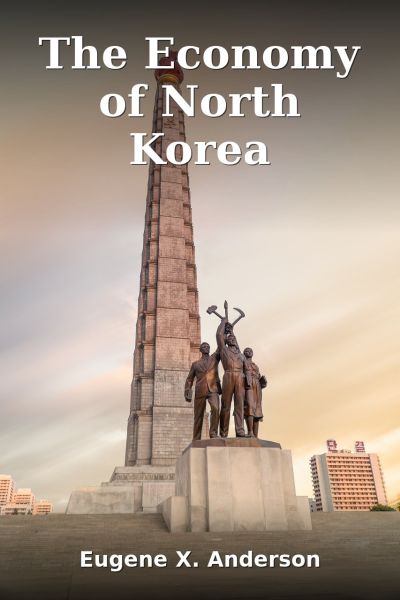
North Korea’s economy is a unique, centrally planned system deeply rooted in the *Juche* ideology of self-reliance and shaped by the devastation of the Korean War. Built upon an industrial base laid during Japanese colonial rule and expanded through Soviet and Chinese aid, the state prioritized heavy industry and military development over consumer welfare. The central planning apparatus, directed by the State Planning Commission, governed all resource allocation, while the *Songun* (military-first) policy entrenched the Korean People’s Army as a primary economic actor, diverting vast resources to the nuclear weapons program and defense industries. This rigid structure achieved initial post-war reconstruction but proved structurally inefficient, technologically stagnant, and increasingly vulnerable to external shocks.
The collapse of the Soviet bloc in the early 1990s triggered a catastrophic systemic failure, culminating in the "Arduous March" famine. The implosion of the Public Distribution System forced a spontaneous, bottom-up emergence of informal markets (*jangmadang*), creating a vibrant parallel economy that now sustains most citizens. While the regime has periodically attempted limited reforms—such as the 2002 July 1st Measures, agricultural "field responsibility systems," and Special Economic Zones—these efforts have been consistently undermined by ideological resistance to liberalization, the disastrous 2009 currency revaluation, and the tightening grip of international sanctions targeting the nuclear program. The state currently oscillates between pragmatic tolerance of market activity and reassertions of centralized control, most recently evident in the post-COVID border closures and the 2021 Five-Year Plan’s emphasis on self-reliance.
Today, the North Korean economy operates as a fragmented dual system: a hollowed-out state sector plagued by chronic energy shortages, dilapidated infrastructure, and sanctions-induced isolation, coexisting with a dynamic, dollarized informal sector driven by *donju* (money masters) and illicit trade networks. Human capital development in education and healthcare suffers from resource diversion to the military and isolation from global knowledge flows, while environmental degradation threatens long-term agricultural viability. The regime’s *Byungjin* policy of simultaneous nuclear and economic development has proven contradictory, as the weapons program invites sanctions that strangle the foreign trade and investment necessary for modernization.
Future prospects remain tightly bound to geopolitical variables. Without verifiable denuclearization and sanctions relief, the economy faces a trajectory of managed stagnation, reliant on Chinese lifelines, illicit cyber revenue, and the resilience of its informal markets. Comparative analysis with other socialist states highlights North Korea’s exceptionalism: unlike China or Vietnam, it has refused systemic market transition, preserving political control at the cost of sustainable development. The fundamental tension between the *Juche* imperative for autarky and the material requirements of a modern economy ensures that North Korea’s economic landscape will remain defined by paradox, scarcity, and the regime’s overriding priority of survival.
What You'll Find Inside:
- The foundational role of Juche ideology and self-reliance in shaping every facet of North Korea's economic policy, from heavy industry prioritization to agricultural collectivization and resistance to market reforms.
- The structure, evolution, and surprising resilience of the centrally planned command economy, including the State Planning Commission's mechanisms, the impact of the Soviet collapse, and the system's adaptation through mass mobilization campaigns.
- The profound and multifaceted impact of the nuclear weapons program and resultant international sanctions, which simultaneously drain resources, isolate the economy, and drive illicit financing and sanctions-evasion networks.
- The emergence and entrenchment of informal markets (jangmadang) and a nascent private sector (including the donju money masters) as essential survival mechanisms that now challenge the state's monopoly on economic activity.
- The unique integration of the Korean People's Army (KPA) into the economic fabric under the Songun (military-first) policy, making the military a direct producer, construction force, trader, and priority claimant on national resources.
Who's It For:
This book is essential reading for economists, political scientists, and policy analysts specializing in command economies, Korean studies, or sanctions regimes. It will also benefit graduate students and researchers needing a comprehensive, sector-by-sector analysis of North Korea's unique economic system, as well as government and NGO professionals engaged in East Asian security, humanitarian aid, or denuclearization negotiations who require a deep understanding of the economic constraints and incentives driving Pyongyang's decision-making.
Table of Contents:
- Introduction
- Chapter 1 Historical Foundations of North Korea's Economy
- Chapter 2 Juche Ideology and Economic Self-Reliance
- Chapter 3 The Central Planning System: Structure and Evolution
- Chapter 4 Agriculture: Policies, Production, and Food Security
- Chapter 5 Industrial Development: Heavy Industry First
- Chapter 6 Energy Sector: Resources, Production, and Challenges
- Chapter 7 Foreign Trade and International Sanctions
- Chapter 8 Special Economic Zones and Foreign Investment
- Chapter 9 The Role of the Korean People's Army in the Economy
- Chapter 10 Financial System: Currency, Banking, and State Finance
- Chapter 11 Social Welfare and Public Distribution System
- Chapter 12 Labor and Employment in a Socialist System
- Chapter 13 Science and Technology Development
- Chapter 14 Transportation and Infrastructure
- Chapter 15 Informal Markets and the Emerging Private Sector
- Chapter 16 Economic Reforms and Policy Shifts
- Chapter 17 Human Capital: Education and Healthcare
- Chapter 18 Environmental Issues and Sustainable Development
- Chapter 19 Inter-Korean Economic Cooperation and Relations
- Chapter 20 The Impact of Nuclear Weapons Program on the Economy
- Chapter 21 Economic Inequality and Social Stratification
- Chapter 22 The Role of External Aid and Humanitarian Assistance
- Chapter 23 Measuring North Korea's Economy: Data Challenges and Estimates
- Chapter 24 Future Prospects and Challenges for Economic Development
- Chapter 25 Comparative Analysis with Other Centrally Planned Economies
Author:
Published By:
Date Published:
November 22, 2026
Type:
Nonfiction
Language:
English
Word Count:
40,919 words
Reading Time:
2 hours 52 minutes
Sample:
Order:
Order The Economy of North Korea (Hardcover) on MixCache.com:
Buy NowPrint copy is made to order and ships worldwide. Includes the ebook free, ready to read instantly.
$5 account credit for all new MixCache.com accounts, usable toward any ebook purchase!*