
Browse by Category
Fiction
- Action & Adventure
- African American
- Anthologies
- Children's Fiction
- Classics
- Comics & Graphic Novels
- Coming of Age
- Contemporary
- Cultural & Regional
- Drama
- Erotica
- Family Life
- Fantasy
- General
- Historical Fiction
- Horror
- Humor & Satire
- Literary Fiction
- Mystery, Thriller & Suspense
- Poetry
- Religious & Inspirational
- Romance
- Science Fiction
- Short Stories
- War & Military
- Westerns
- Women's Fiction
- Young Adult
Non-Fiction
- Antiques & Collectibles
- Arts & Photography
- Biographies & Memoirs
- Business & Money
- Children's Non-Fiction
-
Computers & Technology
- Artificial Intelligence
- Computer Science
- Cybersecurity & Cryptography
- Data Science & Analytics
- Databases & Big Data
- Game Development & Design
- General
- Hardware & DIY
- Mobile App Development
- Networking & Cloud Computing
- Operating Systems
- Programming
- Robotics
- Software
- Software Engineering
- User Experience (UX) & Design
- Web Development & Design
- Cooking, Food & Wine
- Crafts, Hobbies & Home
- Education & Teaching
- Engineering
- General
- Health, Fitness & Dieting
-
History
- African History
- African History - North Africa
- African History - Sub-Saharan Africa
- American History
- American History - 20th Century
- American History - Civil War
- American History - Colonial Period
- Ancient History
- Asian History
- Asian History - China
- Asian History - India
- Asian History - Japan
- Asian History - Southeast Asia
- European History
- European History - Ancient Greece
- European History - Ancient Rome
- European History - Medieval
- European History - Modern
- European History - Renaissance
- General
- Middle Eastern History
- Military History
- Military History - Aviation
- Military History - Naval
- Social & Cultural History
- World History
- Humor & Entertainment
- Industrial Technology
- Language Learning
- Law
- LGBTQ+ Non-Fiction
- Literary Criticism
- Medical Books
- Parenting & Relationships
- Philosophy
- Politics & Social Sciences
- Reference
- Religion & Spirituality
-
Science & Math
- Agricultural Sciences
- Astronomy & Space Science
- Behavioral Sciences
- Biological Sciences
- Botany & Plant Science
- Chemistry
- Earth Sciences
- Engineering - Chemical
- Engineering - Civil
- Engineering - Electrical
- Engineering - Mechanical
- Environment
- General
- Geology
- Mathematics
- Nature & Ecology
- Oceanography
- Paleontology
- Physics
- Statistics
- Self-Help
- Sports & Outdoors
- Study Aids
- Sustainability & Green Living
- Textbooks
- Transportation
- Travel
- True Crime
- Urban Planning & Development
- Veterinary Medicine
- Writing & Publishing
Jump to Section
MixCache.com Total Access
Unlimited reading and audiobooks for every book published by MixCache.com.
Included titles carry the MTA badge.
Learn more →A History of Porcelain MTA
About this book:
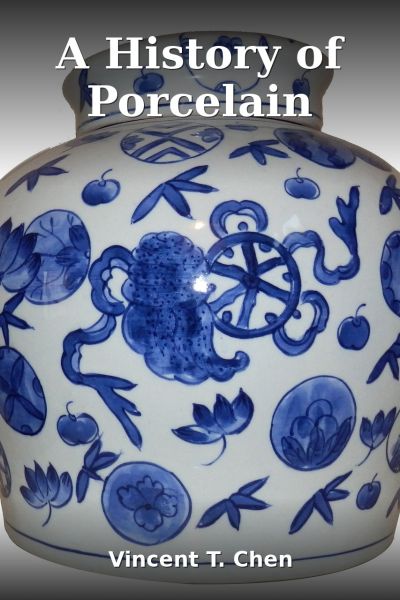
The story of porcelain begins in ancient China, where millennia of ceramic experimentation culminated in the Han Dynasty creation of true, high-fired porcelain—a translucent, resonant "white gold" made from kaolin clay. This material matured through successive golden ages: the Tang Dynasty established its global fame via the Silk Road; the Song Dynasty refined it to scholarly perfection with subtle celadons and imperial kilns; the Yuan Dynasty revolutionized decoration with cobalt blue-and-white wares; and the Ming and Qing Dynasties scaled production for a global export boom while perfecting polychrome enamels like *famille rose*. For centuries, China held a monopoly on this technology, its wares inspiring awe and imitation across the Islamic world and Europe.
The secret of hard-paste porcelain finally reached Europe in the early 18th century through the alchemical breakthrough of Johann Friedrich Böttger at Meissen, ending centuries of speculation and soft-paste approximations. This sparked a continent-wide proliferation of royal manufactories—Vienna, Nymphenburg, Sèvres, and Berlin—each developing distinct artistic identities, from Sèvres’ soft-paste elegance to Meissen’s sculptural mastery. In England, the absence of royal subsidies fostered entrepreneurial innovation, leading to Josiah Wedgwood’s industrial organization and the invention of bone china, a uniquely durable, white, and translucent body that democratized porcelain. The Industrial Revolution further transformed the material, introducing steam power, transfer printing, and mass production, moving porcelain from aristocratic cabinets to middle-class tables and into essential infrastructure as sanitary ware and electrical insulators.
The 20th century saw porcelain become a canvas for modernism, adapting to the organic curves of Art Nouveau and the geometric sleekness of Art Deco before embracing post-war functionalism and minimalist design in Scandinavia, Japan, and the US. Simultaneously, Japan and Korea revitalized their ancient traditions, merging *wabi-sabi* aesthetics with contemporary sculpture. As studio ceramics elevated porcelain to fine art—pushing conceptual and formal boundaries—material science propelled it into the realm of advanced engineering. High-purity, engineered ceramics derived from porcelain’s mineral basis became critical components in aerospace, microelectronics, medical implants, and energy systems, valued for extreme hardness, biocompatibility, and thermal stability.
Today, porcelain stands at a new frontier defined by ultracompact surfaces like Dekton, which use sinterized particle technology to mimic geological metamorphosis in hours, creating materials surpassing natural stone in durability and sustainability. The industry is pivoting toward circular economies through energy-efficient kilns, waste recycling, and digital fabrication like 3D printing, while research into nanoceramics and smart, bio-responsive materials promises interactive futures. From Neolithic earth to engineered surfaces that clad skyscrapers and heal bones, porcelain’s trajectory reflects an unbroken chain of human ingenuity—transforming mud and fire into a material that continuously redefines the boundaries of art, utility, and technology.
What You'll Find Inside:
- Traces porcelain's evolution from Neolithic China through the Han, Tang, Song, Yuan, Ming, and Qing dynasties, detailing breakthroughs in celadon, blue-and-white, and polychrome enamel techniques.
- Chronicles the global dissemination of Chinese porcelain via the Silk Road and maritime trade, and the centuries-long European quest to unlock the "arcanum" of hard-paste porcelain culminating in Meissen's 1708 discovery.
- Explores the rise of major European manufactories—including Meissen, Sèvres, and English factories like Wedgwood—and their distinctive artistic contributions from Rococo and Neoclassicism to Art Nouveau and Art Deco.
- Examines porcelain's transformation during the Industrial Revolution into mass-produced commodities and its critical expansion into architecture, sanitary ware, electrical insulators, and other industrial applications.
- Concludes with contemporary innovations in advanced engineered ceramics, ultracompact surfaces like Dekton, sustainable manufacturing practices, and the material's expanding role in medicine, aerospace, and digital fabrication.
Who's It For:
This book is ideal for ceramic enthusiasts, art historians, and collectors seeking a comprehensive chronicle of porcelain's technical and artistic evolution across cultures. Design professionals and material scientists will appreciate the detailed coverage of manufacturing processes, glaze chemistry, and cutting-edge engineered ceramics. General readers with an interest in global trade history, decorative arts, or technological innovation will find the narrative accessible and richly detailed.
Table of Contents:
- Introduction: The Enduring Allure of Porcelain
- Chapter 1: The Genesis of Porcelain in Ancient China
- Chapter 2: Early Chinese Dynasties and the Evolution of Ceramic Arts
- Chapter 3: The Tang Dynasty: White Gold and the Silk Road
- Chapter 4: Song Dynasty Innovations: Kilns, Glazes, and Imperial Patronage
- Chapter 5: The Yuan Dynasty: Blue and White Porcelain's Ascendance
- Chapter 6: Ming Dynasty Grandeur: Imperial Wares and Export Boom
- Chapter 7: Qing Dynasty Refinements: Enamels and the Height of Craftsmanship
- Chapter 8: The Secret Journey West: Early Encounters with Chinese Porcelain
- Chapter 9: European Attempts: Alchemists, Artisans, and the Quest for White Gold
- Chapter 10: Meissen's Dawn: Böttger's Discovery and the Birth of European Hard-Paste
- Chapter 11: The Spread Across Europe: Rival Factories and Royal Wares
- Chapter 12: Sèvres and the French Aesthetic: Soft-Paste Elegance and Artistic Innovation
- Chapter 13: English Porcelain: From Chelsea to Wedgwood and Industrialization
- Chapter 14: The Industrial Revolution: New Techniques, Mass Production, and Accessibility
- Chapter 15: Porcelain in the 19th Century: Victorian Tastes and Global Expansion
- Chapter 16: Art Nouveau and Art Deco: Porcelain as a Canvas for Modernism
- Chapter 17: The Mid-20th Century: Functionalism, Design, and Post-War Recovery
- Chapter 18: Asian Porcelain Revival: Japan, Korea, and Contemporary Interpretations
- Chapter 19: Porcelain in Architecture and Design: Tiles, Sanitary Ware, and Beyond
- Chapter 20: The Science of Porcelain: Raw Materials, Firing, and Molecular Structure
- Chapter 21: Glazes and Decorations: A Symphony of Color and Texture
- Chapter 22: Restoration and Conservation: Preserving Porcelain's Legacy
- Chapter 23: Contemporary Art Porcelain: Pushing Boundaries of Form and Concept
- Chapter 24: New Frontiers: Advanced Ceramics and Engineered Porcelain Materials
- Chapter 25: Porcelain's Future: Innovations like Dekton and Sustainable Practices
Author:
Published By:
Date Published:
November 20, 2026
Type:
Nonfiction
Language:
English
Word Count:
40,883 words
Reading Time:
2 hours 52 minutes
Sample:
Order:
Buy the A History of Porcelain ebook on MixCache.com:
Buy Now
Full ebook will be available immediately
- read online or download as a PDF file.
$5 account credit for all new MixCache.com accounts, usable toward any ebook purchase!*
MixCache.com Total Access
Get unlimited access to this book + all books published by MixCache.com for $11.99/month
Subscribe to MTA



Ratings & Reviews
Ask Questions About This Book
Have a question about the content? Ask our AI assistant!
Start by asking a question about "A History of Porcelain"
Example: "Does this book mention William Shakespeare?"
Thinking...