
Browse by Category
Fiction
- Action & Adventure
- African American
- Anthologies
- Children's Fiction
- Classics
- Comics & Graphic Novels
- Coming of Age
- Contemporary
- Cultural & Regional
- Drama
- Erotica
- Family Life
- Fantasy
- General
- Historical Fiction
- Horror
- Humor & Satire
- Literary Fiction
- Mystery, Thriller & Suspense
- Poetry
- Religious & Inspirational
- Romance
- Science Fiction
- Short Stories
- War & Military
- Westerns
- Women's Fiction
- Young Adult
Non-Fiction
- Antiques & Collectibles
- Arts & Photography
- Biographies & Memoirs
- Business & Money
- Children's Non-Fiction
-
Computers & Technology
- Artificial Intelligence
- Computer Science
- Cybersecurity & Cryptography
- Data Science & Analytics
- Databases & Big Data
- Game Development & Design
- General
- Hardware & DIY
- Mobile App Development
- Networking & Cloud Computing
- Operating Systems
- Programming
- Robotics
- Software
- Software Engineering
- User Experience (UX) & Design
- Web Development & Design
- Cooking, Food & Wine
- Crafts, Hobbies & Home
- Education & Teaching
- Engineering
- General
- Health, Fitness & Dieting
-
History
- African History
- African History - North Africa
- African History - Sub-Saharan Africa
- American History
- American History - 20th Century
- American History - Civil War
- American History - Colonial Period
- Ancient History
- Asian History
- Asian History - China
- Asian History - India
- Asian History - Japan
- Asian History - Southeast Asia
- European History
- European History - Ancient Greece
- European History - Ancient Rome
- European History - Medieval
- European History - Modern
- European History - Renaissance
- General
- Middle Eastern History
- Military History
- Military History - Aviation
- Military History - Naval
- Social & Cultural History
- World History
- Humor & Entertainment
- Industrial Technology
- Language Learning
- Law
- LGBTQ+ Non-Fiction
- Literary Criticism
- Medical Books
- Parenting & Relationships
- Philosophy
- Politics & Social Sciences
- Reference
- Religion & Spirituality
-
Science & Math
- Agricultural Sciences
- Astronomy & Space Science
- Behavioral Sciences
- Biological Sciences
- Botany & Plant Science
- Chemistry
- Earth Sciences
- Engineering - Chemical
- Engineering - Civil
- Engineering - Electrical
- Engineering - Mechanical
- Environment
- General
- Geology
- Mathematics
- Nature & Ecology
- Oceanography
- Paleontology
- Physics
- Statistics
- Self-Help
- Sports & Outdoors
- Study Aids
- Sustainability & Green Living
- Textbooks
- Transportation
- Travel
- True Crime
- Urban Planning & Development
- Veterinary Medicine
- Writing & Publishing
Jump to Section
MixCache.com Total Access
Unlimited reading and audiobooks for every book published by MixCache.com.
Included titles carry the MTA badge.
Learn more →
A History of Intel
MTA
The Story of an S&P 500 Company
About this book:
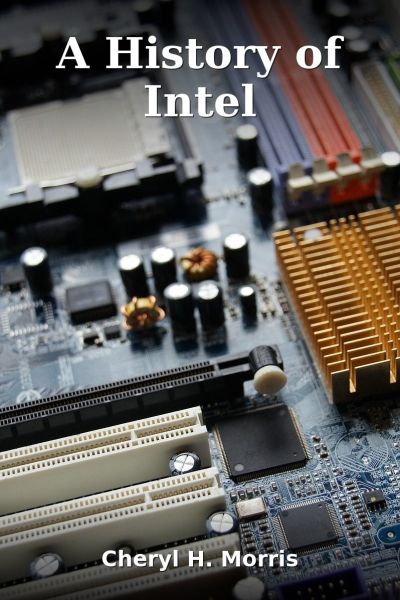
Intel's journey began with the "Traitorous Eight" leaving Shockley Semiconductor to form Fairchild, where Gordon Moore, Robert Noyce, and Andy Grove honed the planar process and integrated circuit technology. In 1968, they founded Intel (Integrated Electronics), initially targeting semiconductor memory. Their first major success, the 1103 DRAM, displaced magnetic core memory and established Intel as a market leader. A pivotal moment arrived in 1971 when Intel, almost accidentally, invented the microprocessor (the 4004) for a Japanese calculator company, realizing its potential as a general-purpose programmable chip. This architecture evolved through the 8080 to the 16-bit 8086/8088, the latter chosen by IBM for its first Personal Computer in 1981. This partnership cemented the x86 architecture as the industry standard, fueling the PC revolution and making Intel the dominant force in computing throughout the 1980s and 1990s with the 286, 386, and the brilliantly marketed Pentium brand.
Intel's dominance was underpinned by a unique vertically integrated model (IDM) where it designed and manufactured its own chips, allowing it to aggressively pursue Moore's Law. Under Andy Grove's operational paranoia, Intel built a "Fab Advantage," consistently leading in process technology and manufacturing scale. The company successfully navigated the dot-com boom and bust, expanding into the lucrative server and data center market with the Xeon line, which became the backbone of the internet and cloud computing. However, the 2000s brought significant strategic missteps. Intel failed to adapt its power-hungry x86 architecture for the smartphone revolution, ceding the mobile market entirely to ARM-based designs despite early assets like StrongARM/XScale. Simultaneously, the company faced fierce competition from AMD, which seized the 64-bit initiative, and later struggled with significant manufacturing delays in transitioning to 10nm and 7nm process nodes, eroding its traditional process leadership.
Facing these existential challenges, Intel embarked on a major transformation labeled "IDM 2.0" under returning CEO Pat Gelsinger. This strategy acknowledges the difficulty of solo process leadership by embracing a hybrid model: maintaining internal fabs while utilizing external foundries (like TSMC) for certain products and launching Intel Foundry Services (IFS) to manufacture chips for other companies. Architecturally, Intel shifted toward modular "chiplet" designs using advanced 3D packaging (Foveros, EMIB) to mix-and-match components. The company is aggressively pursuing an "AI Everywhere" strategy, integrating acceleration into CPUs (Xeon, Core) and developing discrete accelerators (Gaudi via Habana Labs) and GPUs (Arc) to challenge NVIDIA. Massive investments in new fabs in the US (Ohio) and Europe (Germany) aim to secure supply chain resilience and regain process leadership entering the "Angstrom era."
Throughout its history, Intel has been defined by a culture of engineering rigor, constructive confrontation, and relentless execution, forged by founders Moore, Noyce, and Grove. Its legacy extends beyond silicon; the x86 instruction set became the lingua franca of modern computing, enabling a vast software ecosystem that persists today. As a pillar of the S&P 500, Intel's impact includes massive contributions to STEM education, environmental sustainability in manufacturing, and global economic development through its worldwide operations. While navigating current competitive pressures and technological shifts toward AI and heterogeneous computing, Intel's enduring identity remains rooted in its ability to manufacture the future at scale, continuously reinventing itself to remain the foundational architect of the digital age.
What You'll Find Inside:
- The complete origin story of Intel, from its roots in Fairchild Semiconductor's 'Traitorous Eight' to its founding by Moore, Noyce, and Grove and their vision for integrated electronics.
- How Intel's microprocessor breakthroughs—from the 4004 and 8080 through the x86 architecture and Pentium brand—catalyzed the personal computer revolution and established an enduring industry standard.
- The company's unparalleled manufacturing prowess and relentless execution of Moore's Law, which gave Intel a decades-long 'Fab Advantage' and powered exponential computing growth.
- Strategic pivots that defined Intel's trajectory: the exit from memory to dominate microprocessors, the expansion from PCs into servers and data centers, and the current transformation toward AI, foundry services, and heterogeneous computing.
- Leadership philosophy and culture—especially Andy Grove's 'only the paranoid survive' ethos—that drove operational excellence, constructive confrontation, and resilience through crises like the FDIV bug, dot-com bust, and manufacturing delays.
Who's It For:
This book is ideal for technology professionals, business strategists, and investors seeking a comprehensive case study of how a semiconductor company became a foundational pillar of the digital economy. Students of innovation and corporate history will value its detailed analysis of leadership, culture, and strategic adaptation across five decades of industry upheaval. Anyone interested in the forces that shaped modern computing—from the PC and internet eras to today's AI revolution—will find Intel's story both instructive and essential.
Table of Contents:
- Introduction
- Chapter 1: The Early Days: Fairchild Semiconductor and the Genesis of Intel
- Chapter 2: Founding Intel: Moore, Noyce, and Grove's Vision
- 3: The First Products: SRAMs and the Rise of Memory
- Chapter 4: The Microprocessor Revolution Begins: From 4004 to 8080
- Chapter 5: Dominating the PC Market: The IBM PC and the x86 Architecture
- Chapter 6: The 286 and 386: Setting the Standard for Personal Computing
- Chapter 7: The Pentium Era: Mainstream Power and Marketing Prowess
- Chapter 8: The Dot-Com Boom and Bust: Intel's Navigation Through Volatility
- Chapter 9: The Mobile Challenge: ARM, Smartphones, and Missed Opportunities
- Chapter 10: Expanding Horizons: Beyond PCs to Servers and Data Centers
- Chapter 11: Manufacturing Prowess: Moore's Law and the Fab Advantage
- Chapter 12: Competitive Landscape: AMD, RISC, and the Constant Battle
- Chapter 13: Innovation and R&D: Driving the Future of Computing
- Chapter 14: Leadership and Culture: The Impact of Key Figures
- Chapter 15: Acquisitions and Divestitures: Shaping Intel's Portfolio
- Chapter 16: Global Reach: Intel's Presence Around the World
- Chapter 17: The Rise of Graphics: Integrated and Discrete Solutions
- Chapter 18: The AI Revolution: Intel's Strategy for Artificial Intelligence
- Chapter 19: Security and Privacy: Addressing Modern Computing Challenges
- Chapter 20: The Internet of Things: Connecting the Physical World
- Chapter 21: Challenges and Setbacks: Stumbles on the Path to Progress
- Chapter 22: Reinvigoration and Transformation: Adapting to New Realities
- Chapter 23: Corporate Social Responsibility: Intel's Impact on Society
- Chapter 24: The Future of Intel: Emerging Technologies and Strategic Directions
- Chapter 25: Intel's Enduring Legacy: A Pillar of the S&P 500
Author:
Published By:
Date Published:
November 19, 2026
Type:
Nonfiction
Language:
English
Word Count:
38,482 words
Reading Time:
2 hours 42 minutes
Sample:
Order:
Buy the A History of Intel ebook on MixCache.com:
Buy Now
Full ebook will be available immediately
- read online or download as a PDF file.
$5 account credit for all new MixCache.com accounts, usable toward any ebook purchase!*
MixCache.com Total Access
Get unlimited access to this book + all books published by MixCache.com for $11.99/month
Subscribe to MTA





Ratings & Reviews
Ask Questions About This Book
Have a question about the content? Ask our AI assistant!
Start by asking a question about "A History of Intel"
Example: "Does this book mention William Shakespeare?"
Thinking...