
Browse by Category
Fiction
- Action & Adventure
- African American
- Anthologies
- Children's Fiction
- Classics
- Comics & Graphic Novels
- Coming of Age
- Contemporary
- Cultural & Regional
- Drama
- Erotica
- Family Life
- Fantasy
- General
- Historical Fiction
- Horror
- Humor & Satire
- Literary Fiction
- Mystery, Thriller & Suspense
- Poetry
- Religious & Inspirational
- Romance
- Science Fiction
- Short Stories
- War & Military
- Westerns
- Women's Fiction
- Young Adult
Non-Fiction
- Antiques & Collectibles
- Arts & Photography
- Biographies & Memoirs
- Business & Money
- Children's Non-Fiction
-
Computers & Technology
- Artificial Intelligence
- Computer Science
- Cybersecurity & Cryptography
- Data Science & Analytics
- Databases & Big Data
- Game Development & Design
- General
- Hardware & DIY
- Mobile App Development
- Networking & Cloud Computing
- Operating Systems
- Programming
- Robotics
- Software
- Software Engineering
- User Experience (UX) & Design
- Web Development & Design
- Cooking, Food & Wine
- Crafts, Hobbies & Home
- Education & Teaching
- Engineering
- General
- Health, Fitness & Dieting
-
History
- African History
- African History - North Africa
- African History - Sub-Saharan Africa
- American History
- American History - 20th Century
- American History - Civil War
- American History - Colonial Period
- Ancient History
- Asian History
- Asian History - China
- Asian History - India
- Asian History - Japan
- Asian History - Southeast Asia
- European History
- European History - Ancient Greece
- European History - Ancient Rome
- European History - Medieval
- European History - Modern
- European History - Renaissance
- General
- Middle Eastern History
- Military History
- Military History - Aviation
- Military History - Naval
- Social & Cultural History
- World History
- Humor & Entertainment
- Industrial Technology
- Language Learning
- Law
- LGBTQ+ Non-Fiction
- Literary Criticism
- Medical Books
- Parenting & Relationships
- Philosophy
- Politics & Social Sciences
- Reference
- Religion & Spirituality
-
Science & Math
- Agricultural Sciences
- Astronomy & Space Science
- Behavioral Sciences
- Biological Sciences
- Botany & Plant Science
- Chemistry
- Earth Sciences
- Engineering - Chemical
- Engineering - Civil
- Engineering - Electrical
- Engineering - Mechanical
- Environment
- General
- Geology
- Mathematics
- Nature & Ecology
- Oceanography
- Paleontology
- Physics
- Statistics
- Self-Help
- Sports & Outdoors
- Study Aids
- Sustainability & Green Living
- Textbooks
- Transportation
- Travel
- True Crime
- Urban Planning & Development
- Veterinary Medicine
- Writing & Publishing
Jump to Section
MixCache.com Total Access
Unlimited reading and audiobooks for every book published by MixCache.com.
Included titles carry the MTA badge.
Learn more →
A History of Federal Realty Investment Trust
MTA
The Story of an S&P 500 Company
About this book:
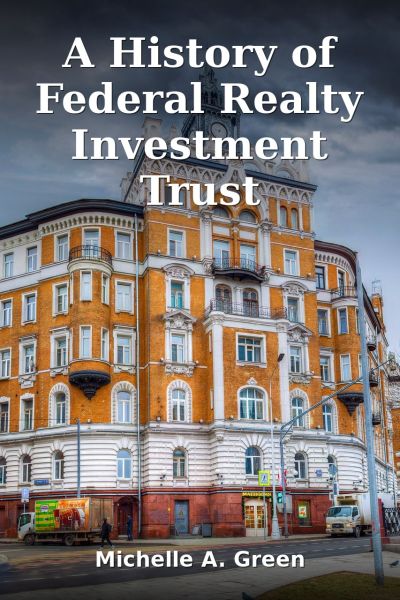
Federal Realty Investment Trust was founded in 1962 by Samuel J. Gorlitz, who envisioned a publicly traded REIT focused on acquiring and developing high-quality, community-centric retail properties in strategically located, densely populated suburbs. From its inception, the company distinguished itself through a disciplined, integrated approach—combining acquisition, development, and long-term management—while prioritizing necessity-based tenants, conservative financial leverage, and strong community relationships. These foundational principles enabled Federal Realty to navigate early economic headwinds and the turbulent "REIT Revolution" of the 1970s, emerging as a stable, resilient operator while many competitors faltered. The company methodically expanded its geographic footprint across the Northeast and Mid-Atlantic, refined its redevelopment expertise, and began pioneering mixed-use concepts that integrated retail with residential and office components, laying the groundwork for its future identity as a creator of vibrant urban places.
Throughout the 1980s and 1990s, Federal Realty matured institutionally, codifying a corporate culture rooted in integrity, accountability, and long-term stewardship while adapting to evolving retail formats and intensifying competition. A strategic pivot toward dense, infill markets in affluent, high-barrier-to-entry urban and suburban corridors—exemplified by transformative projects like Assembly Row and Pike & Rose—became a hallmark of its growth. This "urban renaissance" strategy, coupled with rigorous financial fortification, prudent capital allocation, and a deepening commitment to placemaking, positioned the company for sustained success. Leadership transitions, notably to Steven Guttman, were managed seamlessly, preserving the founding vision while injecting renewed strategic innovation. The culmination of this decades-long trajectory was recognized in 2007 with inclusion in the S&P 500, validating its scale, liquidity, and consistent shareholder returns.
The 2008 Global Financial Crisis served as a definitive stress test, which Federal Realty passed due to its conservative balance sheet, resilient necessity-based tenancy, and high-quality infill portfolio. In the subsequent decade, the company aggressively adapted to the rise of e-commerce by doubling down on experiential retail, curating dynamic tenant mixes focused on dining, wellness, entertainment, and digitally native brands seeking physical presence. It simultaneously embraced technological integration—leveraging data analytics, smart building systems, and digital platforms—to enhance operations and the consumer experience. Sustainability and ESG principles were woven into development and management practices, while strategic partnerships with institutional investors and public agencies enabled the execution of complex, large-scale mixed-use urban regeneration projects that would have been difficult to undertake alone.
Today, Federal Realty stands as a premier S&P 500 REIT with a concentrated portfolio of irreplaceable, mixed-use assets in the nation's most desirable coastal and gateway markets. Its properties function as 24/7 live-work-play ecosystems, distinguished by thoughtful placemaking, architectural quality, and a curated blend of retail, residential, office, and hospitality uses that foster genuine community connection. The company maintains rigorous corporate governance, transparent reporting, and a conservative financial profile that ensures resilience and access to capital. As it looks forward, Federal Realty continues to invest in its development pipeline, technological capabilities, and human capital, guided by the same patient, principles-driven approach that has defined its six-decade legacy of leadership, adaptability, and enduring value creation.
What You'll Find Inside:
- The founding vision of Samuel Gorlitz in 1962 to establish a REIT focused on strategically located, community-centric retail properties that prioritize long-term value creation over short-term gains.
- Federal Realty's resilience through major economic downturns—including the 1970s REIT crash and the 2008 Great Recession—driven by conservative financial management, necessity-based tenant mixes, and a focus on high-barrier-to-entry markets.
- The company's pioneering role in mixed-use development and placemaking, transforming traditional shopping centers into integrated live-work-play destinations like Assembly Row and Pike & Rose that foster community engagement and diversify revenue streams.
- Strategic adaptation to the rise of e-commerce by aggressively curating experiential retail, dining, entertainment, and wellness tenants to create physical destinations that offer social connection and experiences impossible to replicate online.
- The milestone achievement of S&P 500 inclusion in 2007, validating decades of disciplined growth, robust corporate governance, and a consistent track record of delivering shareholder value through a patient, long-term ownership model.
Who's It For:
This book is ideal for real estate professionals, institutional investors, and REIT analysts seeking a deep case study in long-term value creation and portfolio strategy. Business historians and students of corporate strategy will appreciate the detailed chronicle of leadership transitions, governance evolution, and adaptive resilience across economic cycles. Urban planners and developers will find valuable insights into the practical execution of mixed-use placemaking and community-centric development in dense, supply-constrained markets.
Table of Contents:
- Introduction
- Chapter 1: The Early Vision: Founding Federal Realty and Its Initial Ambitions
- Chapter 2: Laying the Foundation: First Properties and Business Model Development
- Chapter 3: Navigating Early Economic Headwinds: Growth Amidst Uncertainty
- Chapter 4: Expanding Horizons: Geographic Expansion and Portfolio Diversification
- Chapter 5: The REIT Revolution: Adapting to a New Investment Landscape
- Chapter 6: A Decade of Development: Key Projects and Strategic Acquisitions (1970s)
- Chapter 7: Innovation in Retail: Pioneering Mixed-Use and Community Centers
- Chapter 8: The Maturation of a Company: Establishing Core Values and Culture
- Chapter 9: Riding the Waves of Change: Adapting to Evolving Retail Trends (1980s)
- Chapter 10: Financial Fortification: Capital Strategies and Investment Principles
- Chapter 11: Leadership Transitions and Enduring Legacy
- Chapter 12: The Urban Renaissance: Focusing on Densely Populated Markets
- Chapter 13: The Dawn of a New Millennium: Strategic Vision for the 21st Century
- Chapter 14: Crafting Vibrant Places: Placemaking and Community Engagement
- Chapter 15: Sustained Growth: Expanding the Portfolio and Market Presence (2000s)
- Chapter 16: Weathering the Storm: Navigating Economic Downturns and Market Shifts
- Chapter 17: Innovation in Tenant Mix: Curating Experiences for the Modern Consumer
- Chapter 18: Embracing Sustainability: Environmental and Social Responsibility Initiatives
- Chapter 19: Technological Integration: Leveraging Data and Digital Platforms
- Chapter 20: Strategic Partnerships and Collaborative Ventures
- Chapter 21: The S&P 500 Recognition: A Milestone Achievement
- Chapter 22: Adapting to a Changing Retail Landscape: E-commerce and Experiential Retail
- Chapter 23: Building for the Future: Long-Term Growth Strategies and Investments
- Chapter 24: Corporate Governance and Shareholder Value
- Chapter 25: Federal Realty Today: A Legacy of Leadership and Enduring Success
Author:
Published By:
Date Published:
November 17, 2026
Type:
Nonfiction
Language:
English
Word Count:
43,912 words
Reading Time:
3 hours 5 minutes
Sample:
Order:
Buy the A History of Federal Realty Investment Trust ebook on MixCache.com:
Buy Now
Full ebook will be available immediately
- read online or download as a PDF file.
$5 account credit for all new MixCache.com accounts, usable toward any ebook purchase!*
MixCache.com Total Access
Get unlimited access to this book + all books published by MixCache.com for $11.99/month
Subscribe to MTA




Ratings & Reviews
Ask Questions About This Book
Have a question about the content? Ask our AI assistant!
Start by asking a question about "A History of Federal Realty Investment Trust"
Example: "Does this book mention William Shakespeare?"
Thinking...