
Browse by Category
Fiction
- Action & Adventure
- African American
- Anthologies
- Children's Fiction
- Classics
- Comics & Graphic Novels
- Coming of Age
- Contemporary
- Cultural & Regional
- Drama
- Erotica
- Fantasy
- General
- Historical Fiction
- Horror
- Humor & Satire
- Literary Fiction
- Mystery, Thriller & Suspense
- Poetry
- Religious & Inspirational
- Romance
- Science Fiction
- Short Stories
- War & Military
- Westerns
- Women's Fiction
- Young Adult
Non-Fiction
- Antiques & Collectibles
- Arts & Photography
- Biographies & Memoirs
- Business & Money
- Children's Non-Fiction
-
Computers & Technology
- Artificial Intelligence
- Computer Science
- Cybersecurity & Cryptography
- Data Science & Analytics
- Databases & Big Data
- Game Development & Design
- General
- Hardware & DIY
- Mobile App Development
- Networking & Cloud Computing
- Operating Systems
- Programming
- Robotics
- Software
- Software Engineering
- User Experience (UX) & Design
- Web Development & Design
- Cooking, Food & Wine
- Crafts, Hobbies & Home
- Education & Teaching
- Engineering
- General
- Health, Fitness & Dieting
-
History
- African History
- African History - North Africa
- African History - Sub-Saharan Africa
- American History
- American History - 20th Century
- American History - Civil War
- American History - Colonial Period
- Ancient History
- Asian History
- Asian History - China
- Asian History - India
- Asian History - Japan
- Asian History - Southeast Asia
- European History
- European History - Ancient Greece
- European History - Ancient Rome
- European History - Medieval
- European History - Modern
- European History - Renaissance
- General
- Middle Eastern History
- Military History
- Military History - Aviation
- Military History - Naval
- Social & Cultural History
- World History
- Humor & Entertainment
- Industrial Technology
- Language Learning
- Law
- LGBTQ+ Non-Fiction
- Literary Criticism
- Medical Books
- Parenting & Relationships
- Philosophy
- Politics & Social Sciences
- Reference
- Religion & Spirituality
-
Science & Math
- Agricultural Sciences
- Astronomy & Space Science
- Behavioral Sciences
- Biological Sciences
- Botany & Plant Science
- Chemistry
- Earth Sciences
- Engineering - Chemical
- Engineering - Civil
- Engineering - Electrical
- Engineering - Mechanical
- Environment
- General
- Geology
- Mathematics
- Nature & Ecology
- Oceanography
- Paleontology
- Physics
- Statistics
- Self-Help
- Sports & Outdoors
- Study Aids
- Sustainability & Green Living
- Textbooks
- Transportation
- Travel
- True Crime
- Urban Planning & Development
- Veterinary Medicine
- Writing & Publishing
Jump to Section
MixCache.com Total Access
Unlimited reading and audiobooks for every book published by MixCache.com.
Included titles carry the MTA badge.
Learn more →
A History of FedEx Freight
MTA
The Story of an S&P 500 Company
About this book:
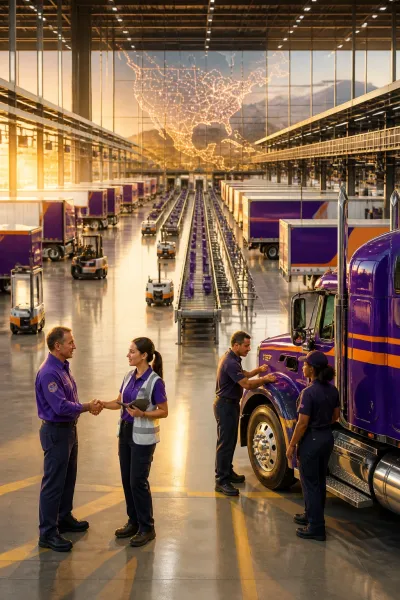
FedEx Freight’s history traces a deliberate evolution from a collection of regional less-than-truckload (LTL) carriers into North America’s largest LTL provider and a standalone S&P 500 company. While Federal Express revolutionized air cargo starting in 1973, the freight division was built decades later through the strategic acquisition and integration of three major regional networks: American Freightways (1998), Viking Freight (2000), and Overnite Transportation (2005). Merging these distinct operations—each with unique cultures, technologies, and labor models—required a massive, multi-year effort to harmonize systems, standardize safety protocols, and unify a workforce of approximately 40,000 employees under the "People-Service-Profit" philosophy. This consolidation created a seamless national network covering 98% of U.S. zip codes, plus Canada and Mexico, supported by over 365 service centers and nearly 30,000 vehicles.
The company sustained growth by embedding technology into its operational core, progressing from basic route optimization to advanced data analytics, AI, and IoT-enabled "smart network" capabilities. These tools drove efficiency in cube utilization, predictive maintenance, and dynamic pricing while enhancing customer visibility and e-commerce integration for "big and bulky" residential deliveries. FedEx Freight navigated severe economic headwinds—including the Great Recession and the COVID-19 pandemic—through financial discipline, network agility, and an unwavering focus on service reliability, consistently achieving approximately 98% on-time performance. Its commitment to safety, sustainability (via alternative fuels and electrification), and community engagement further solidified its reputation as a responsible industry leader.
FedEx Freight’s competitive strategy centered on differentiating through network density, technological superiority, and a consultative, customer-centric approach that moved beyond transactional shipping to integrated supply chain partnerships. This operational excellence made it a critical pillar of FedEx Corporation’s financial performance and market valuation, ultimately justifying its separation. On June 1, 2026, FedEx Freight spun off as an independent, publicly traded entity (NYSE: FDXF), immediately entering the S&P 500—a rare, fast-track inclusion signaling its market significance and the distinct demand dynamics of the LTL sector compared to parcel delivery.
As an independent company led by CEO John A. Smith, FedEx Freight is executing a focused roadmap built on four pillars: network optimization (leveraging dimension-in-motion technology for a 12% cube utilization gain), commercial growth (aggressively targeting SMBs, e-commerce, and verticals like grocery), technology and automation (deploying AI for predictive maintenance and customer experience), and financial value creation (targeting margin expansion, free cash flow, and shareholder returns via dividends and buybacks). This new chapter aims to capitalize on structural advantages—scale, density, and brand—to shape the future of freight through practical sustainability, workforce development, and relentless innovation in an increasingly automated, data-driven logistics landscape.
What You'll Find Inside:
- The strategic acquisition and integration of American Freightways, Viking Freight, and Overnite Transportation that built FedEx Freight into North America's largest LTL carrier.
- How technology and innovation—from the hub-and-spoke model to AI-driven predictive analytics and digital transformation—revolutionized operational efficiency and customer experience.
- The complex cultural integration challenges of merging unionized and non-unionized workforces while maintaining service quality and safety standards.
- Adaptation to major market shifts including the rise of e-commerce 'big and bulky' delivery, global expansion, and navigation of economic crises like the Great Recession and COVID-19 pandemic.
- The 2026 spin-off as an independent S&P 500 company with a focused strategy on network optimization, commercial growth, technology automation, and financial value creation.
Who's It For:
This book is ideal for logistics and supply chain professionals seeking strategic insights into LTL industry evolution, business historians and students studying corporate growth through mergers and acquisitions, investors analyzing transportation sector dynamics, and executives interested in cultural integration, technology adoption, and crisis management in large-scale operations.
Table of Contents:
- Introduction
- Chapter 1 The Genesis of a Giant: Federal Express's Early Days
- Chapter 2 Laying the Groundwork: The Birth of FedEx Freight's Predecessors
- Chapter 3 The Less-Than-Truckload Landscape: Early Competition and Market Entry
- Chapter 4 Strategic Acquisitions: Building the Freight Network
- Chapter 5 Overnite Transportation: A Pivotal Merger
- Chapter 6 Integrating Cultures: Blending Legacy Companies
- Chapter 7 Technology and Innovation: Driving Efficiency in Freight
- Chapter 8 Expanding Reach: Geographical and Service Line Growth
- Chapter 9 Economic Headwinds: Navigating Recessions and Market Shifts
- Chapter 10 The Human Element: People, Culture, and Labor Relations
- Chapter 11 Safety First: Prioritizing Operations and Compliance
- Chapter 12 Environmental Responsibility: Sustainability in Logistics
- Chapter 13 The Rise of E-commerce: Adapting to New Demands
- Chapter 14 Global Ambitions: International Expansion and Cross-Border Services
- Chapter 15 Customer-Centricity: Evolving Service and Solutions
- Chapter 16 Regulatory Challenges: Compliance and Industry Standards
- Chapter 17 The S&P 500 Journey: Milestones and Market Recognition
- Chapter 18 Leadership and Vision: Shaping the Future of Freight
- Chapter 19 Competitive Pressures: Standing Out in a Crowded Market
- Chapter 20 Data Analytics: Optimizing Operations and Decision Making
- Chapter 21 The Digital Transformation: Embracing New Technologies
- Chapter 22 Crisis Management: Responding to Unexpected Events
- Chapter 23 Community Engagement: Corporate Social Responsibility
- Chapter 24 The Future of Freight: Trends and Predictions
- Chapter 25 FedEx Freight's Enduring Legacy: A Story of Growth and Innovation
Author:
Published By:
Date Published:
November 1, 2026
Type:
Nonfiction
Language:
English
Word Count:
38,589 words
Reading Time:
2 hours 42 minutes
Sample:
Order:
Buy the A History of FedEx Freight ebook on MixCache.com:
Buy Now
Full ebook will be available immediately
- read online or download as a PDF file.
$5 account credit for all new MixCache.com accounts, usable toward any ebook purchase!*
MixCache.com Total Access
Get unlimited access to this book + all books published by MixCache.com for $11.99/month
Subscribe to MTA




Ratings & Reviews
Ask Questions About This Book
Have a question about the content? Ask our AI assistant!
Start by asking a question about "A History of FedEx Freight"
Example: "Does this book mention William Shakespeare?"
Thinking...