Browse by Category
Fiction
- Action & Adventure
- African American
- Anthologies
- Children's Fiction
- Classics
- Comics & Graphic Novels
- Coming of Age
- Contemporary
- Cultural & Regional
- Drama
- Erotica
- Fantasy
- General
- Historical Fiction
- Horror
- Humor & Satire
- Literary Fiction
- Mystery, Thriller & Suspense
- Poetry
- Religious & Inspirational
- Romance
- Science Fiction
- Short Stories
- War & Military
- Westerns
- Women's Fiction
- Young Adult
Non-Fiction
- Antiques & Collectibles
- Arts & Photography
- Biographies & Memoirs
- Business & Money
- Children's Non-Fiction
-
Computers & Technology
- Artificial Intelligence
- Computer Science
- Cybersecurity & Cryptography
- Data Science & Analytics
- Databases & Big Data
- Game Development & Design
- General
- Hardware & DIY
- Mobile App Development
- Networking & Cloud Computing
- Operating Systems
- Programming
- Robotics
- Software
- Software Engineering
- User Experience (UX) & Design
- Web Development & Design
- Cooking, Food & Wine
- Crafts, Hobbies & Home
- Education & Teaching
- Engineering
- General
- Health, Fitness & Dieting
-
History
- African History
- African History - North Africa
- African History - Sub-Saharan Africa
- American History
- American History - 20th Century
- American History - Civil War
- American History - Colonial Period
- Ancient History
- Asian History
- Asian History - China
- Asian History - India
- Asian History - Japan
- Asian History - Southeast Asia
- European History
- European History - Ancient Greece
- European History - Ancient Rome
- European History - Medieval
- European History - Modern
- European History - Renaissance
- General
- Middle Eastern History
- Military History
- Military History - Aviation
- Military History - Naval
- Social & Cultural History
- World History
- Humor & Entertainment
- Industrial Technology
- Language Learning
- Law
- LGBTQ+ Non-Fiction
- Literary Criticism
- Medical Books
- Parenting & Relationships
- Philosophy
- Politics & Social Sciences
- Reference
- Religion & Spirituality
-
Science & Math
- Agricultural Sciences
- Astronomy & Space Science
- Behavioral Sciences
- Biological Sciences
- Botany & Plant Science
- Chemistry
- Earth Sciences
- Engineering - Chemical
- Engineering - Civil
- Engineering - Electrical
- Engineering - Mechanical
- Environment
- General
- Geology
- Mathematics
- Nature & Ecology
- Oceanography
- Paleontology
- Physics
- Statistics
- Self-Help
- Sports & Outdoors
- Study Aids
- Sustainability & Green Living
- Textbooks
- Transportation
- Travel
- True Crime
- Urban Planning & Development
- Veterinary Medicine
- Writing & Publishing
Jump to Section
MixCache.com Total Access
Unlimited reading and audiobooks for every book published by MixCache.com.
Included titles carry the MTA badge.
Learn more →
A History of GE Aerospace
MTA
The Story of an S&P 500 Company
About this book:
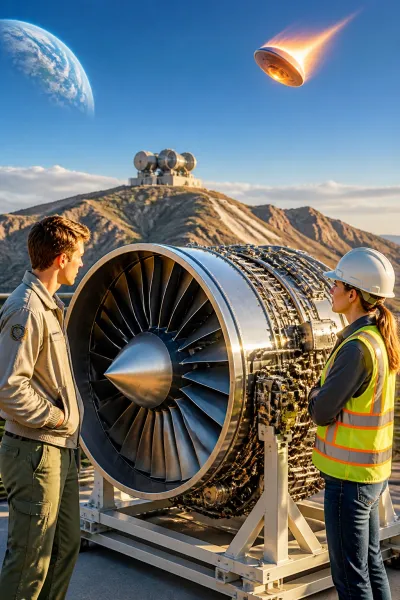
GE Aerospace traces its roots to the electrical innovations of Thomas Edison and the formation of General Electric through the 1892 merger of Edison General Electric and Thomson‑Houston. The company’s first foray into aviation came during World I when Sanford Alexander Moss developed a turbosupercharger that restored engine power at altitude, a breakthrough demonstrated on Pikes Peak in 1918. This expertise in turbines and high‑temperature machinery paved the way for GE’s entry into jet propulsion during World II, when it reverse‑engineered and produced the United States’ first turbojet, the I‑A, powering the Bell XP‑59A Airacomet in 1942. The post‑war era saw GE refine turbojet technology, develop the iconic J79 with variable‑stator vanes, and contribute to the Space Race through re‑entry vehicle heat shields, guidance systems, and electrical components for Mercury, Gemini, and Apollo missions.
In the commercial aviation boom, GE leveraged its military experience to launch the CF6 high‑bypass turbofan for wide‑body aircraft such as the DC‑10 and Boeing 747, and later co‑created the CFM56 engine with Safran through CFM International, which became the best‑selling commercial engine in history powering the Boeing 737 and Airbus A320 families. The company diversified into auxiliary power units, avionics, mechanical and hydraulic systems, and aftermarket services, while pursuing global expansion with MRO hubs in Singapore, Brazil, Mexico, and India, and forming joint ventures like the Engine Alliance and GE Honda Aero Engines. Technological leaps in materials (single‑crystal turbine blades, ceramic matrix composites), design (advanced aerodynamics, additive manufacturing, FADEC digital controls), and manufacturing (lean, Six Sigma, Brilliant Factory) were matched by a robust R&D program that drove innovations in combustion, noise reduction, and sustainable aviation, including the LEAP engine with TAPS combustor and 3D‑printed fuel nozzles.
GE Aerospace has repeatedly navigated economic headwinds—from oil crises and recessions to the 9/11 attacks and the COVID‑19 pandemic—by adjusting production, protecting R&D, leveraging diversified service revenues, and maintaining strong customer and supplier relationships. Strategic leadership, from early figures like Gerhard Neumann to modern executives such as Larry Culp, has guided the company through mergers, acquisitions, and the 2024 spin‑off that returned GE Aerospace to an independent, S&P 500‑listed entity. A global workforce, a culture of safety, continuous learning, and community engagement through STEM education, vocational training, and environmental stewardship underpin its operations. Looking ahead, GE Aerospace is investing in hypersonic propulsion, hybrid‑electric and hydrogen‑based systems, advanced digital twins and AI‑driven engine optimization, and continued expansion of its global MRO network, aiming to lead the next chapter of sustainable, faster, and more connected flight.
What You'll Find Inside:
- GE Aerospace's evolution from Edison's electrical innovations to becoming a global leader in aircraft propulsion through turbosuperchargers, jet engines, and turbofan technology
- The company's pivotal role in major historical events including WWI, WWII, the Cold War, and the Space Race, demonstrating how conflict and competition drove technological advancement
- How GE Aerospace transformed commercial aviation with engines like the CF6 and CFM56 families, making jet travel accessible to the masses and connecting global markets
- GE Aerospace's commitment to sustainable aviation through initiatives like hybrid-electric propulsion, sustainable aviation fuels, and the LEAP engine family's environmental improvements
- The company's journey to becoming a standalone S&P 500 entity through strategic diversification, global expansion, partnerships like CFM International, and relentless innovation in materials and digital technologies
Who's It For:
This book is ideal for aviation enthusiasts, aerospace professionals, and business history readers interested in understanding how a major industrial company shaped the evolution of flight. It will particularly appeal to those fascinated by technological innovation, corporate strategy, and the intersection of engineering excellence with historical events like the World Wars, Cold War, and Space Race. Readers seeking insights into how companies sustain long-term success through adaptation, R&D investment, and global expansion will find valuable lessons in GE Aerospace's century-long journey.
Table of Contents:
- Introduction
- Chapter 1: The Early Days: From Edison to Aviation's Dawn
- Chapter 2: Forging Ahead: World War I and the Birth of Jet Propulsion
- Chapter 3: Post-War Boom: Expanding Horizons in the Golden Age of Flight
- Chapter 4: Cold War Innovations: Powering Military Might
- Chapter 5: The Space Race: GE Aerospace's Contribution to Lunar Ambitions
- Chapter 6: Commercial Aviation Takes Flight: Jet Engines for the Masses
- Chapter 7: Diversification and Growth: Beyond the Engine
- Chapter 8: Challenges and Triumphs: Navigating Economic Headwinds
- Chapter 9: Global Expansion: Reaching New Markets
- Chapter 10: Technological Leaps: Advancements in Materials and Design
- Chapter 11: The Digital Revolution: Integrating Electronics and Software
- Chapter 12: Environmental Focus: Sustainable Aviation Initiatives
- Chapter 13: Mergers and Acquisitions: Shaping the Modern Company
- Chapter 14: Leadership and Vision: Guiding GE Aerospace Through Change
- Chapter 15: Manufacturing Excellence: Precision and Scale
- Chapter 16: Research and Development: Pushing the Boundaries of Flight
- Chapter 17: The S&P 500 Journey: A Mark of Corporate Success
- Chapter 18: Crisis and Resilience: Overcoming Industry Downturns
- Chapter 19: Partnerships and Collaborations: Driving Innovation Together
- Chapter 20: The Future of Flight: Hypersonic, Electric, and Beyond
- Chapter 21: Workforce and Culture: The People Behind the Power
- Chapter 22: Community and Social Responsibility: Beyond the Bottom Line
- Chapter 23: Defining Moments: Key Events in GE Aerospace History
- Chapter 24: A Legacy of Innovation: Impact on Aviation and Industry
- Chapter 25: Looking Ahead: The Next Chapter for GE Aerospace
Author:
Published By:
Date Published:
October 16, 2026
Type:
Nonfiction
Language:
English
Word Count:
41,301 words
Reading Time:
2 hours 54 minutes
Sample:
Order:
Order A History of GE Aerospace (Hardcover) on MixCache.com:
Buy NowPrint copy is made to order and ships worldwide. Includes the ebook free, ready to read instantly.
$5 account credit for all new MixCache.com accounts, usable toward any ebook purchase!*